InstantInstant

What's new at Instant

Every new feature and improvement we ship for you — updated as it goes live.

September 2026

9 updates
Flows14 Sept 2026

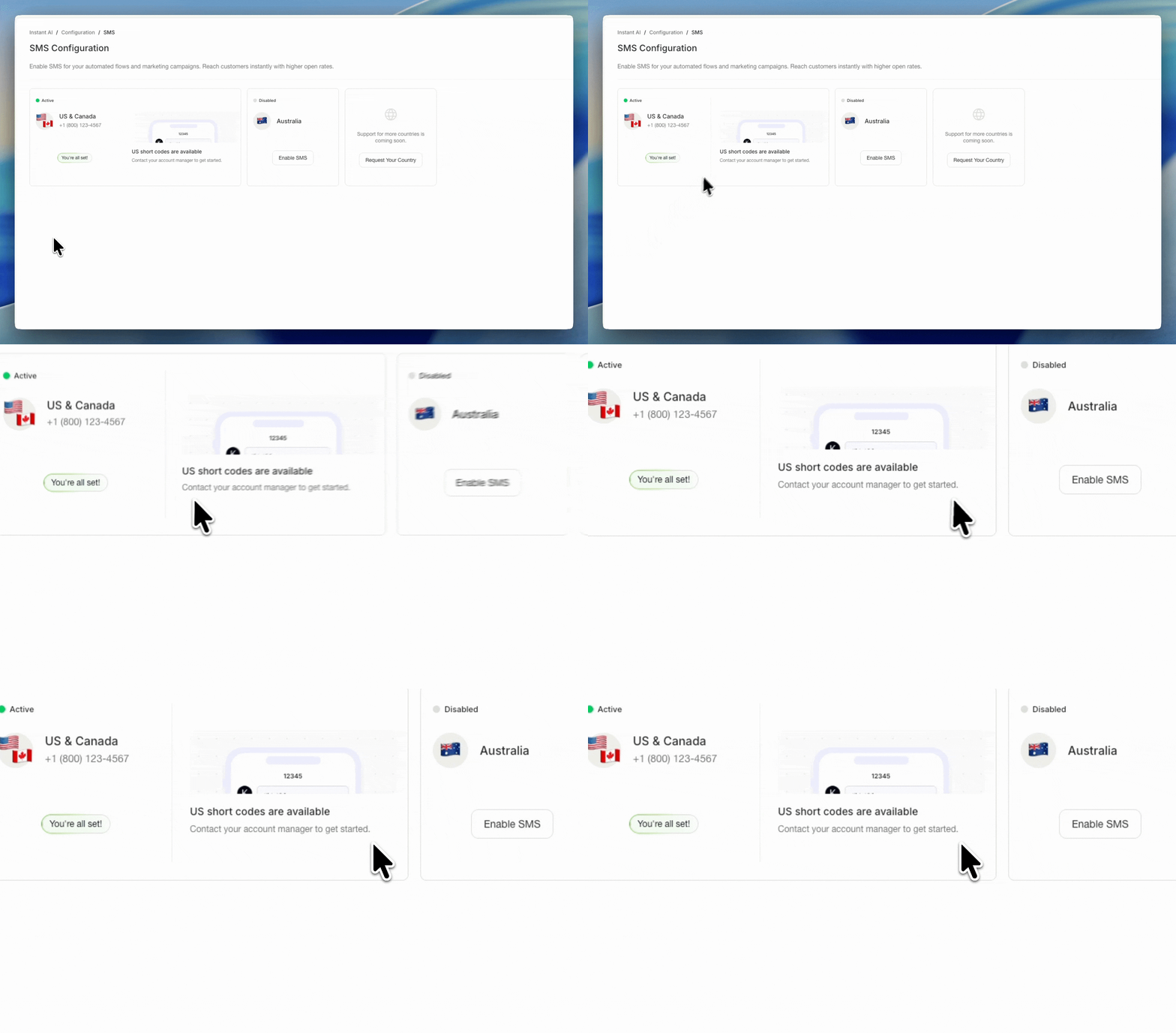
SMS is now available in all Abandonment Flows and all Stock Flows

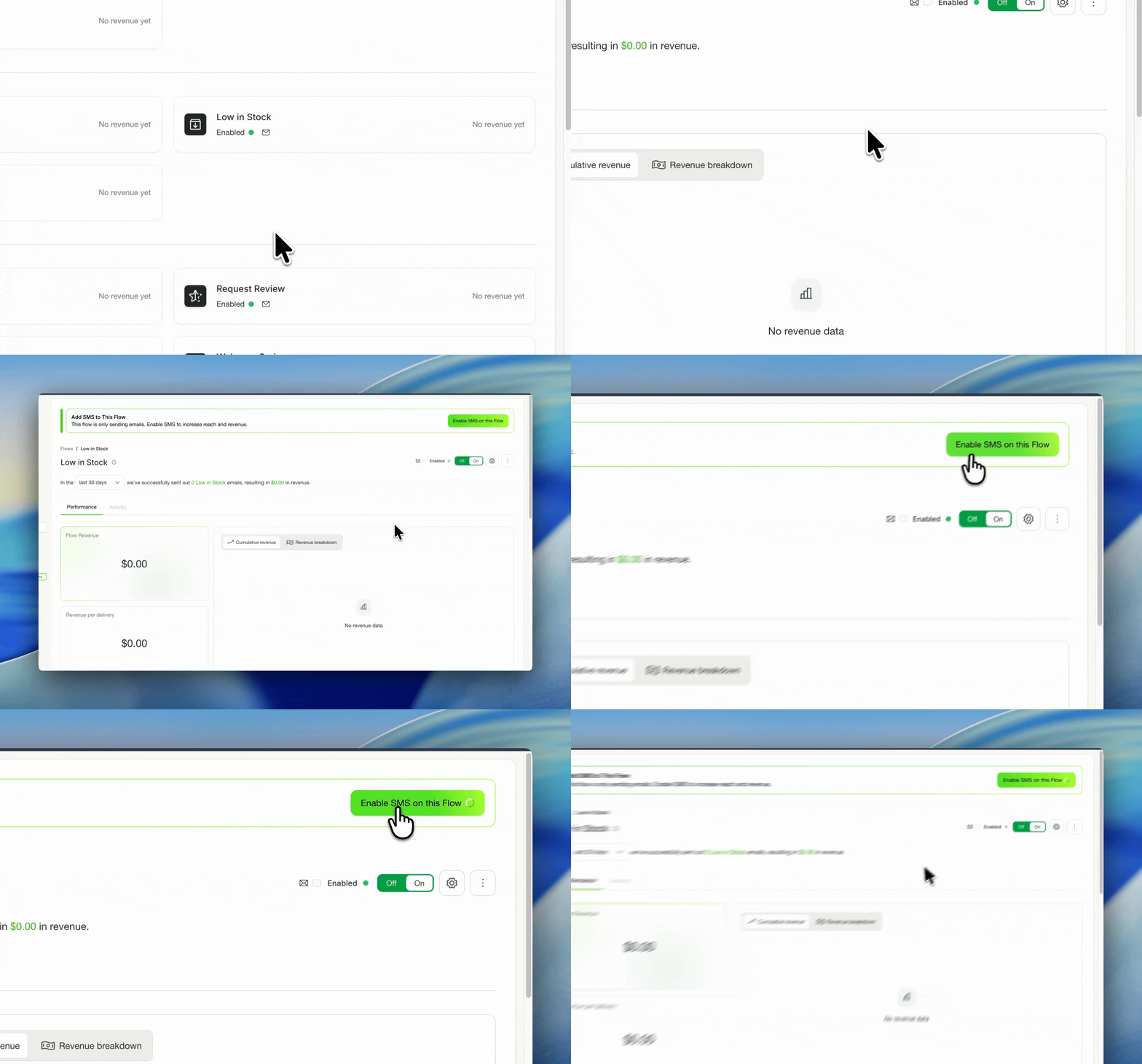
SMS in flows started with your Checkout and Cart Abandonment flows. It now covers every abandonment flow and every stock flow, and turning it on works the same way in each one. That puts a text in front of a shopper who browsed a product, left a collection page, ended a session without buying, or is waiting on a product that is low or back in stock. Each of those moments can now reach a shopper by SMS as well as email.

SMS can now be turned on for every abandonment flow and every stock flow

Flows11 Sept 2026

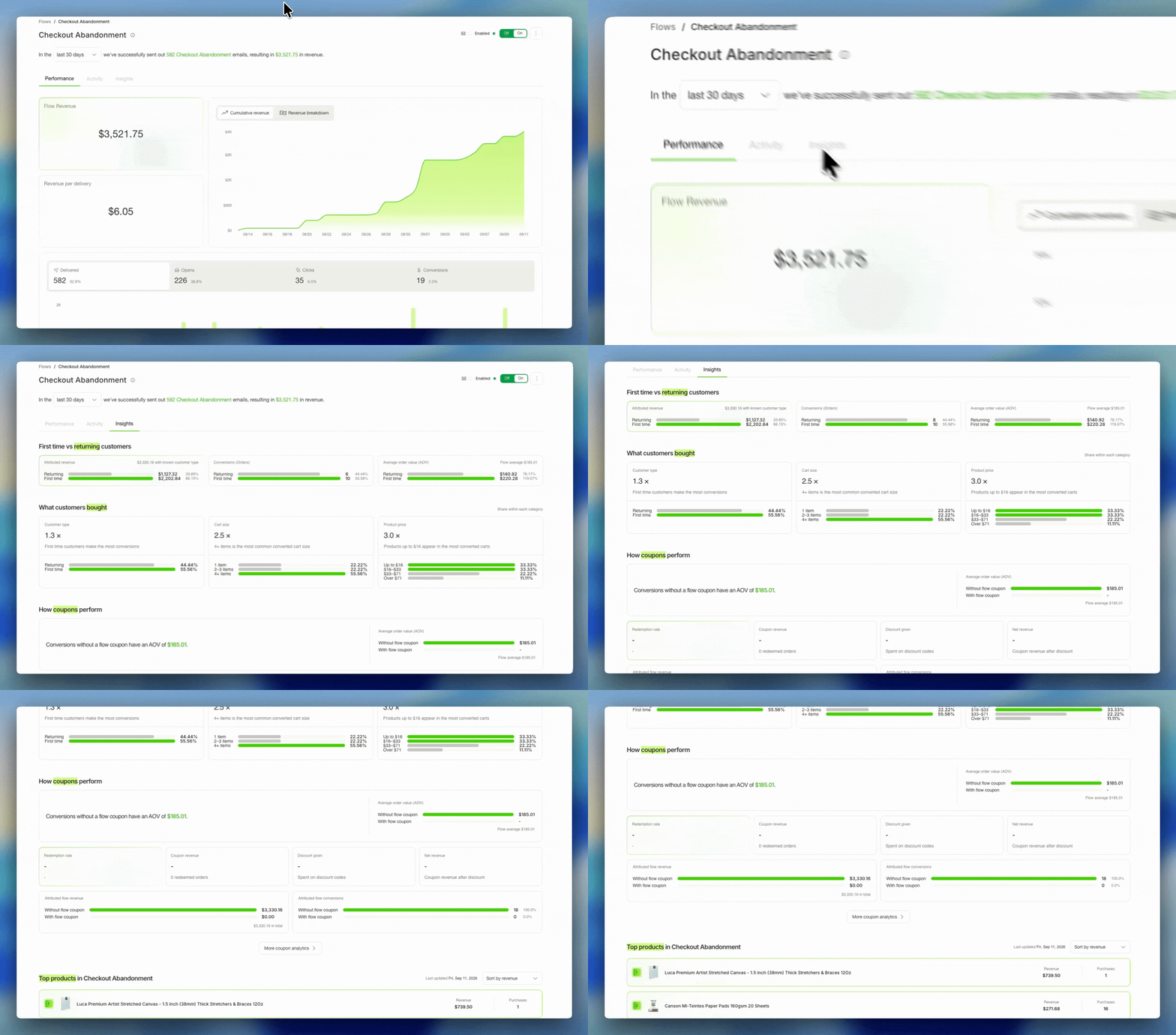
New Insights tab on Abandonment Flows

Flow reporting has always told you how much revenue an abandonment flow recovers. It has not told you much about who it recovers, or what they buy. Insights fills that gap. You can see whether the flow brings back first time or returning customers, whether the coupon is helping or costing you margin, and which products and price points drive the recovered revenue.

Checkout, Cart and Browse Abandonment flows now have a third tab, Insights, which breaks down where the flow's conversions come from

Email editor11 Sept 2026

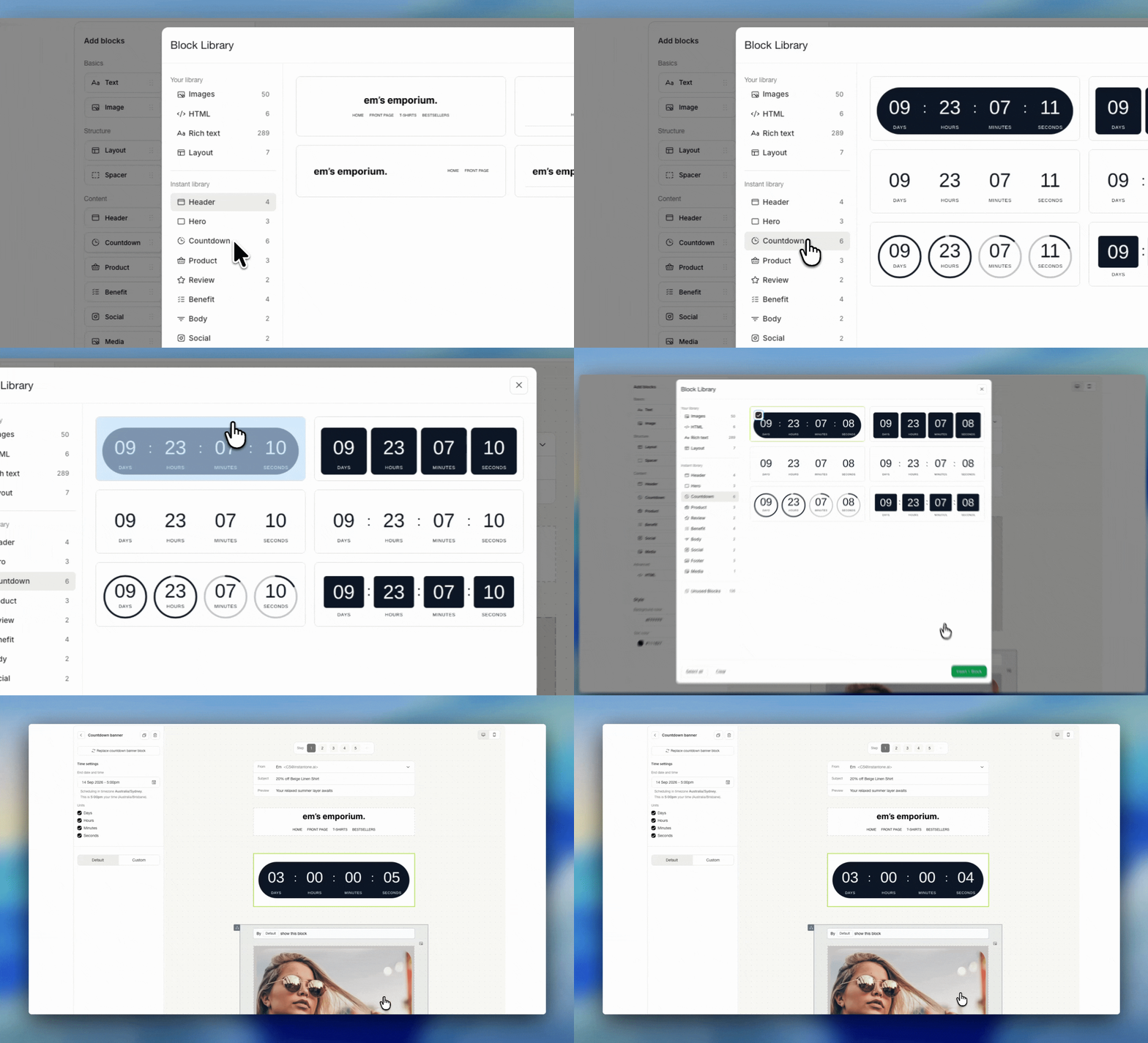
Countdown Timers are now in the block library

Countdown timers add real urgency to a sale or launch email. This release puts them in the block library as a standard block, so adding one takes a couple of clicks and no design work. Because the timer runs live in the inbox, the time shown is always correct at the moment the email is opened. A shopper who opens your sale email on the last day sees the hours left, not the number that was right when you sent it.

A new Countdown category in the block library gives you 6 timer styles to choose from

Flows10 Sept 2026

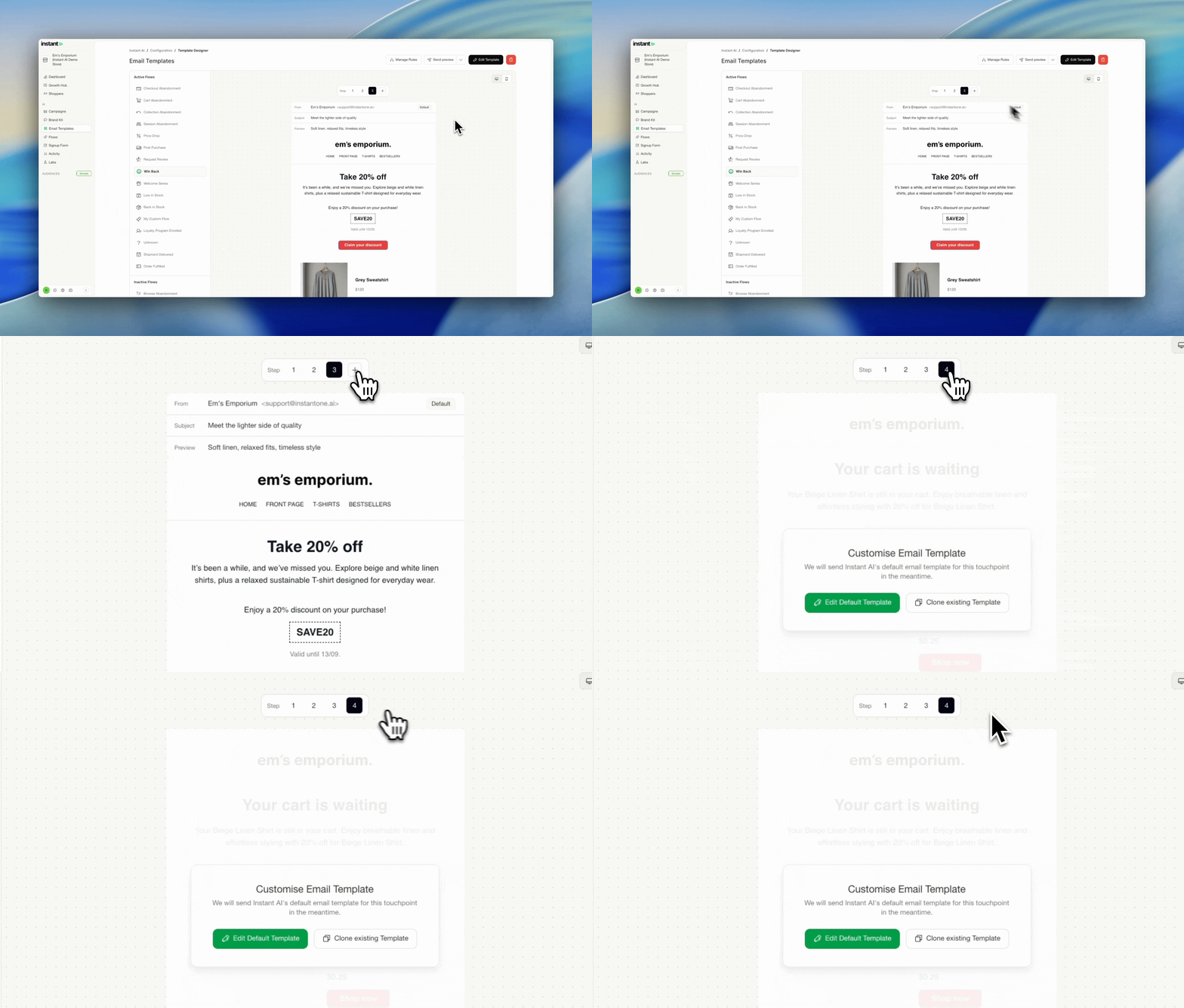
All flows now support up to 10 touchpoints

Instant AI still sets the number of emails in each flow for you, based on what performs. What changes here is the ceiling, not the recommendation. If you have wanted more emails in one particular flow, you no longer have to work around a lower cap on that flow. Every email flow uses the same limit, so a Welcome or an Abandoned Cart sequence can run to 10 touchpoints when that suits your store.

Every email flow now supports up to 10 touchpoints, up from a maximum of 5

Email editor10 Sept 2026

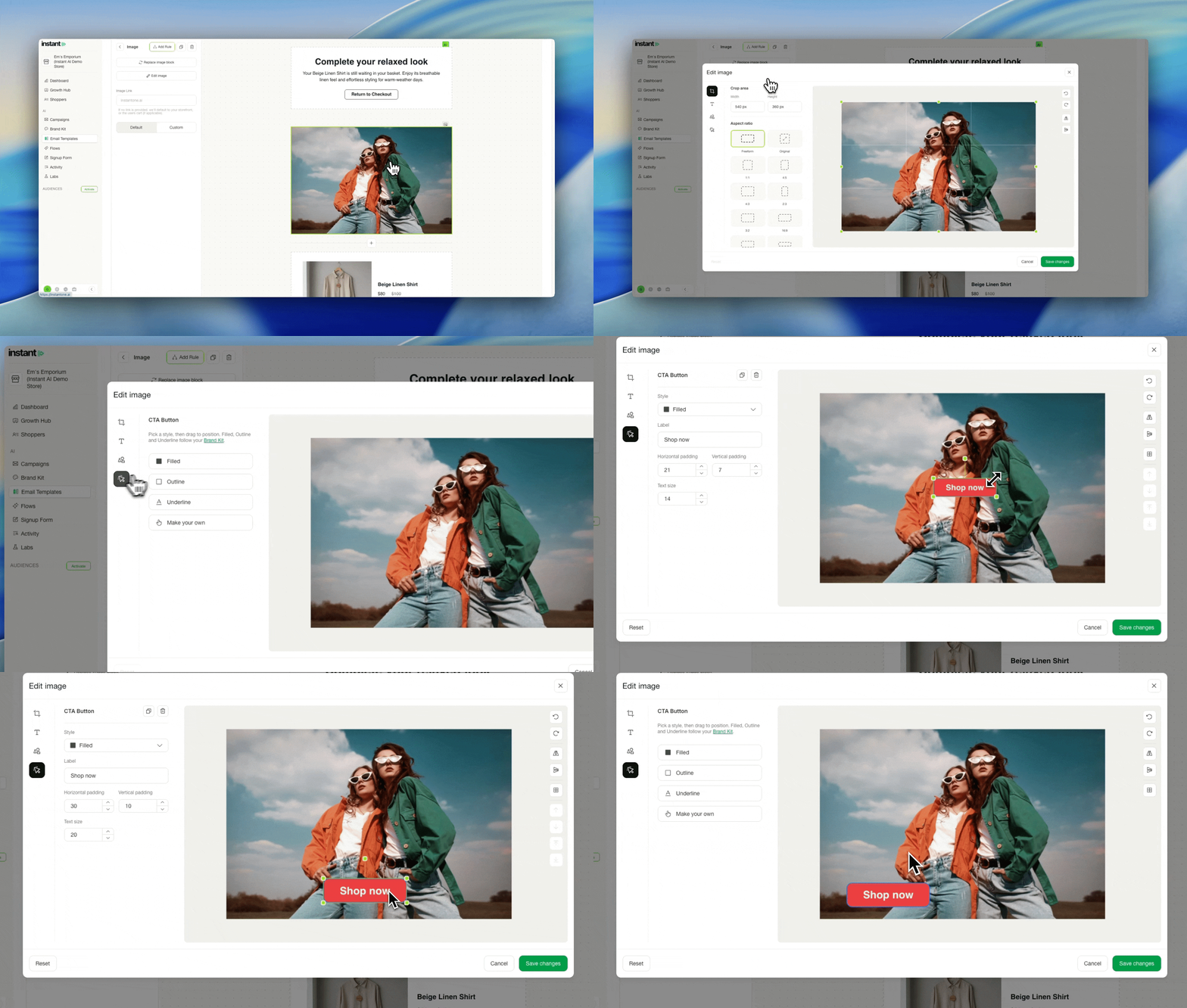
CTAs can now be overlaid on images

This follows text over images. The image editor already handled cropping and editable text, and the CTA was the last piece of a hero image that still had to be built somewhere else. Every CTA style in your brand kit is available in the editor, so a button placed over an image matches the rest of your email with no setup. Pick Custom when one image needs something different.

Editing an image now includes a CTA option, so you can place a button over any image

Emails3 Sept 2026

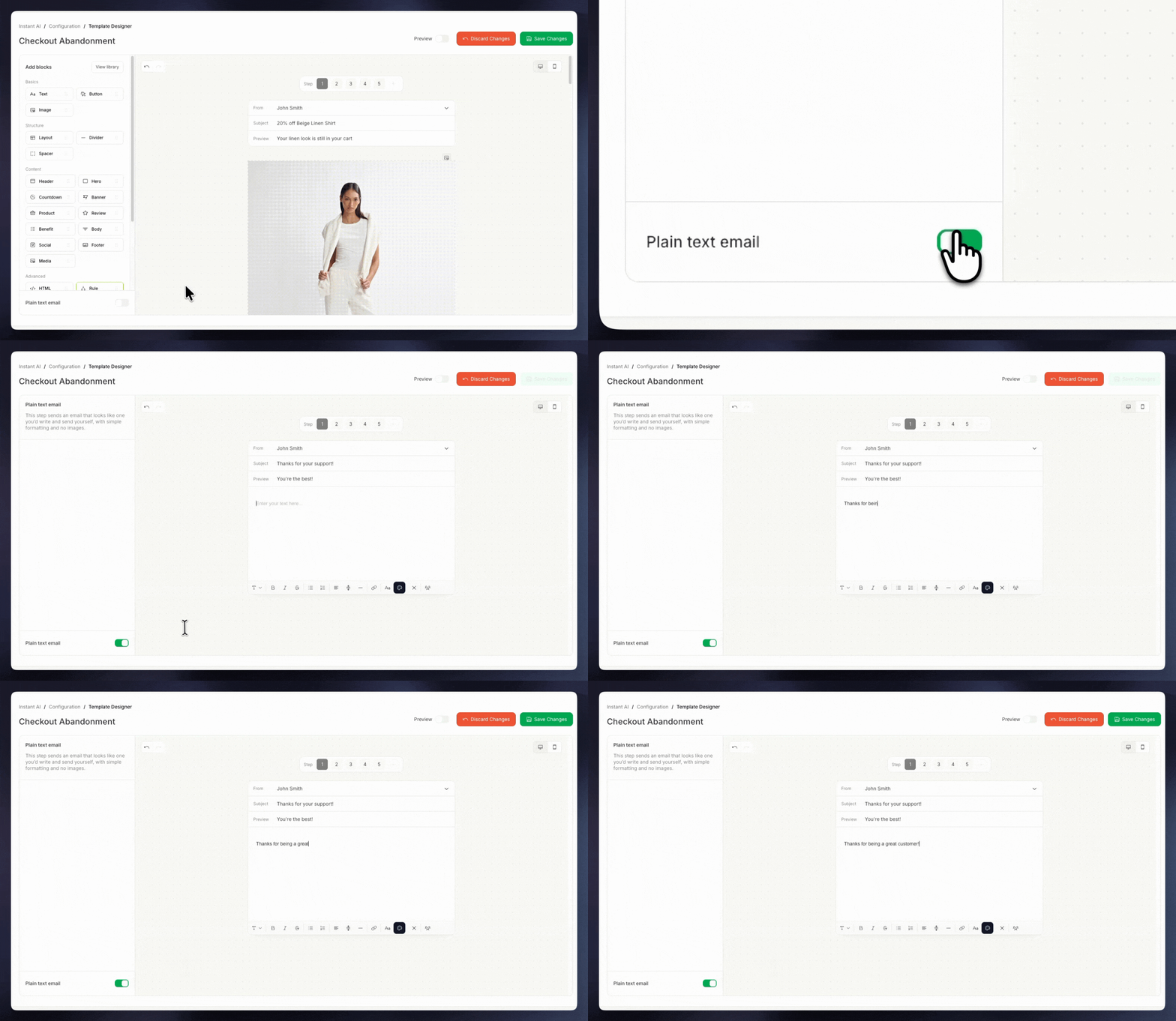
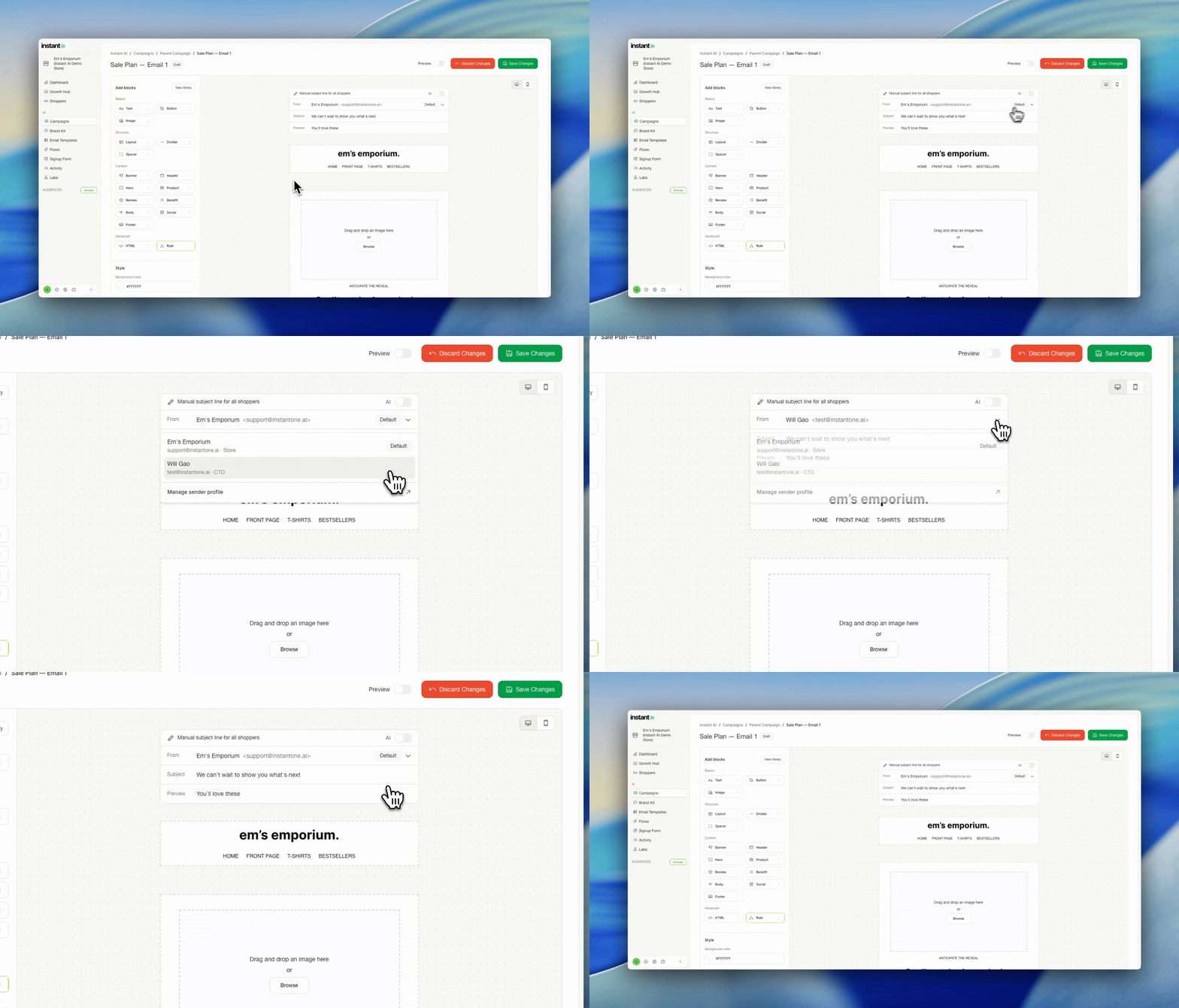
Send emails from a different email address

Most of your email should come from the same place, and it still does unless you change it. This is for the emails that should not: a campaign written by your founder, or a plain text step in a flow that reads like a note from a person rather than from a brand. A plain text email lands differently when it actually arrives from your founder, and a message asking whether someone needs help with their order works better coming from support than from your marketing address.

A new From section when you edit any email lets you pick which address that email sends from, in both campaigns and flows

Flows3 Sept 2026

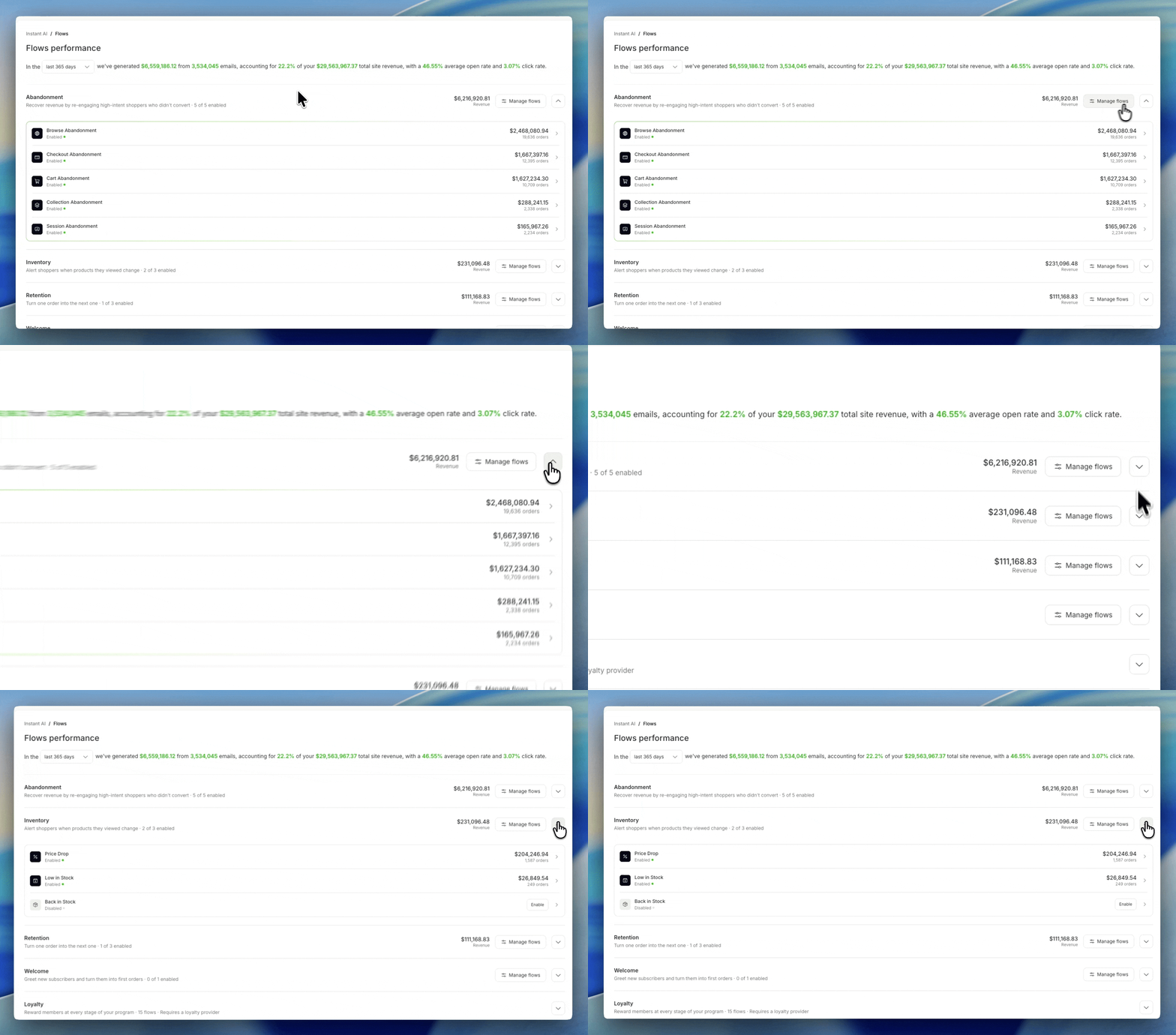
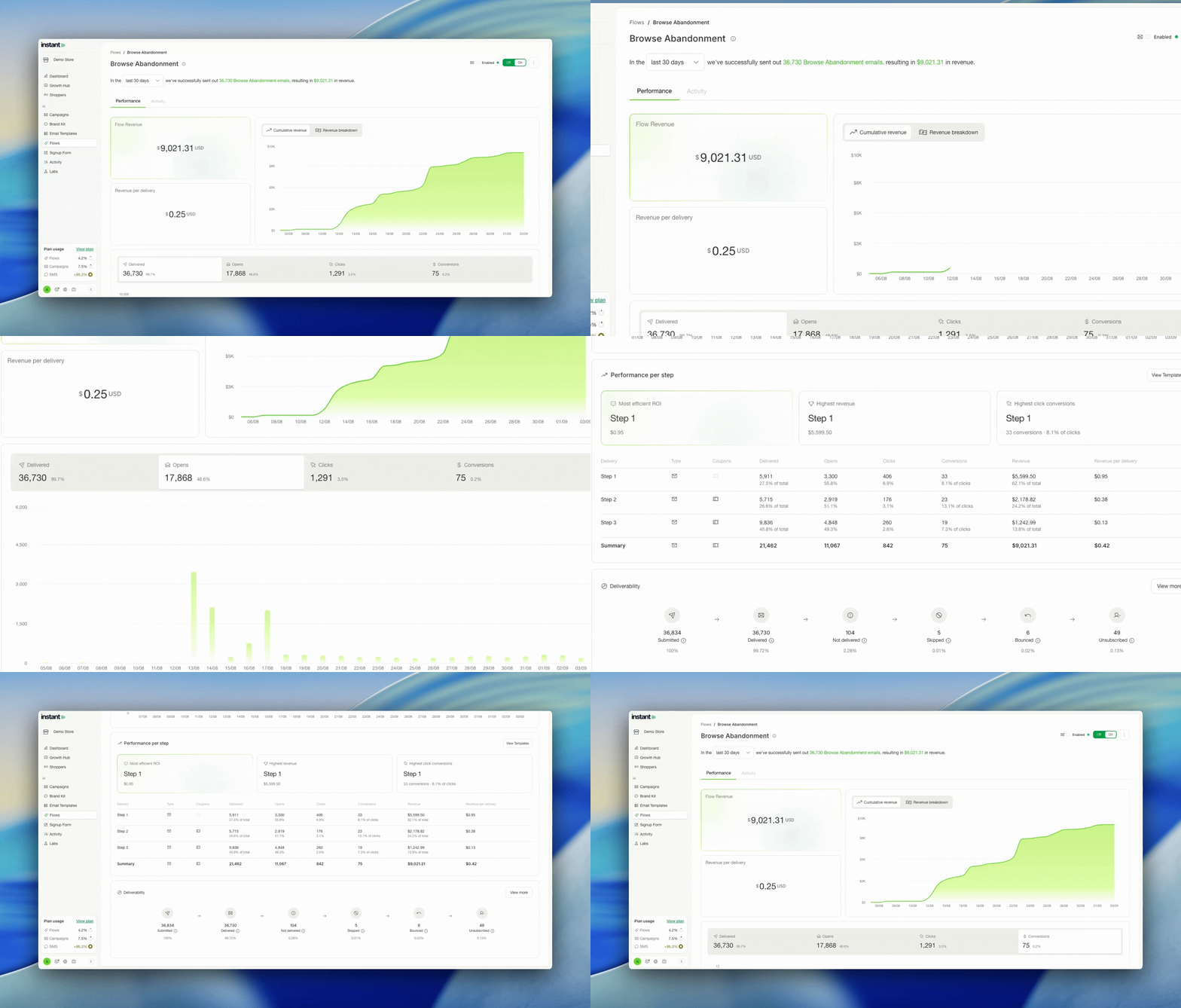
Improved flow analytics with per step analytics

The numbers behind your flows were already being tracked. What changes here is the order they appear in, so the revenue a flow brought in reads first and the detail sits under it. The per step card is the new part. You can see which touchpoint is doing the work and what share of the results comes from each step, so a flow that looks healthy overall no longer hides a step that is not pulling its weight.

Flow pages have a new structure, with revenue data at the top, then interactions, then the per step breakdown

Email editor3 Sept 2026

Add text over images

Text added to an image is usually baked into the file the moment it is saved. From that point a small copy change means rebuilding the image from scratch, and the original layers are gone. Instant keeps the text as its own layer for as long as the image exists. A price, a date or an offer can be corrected weeks later in a few seconds, without going back to a design tool.

The image editor now lets you layer text over any image

Flows2 Sept 2026

SMS Welcome flows are now live

This is a standalone flow rather than SMS added to your existing Welcome flow. It has its own trigger, its own touchpoints and its own copy, and it does not replace or delay the email welcome a shopper is already in. Welcome copy is the most bespoke content most brands write, so this flow hands you the message to write rather than generating it. A shopper who signs up with a phone number and no email address now gets a welcome as well, where before they heard nothing from you until your next SMS campaign.

A dedicated SMS Welcome flow texts a shopper as soon as they subscribe to SMS

August 2026

19 updates
Brand Kit28 Aug 2026

Brand kit now supports a mobile only logo

Plenty of brands have a long horizontal logo that works well on desktop and gets squeezed on a phone, so they keep a shorter mobile version alongside it. Until now the way to handle that in an email was a custom header with your own logic for what to show and hide on mobile. You can keep using Instant’s standard header instead, and just upload the second file.

Upload a second logo that is specific to mobile

Flows28 Aug 2026

Request Review Flows now support custom triggers

Set your own waiting period between an order being fulfilled and the review request sending

Deliverability21 Aug 2026

Bounce Reasons now on the deliverability dashboard

This page reports on work that is already happening. Instant manages a large number of deliverability scenarios for you automatically, and the recommendations page already tells you when something needs your attention. Reasons adds the evidence behind that. It shows why the bounces you still see are happening, and once the detail is visible most accounts look a lot healthier than expected.

A new Reasons tab on the deliverability dashboard breaks down every reason your emails bounce

Campaigns21 Aug 2026

Skip Campaign emails if someone converts

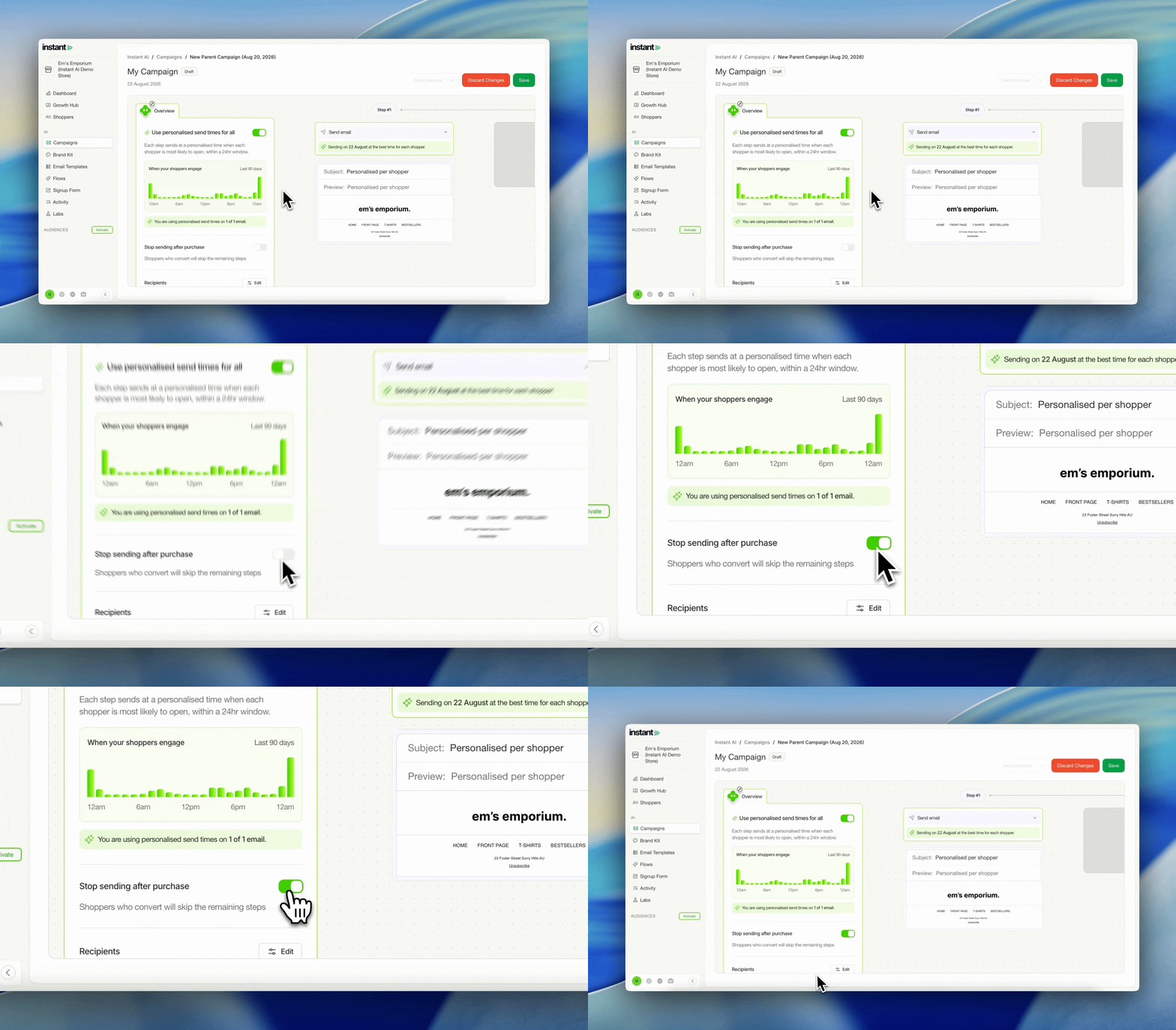
Campaigns and flows have always worked differently. A flow reacts to what a shopper does, and a campaign sends to everyone on the list. That gap mattered most when you were using a multi-step campaign to nurture shoppers towards a purchase, because someone who bought from the first email kept getting the rest. You can now put that logic on a campaign. Build three or four emails to warm shoppers up, and anyone who converts along the way stops receiving the remaining sends.

Turn on a toggle to stop sending the remaining emails in a multi-step campaign to shoppers who convert

Email editor20 Aug 2026

Crop images from the email editor

Small image changes used to mean leaving Instant. You would open the image in another tool, crop it, save it, then come back and upload it again. Now the edit happens where you are already working, so the back and forth goes away for the small adjustments that come up while you are building an email.

Crop and edit your images from inside the email editor

Email editor19 Aug 2026

Send a preview email to someone else

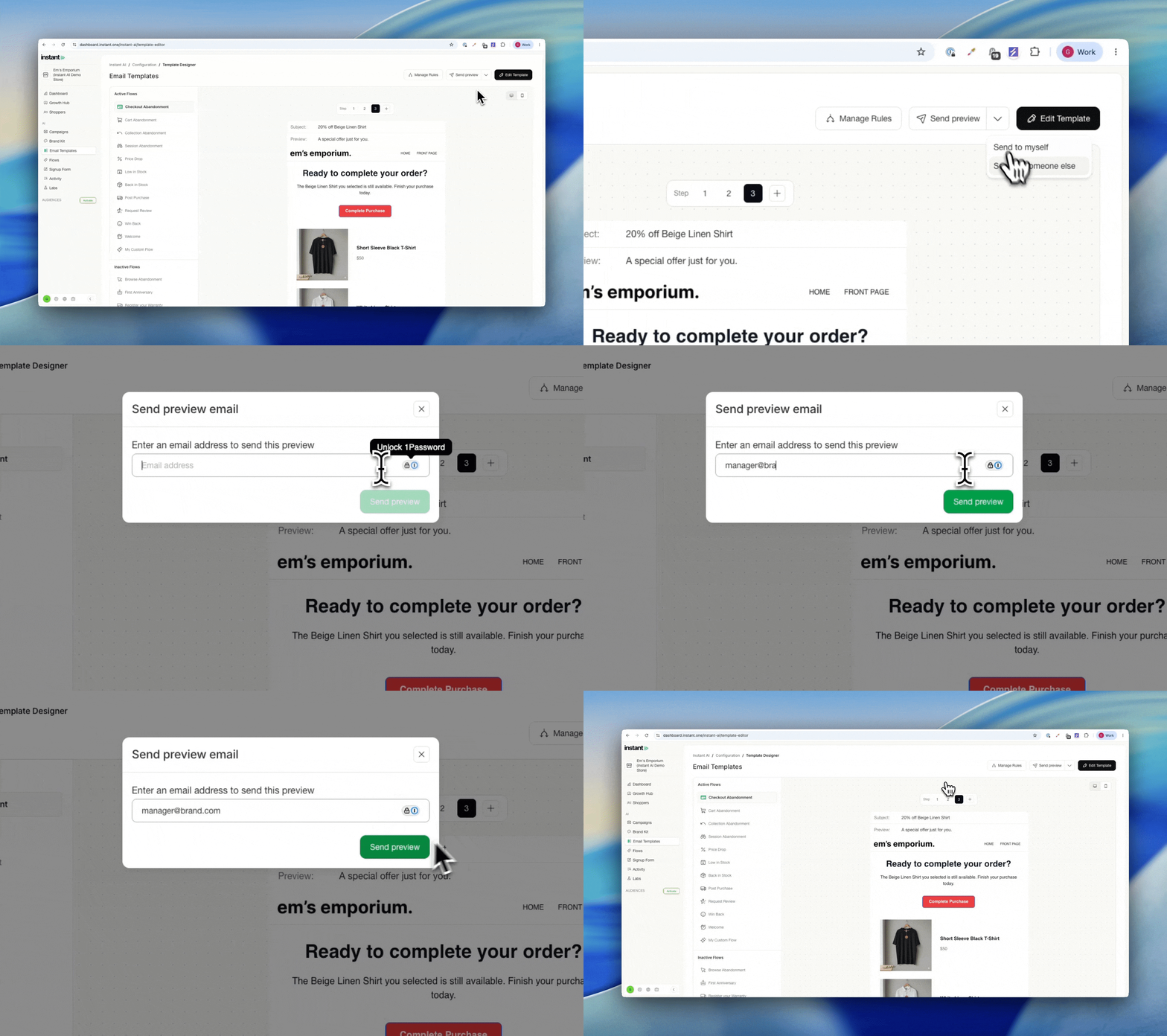
If you work with an agency or review emails across a large team, the person signing off on the copy is often not the person logged into Instant. You can now send the preview straight to whoever needs to see it, without forwarding it on yourself.

Send a preview email to an address other than your own

Flows18 Aug 2026

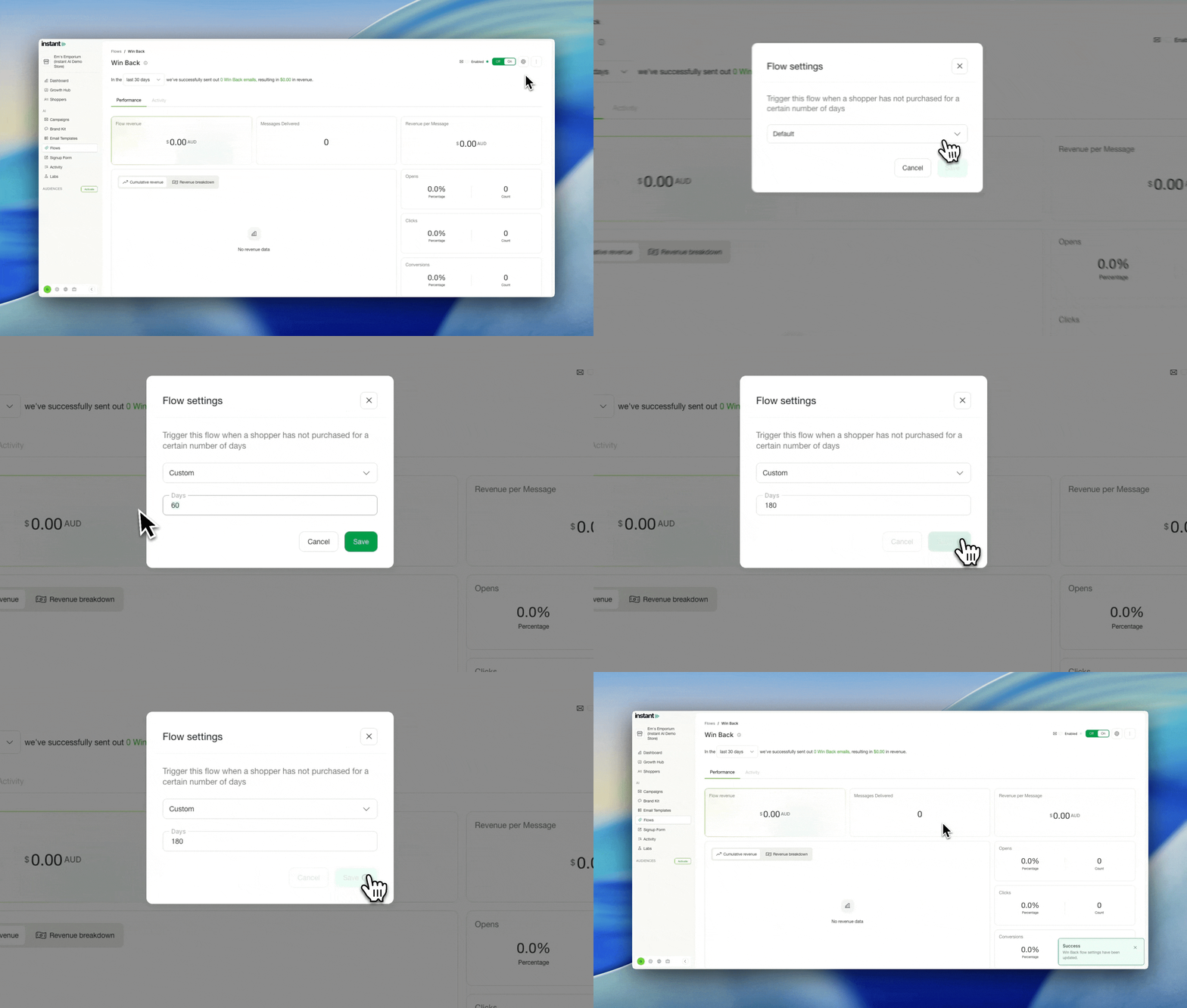
Winback periods are now adjustable beyond 90 days

A 90 day winback window is best practice for most stores, and it gets the strongest results across our merchant base. But some categories have much longer natural repurchase cycles, and a 90 day cap meant the flow would reach shoppers well before they were ready to buy again. You can now match the winback period to how your customers actually shop, whether that is four months, six months, or longer.

Set a winback period to any number of days, not just up to a 90 day maximum

Campaigns14 Aug 2026

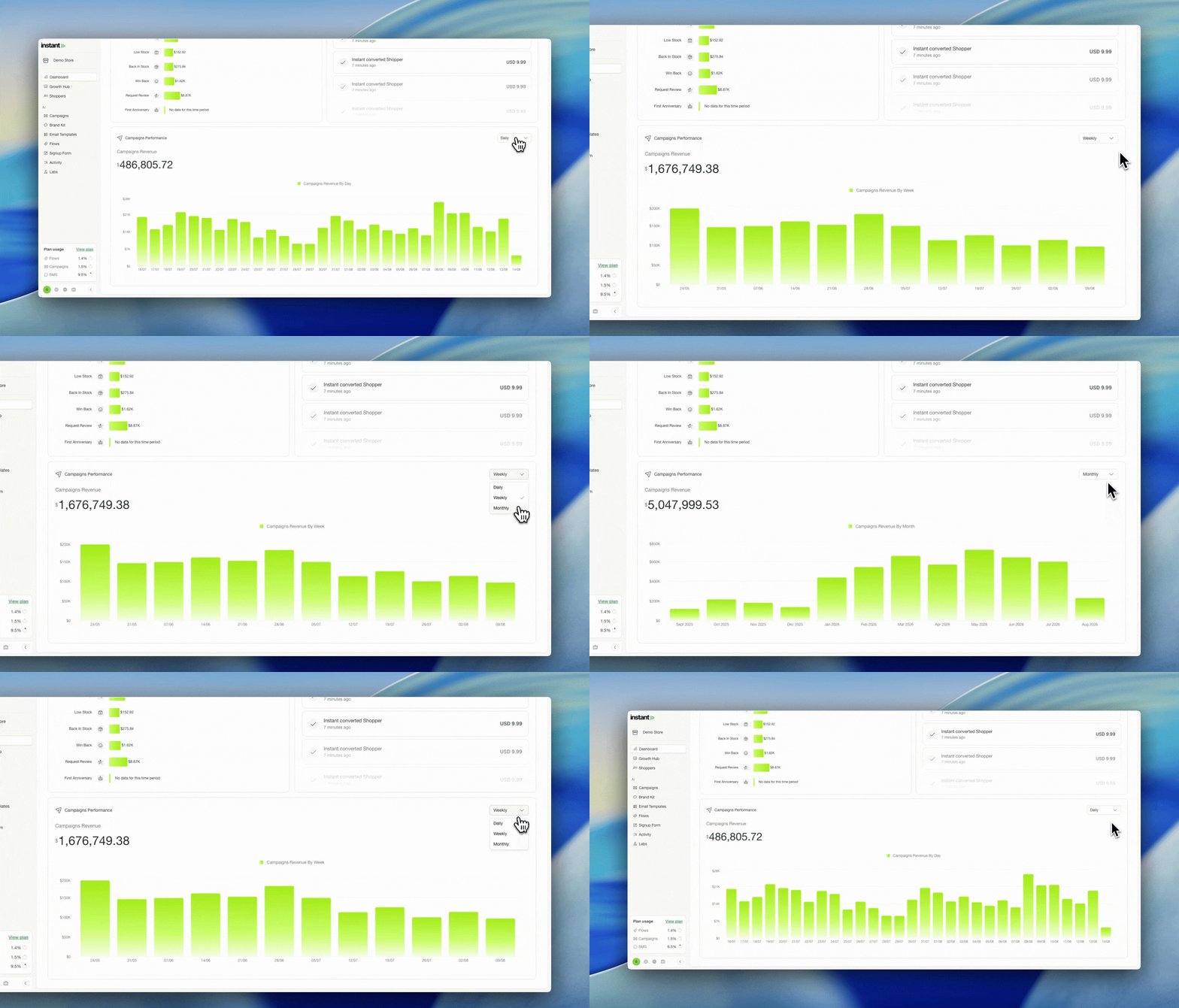
Daily, weekly and monthly view for the campaign revenue graph

The campaign revenue graph can now be filtered by daily, weekly or monthly, instead of showing the last 7 days only

Flows14 Aug 2026

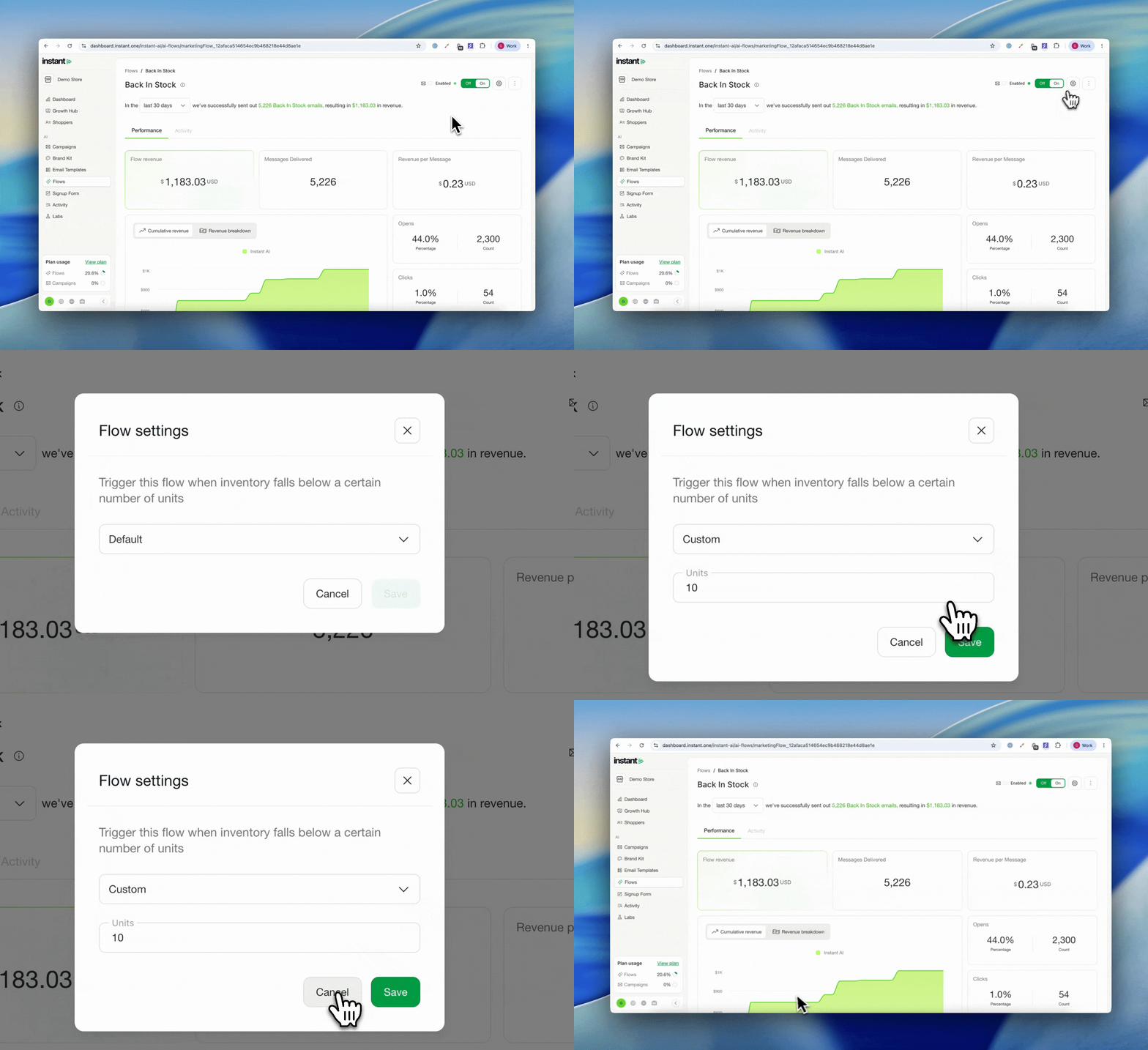
Configurable stock thresholds for Back in Stock and Low in Stock

Set your own unit threshold for the Back in Stock and Low in Stock flows, instead of the fixed 10 units

Email editor12 Aug 2026

Upload images up to 10MB

Upload images up to 10MB

Shoppers11 Aug 2026

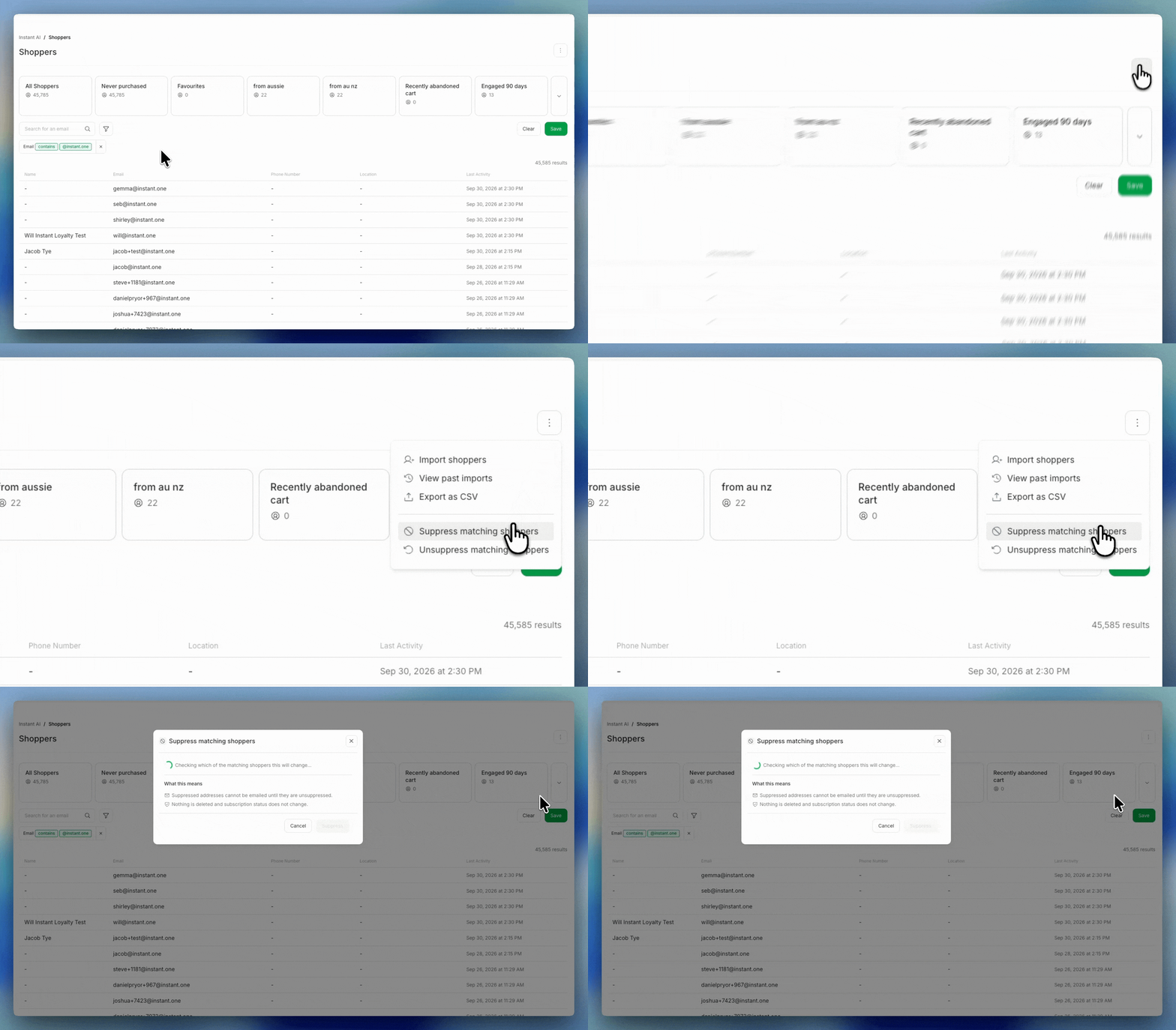
Upload customers to a custom list

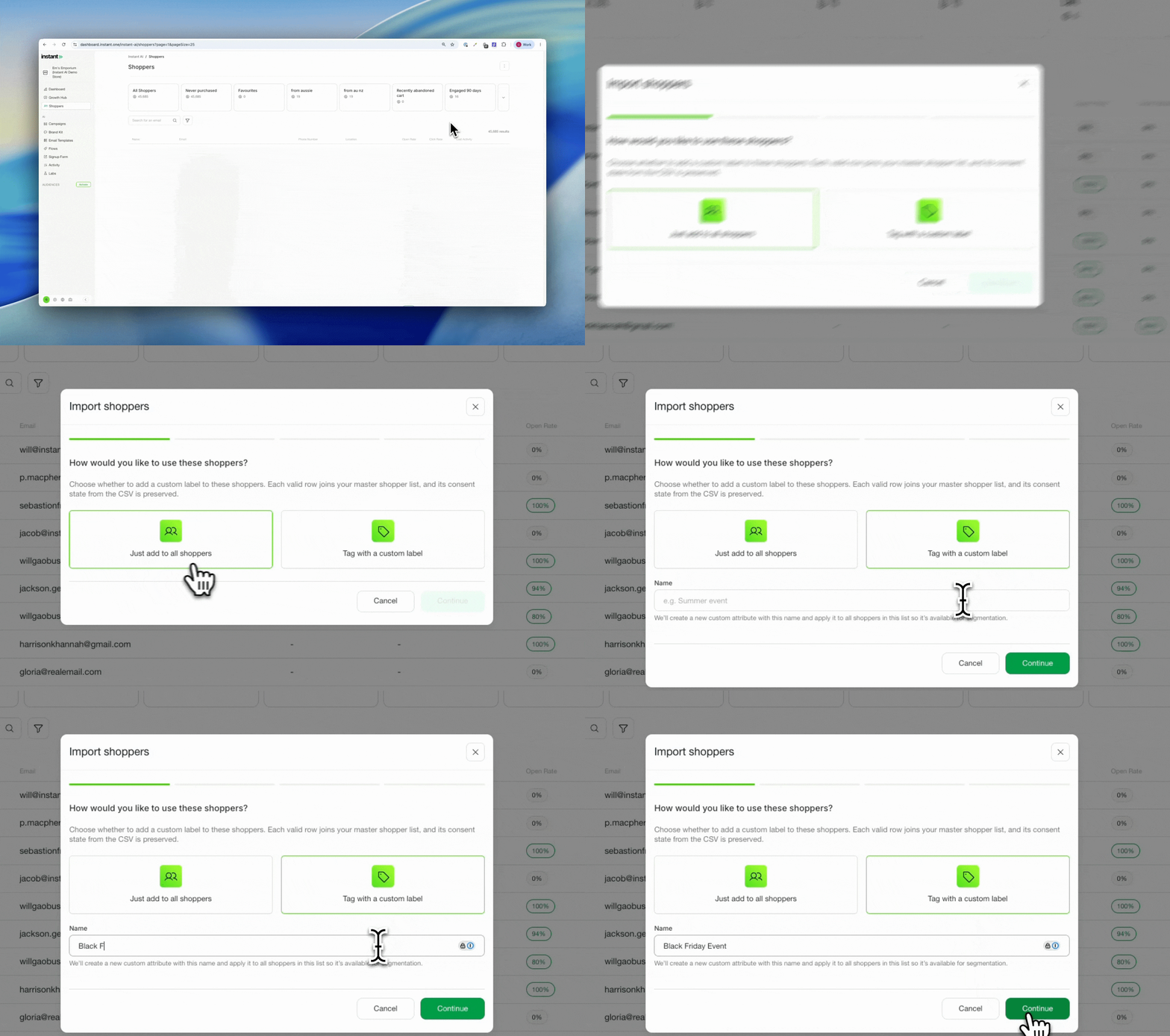
Often you run an event and walk away with a CSV of sign-up emails, then need to email everyone on that list. You can upload them as new shoppers so they are in your campaigns, but it can be hard to know where you met them or to keep that group of people associated together. Tagging them on upload solves that. The shoppers go into your master list as normal, and the shared attribute lets you find the exact group again in segmentation and target them in a campaign. Previously you could do this with Shopify tags, which is still a great, closely integrated approach. This is an alternative for when you think in terms of "lists", while staying integrated with everything in segmentation.

When uploading a new list of shoppers, you can now choose to tag everyone in that upload with a shared attribute

Integrations10 Aug 2026

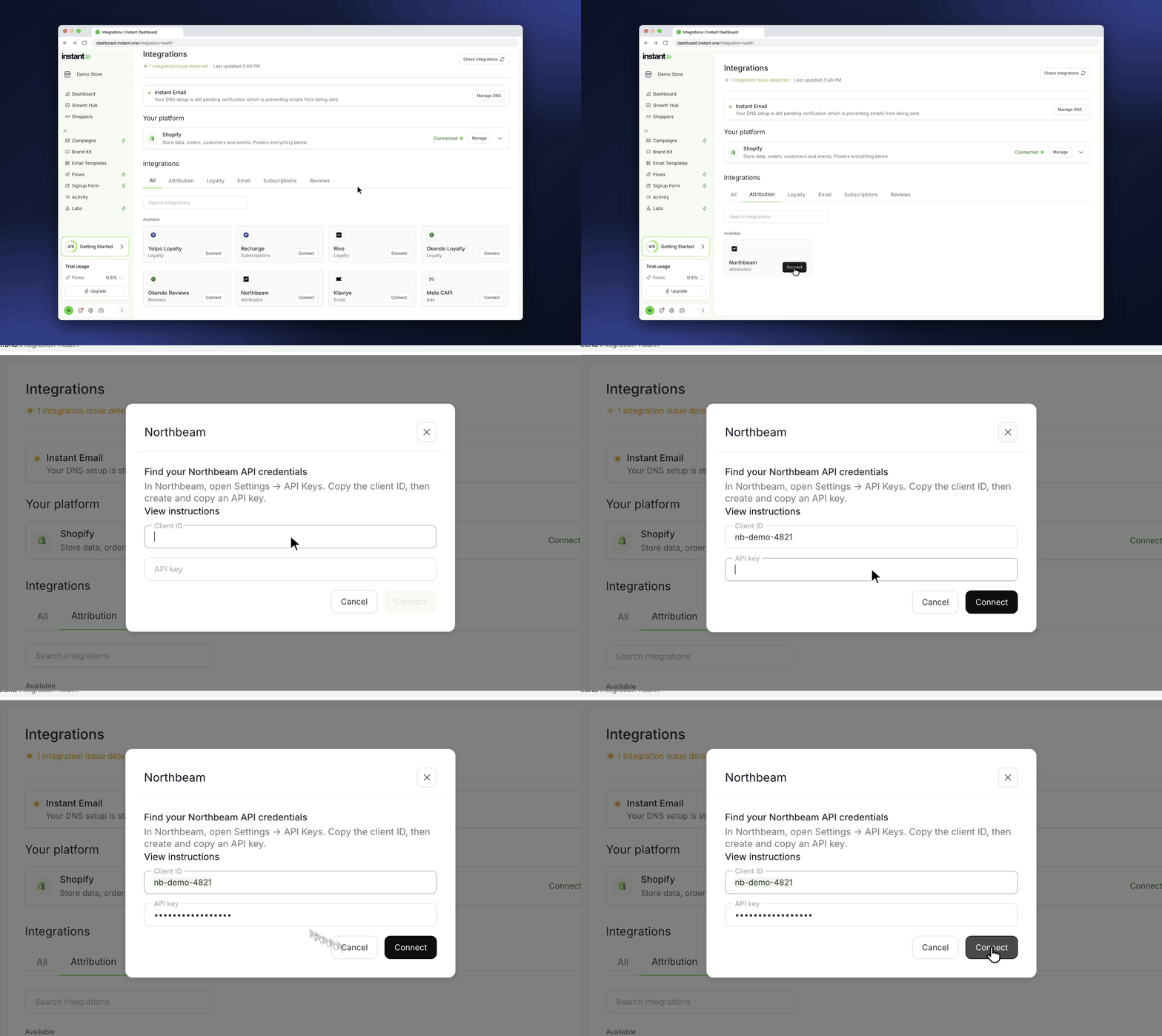
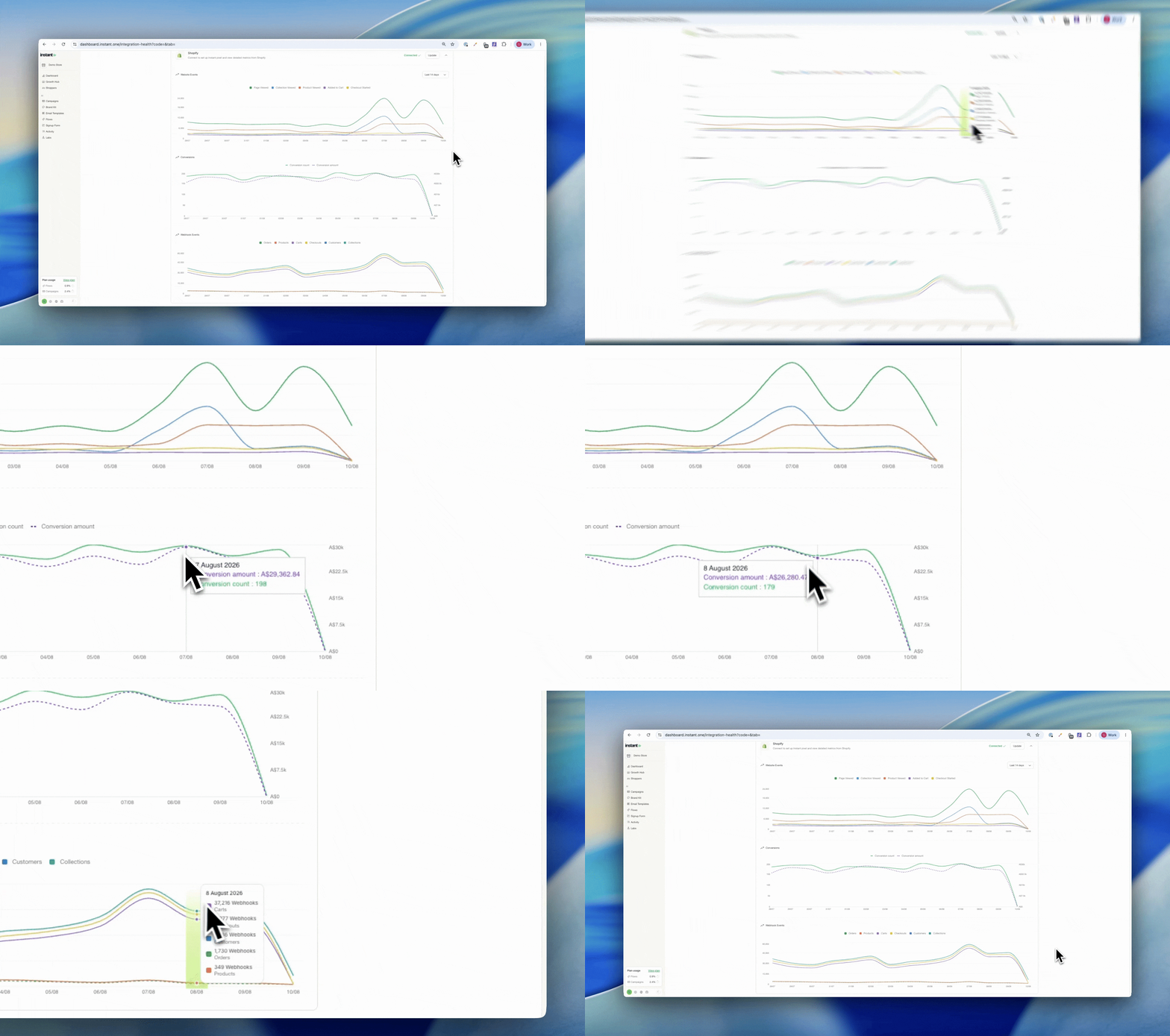
More visibility over Shopify integration events

See webhook events and conversion events directly on your Shopify integration page

Segmentation10 Aug 2026

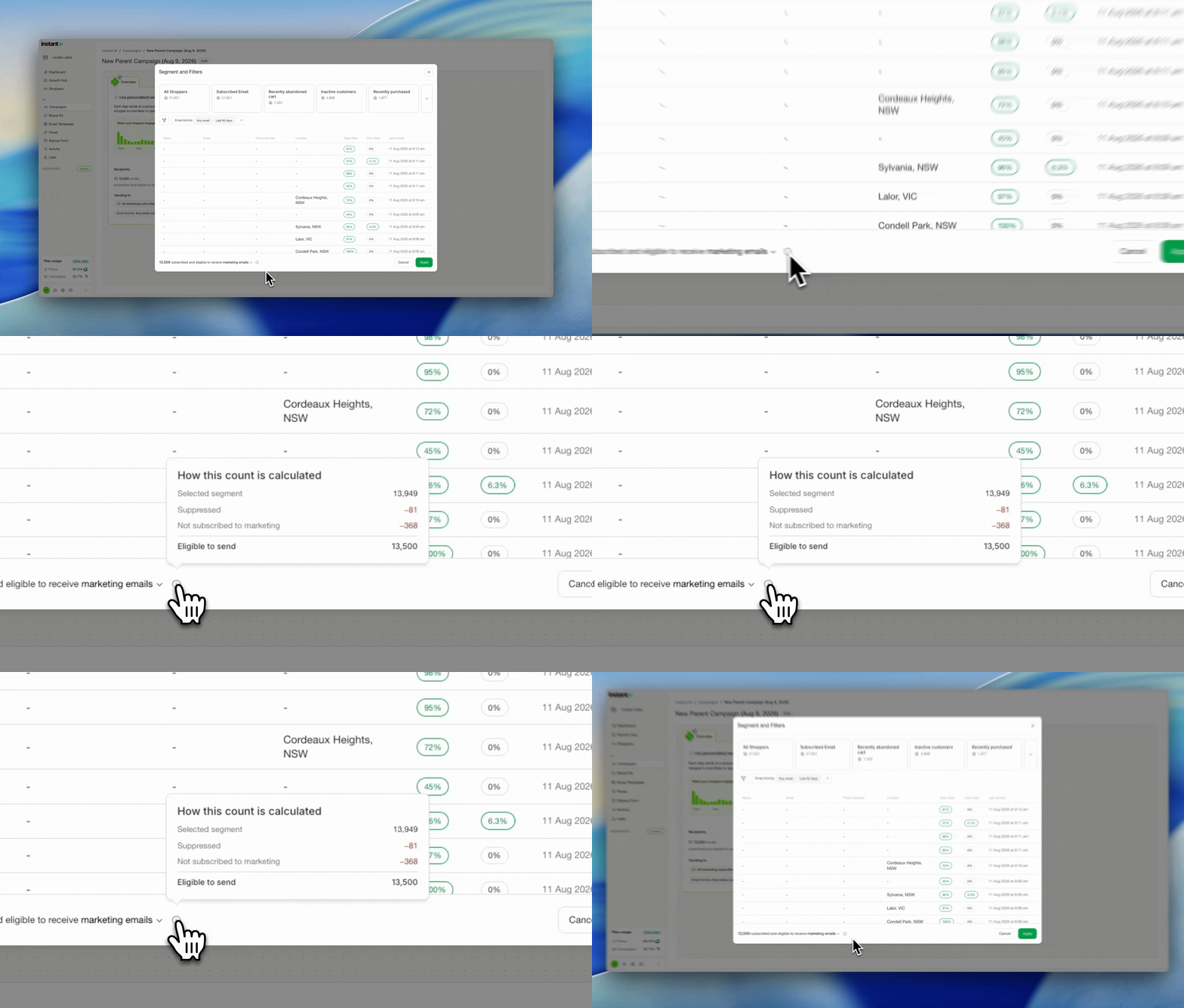
Improved breakdown of segment count

Your total email list and the number you can actually send a campaign to are often different, and it is not always obvious why. The usual reason is that suppressed contacts cannot be sent a campaign, so they are removed from the eligible count. Now you can hover over the total and see the full breakdown yourself, so the numbers make sense at a glance without having to ask.

A tooltip now sits next to the total eligible contacts for a campaign, breaking down how that final number is reached

Flows10 Aug 2026

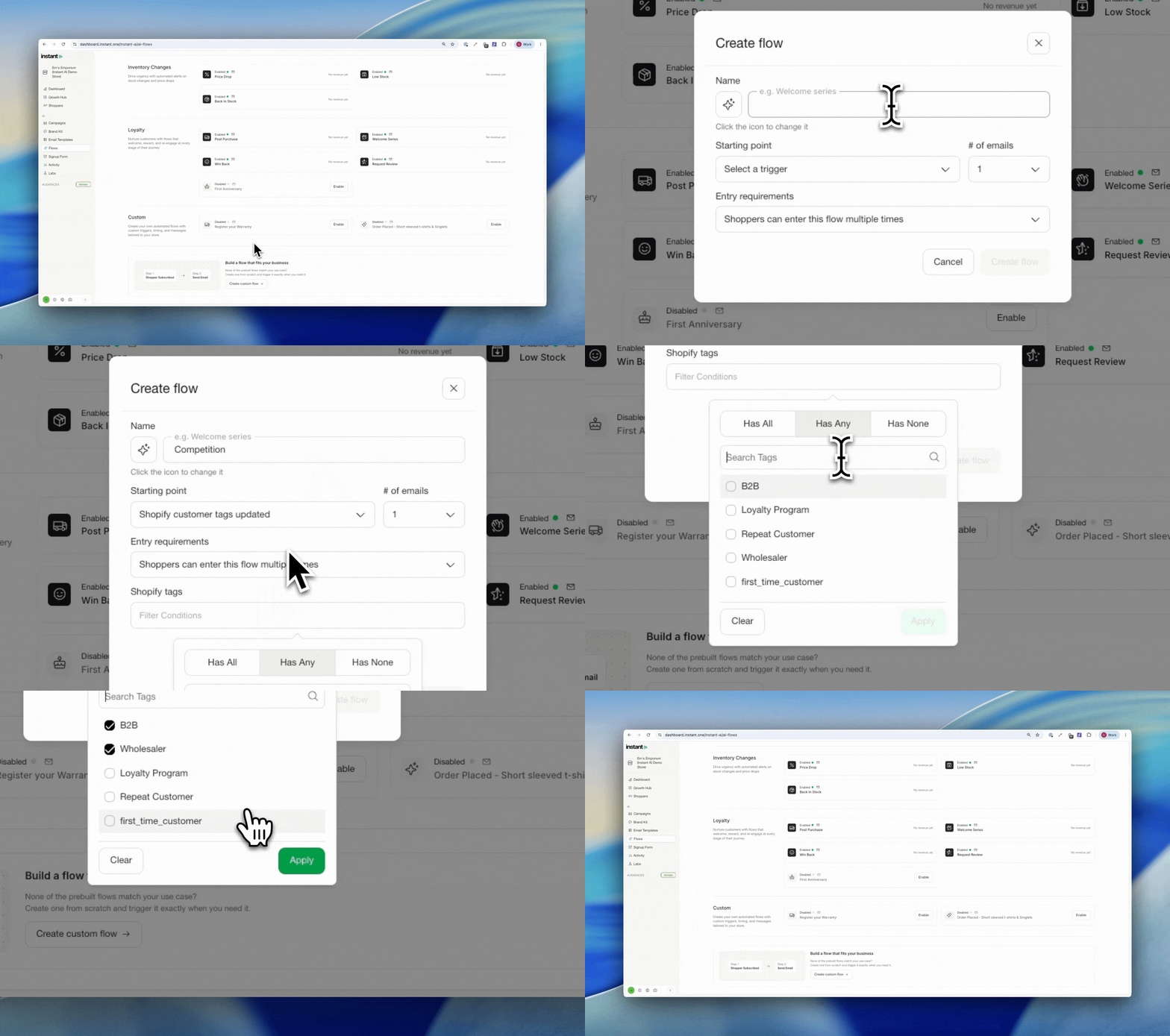
Custom flow improvements

Some brands run a sale, waitlist, or promotion that only needs a flow for a short window, then take it down again. That kind of short-lived, custom automation was hard to manage before. Now you can add a Shopify tag to the right customers and trigger a custom flow off it, for exactly as long as you need it, without touching your core flows. One brand recently shut their store for 48 hours and built a waitlist flow that captured everyone who submitted their email while the store was down. When they reopened, they sent a campaign to everyone carrying that tag: an on-demand announcement to a warm, ready audience of over 1,700 people. The same approach powers competitions too, like tagging 1 in every 100 entrants as a winner and triggering a flow just for them.

Trigger a custom flow automatically when a specific Shopify tag is added to a customer

Segmentation8 Aug 2026

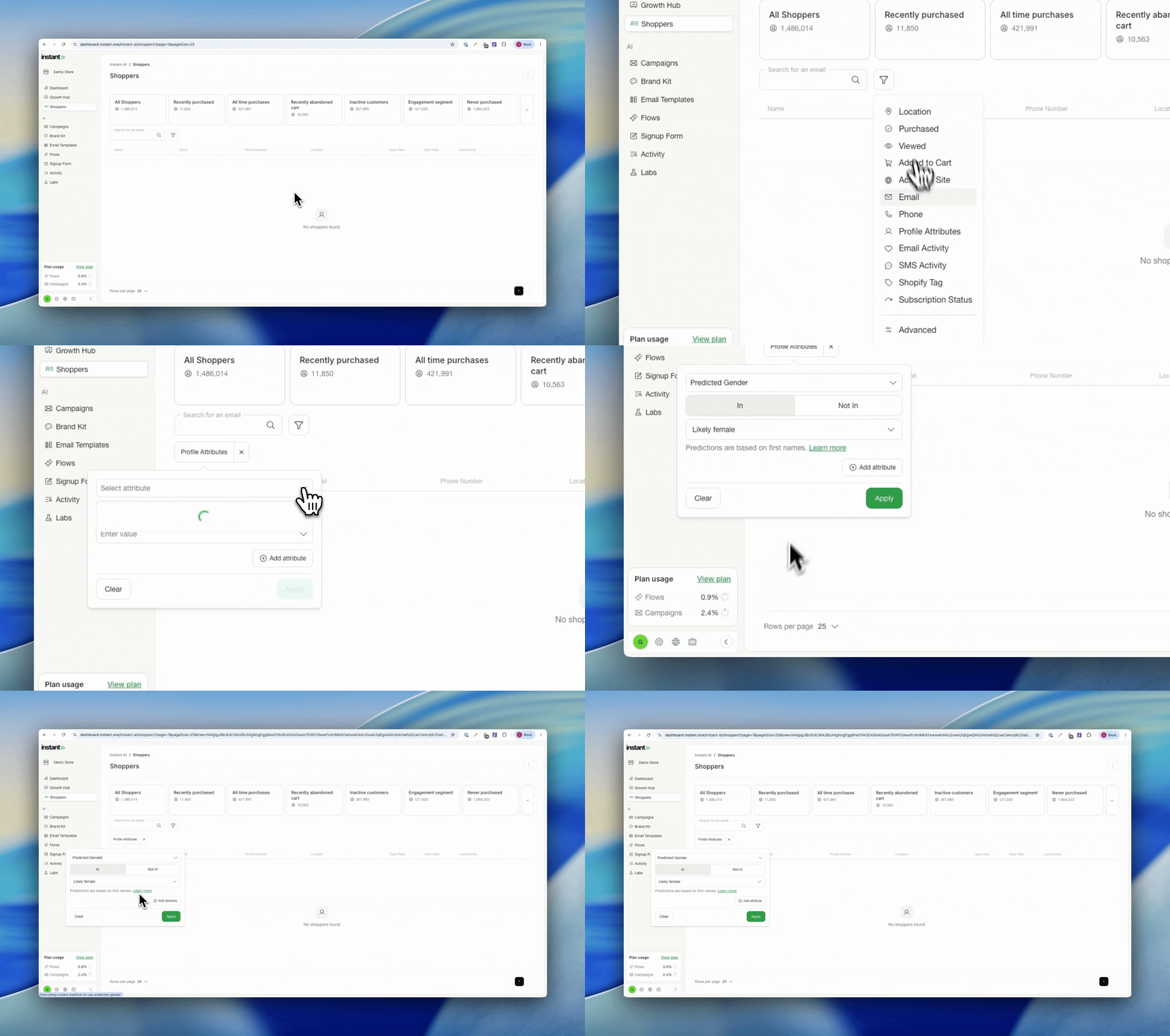
Predicted Gender in segmentation

Predicted gender is based on census data matched to first names, the same approach used elsewhere. It is not relevant for every store, but some verticals rely on it heavily, so if you segment this way today you can now do it inside Instant.

A new filter on a shopper's profile that predicts a shopper's gender based on their first name

Segmentation5 Aug 2026

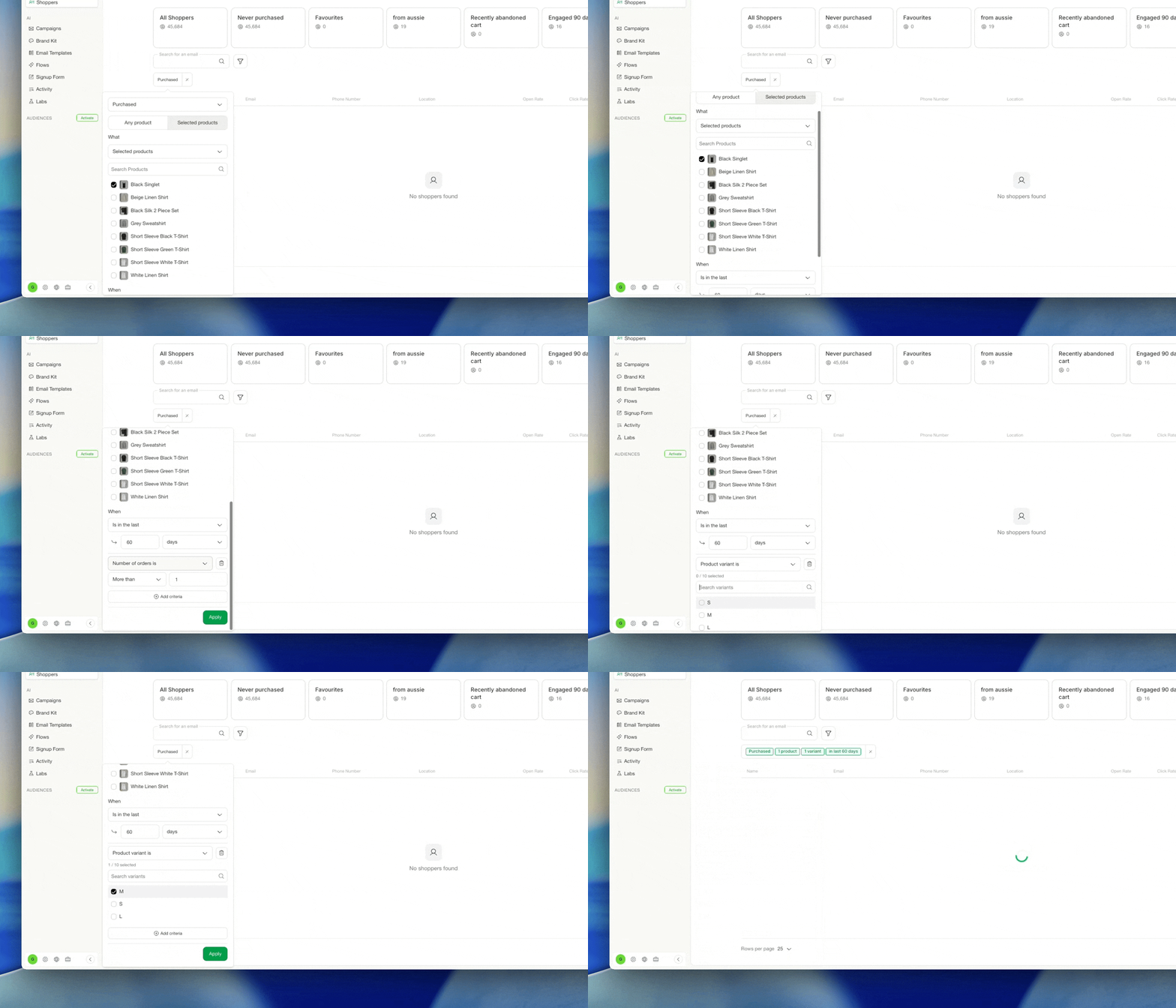
Filter segments by product variant

Build segments based on a specific product variant, not just the product itself

Emails4 Aug 2026

Turn off review stars in emails

Turn off review stars in your emails if you'd rather not show them

Integrations4 Aug 2026

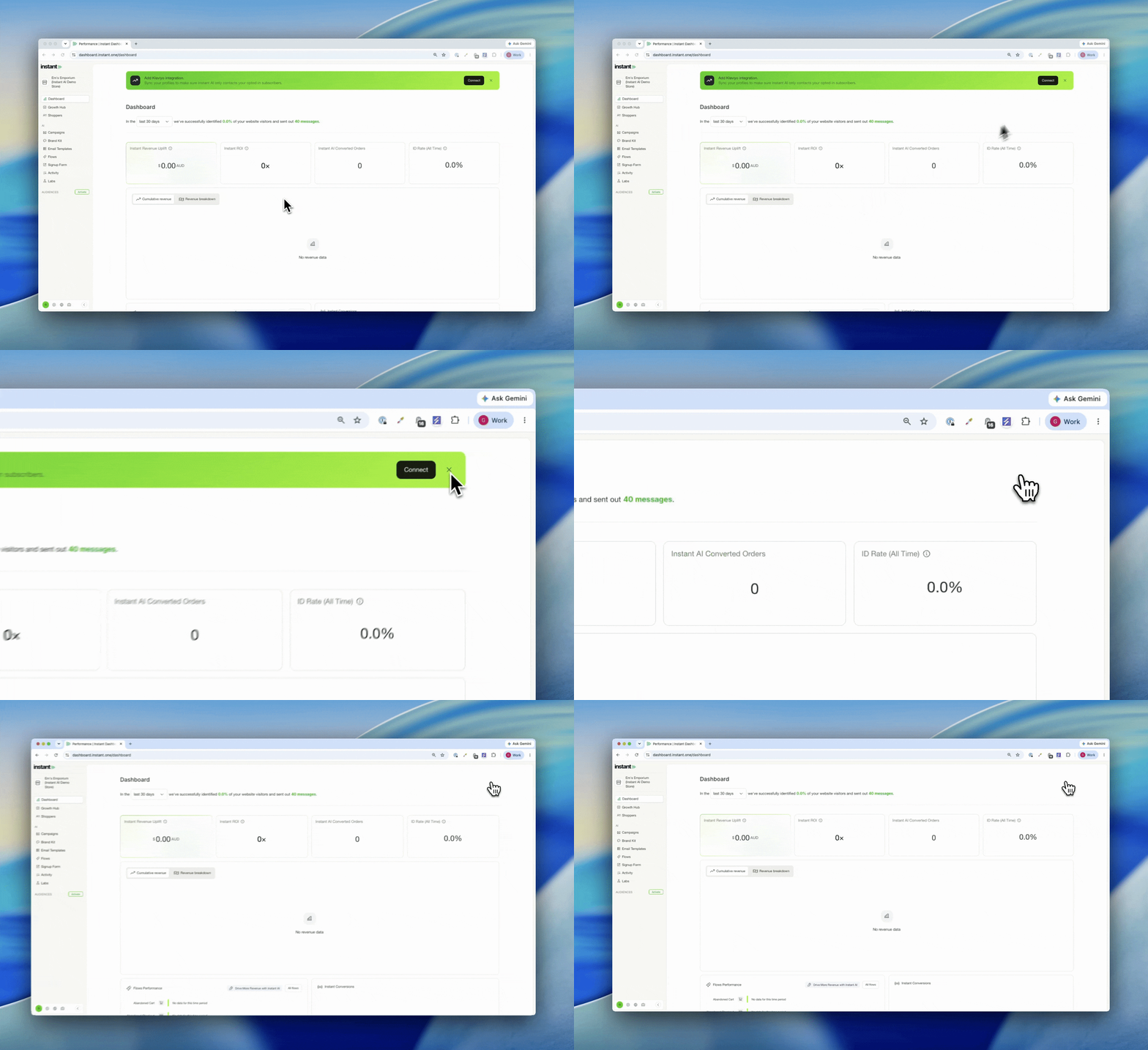
Dismissible Klaviyo integration banner

The banner prompting you to integrate with Klaviyo can now be dismissed

Shoppers3 Aug 2026

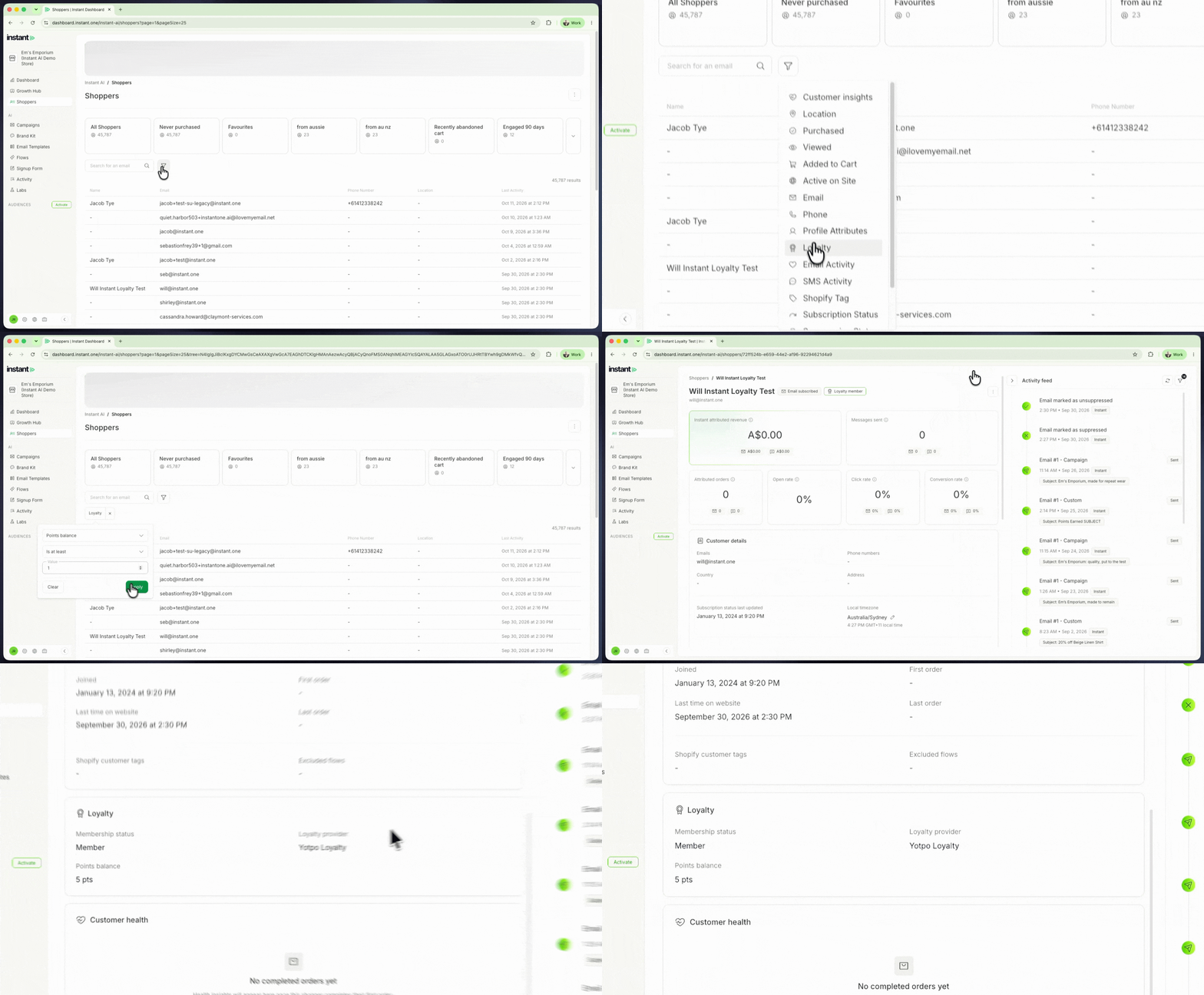
Improved shopper profiles and customer health insights

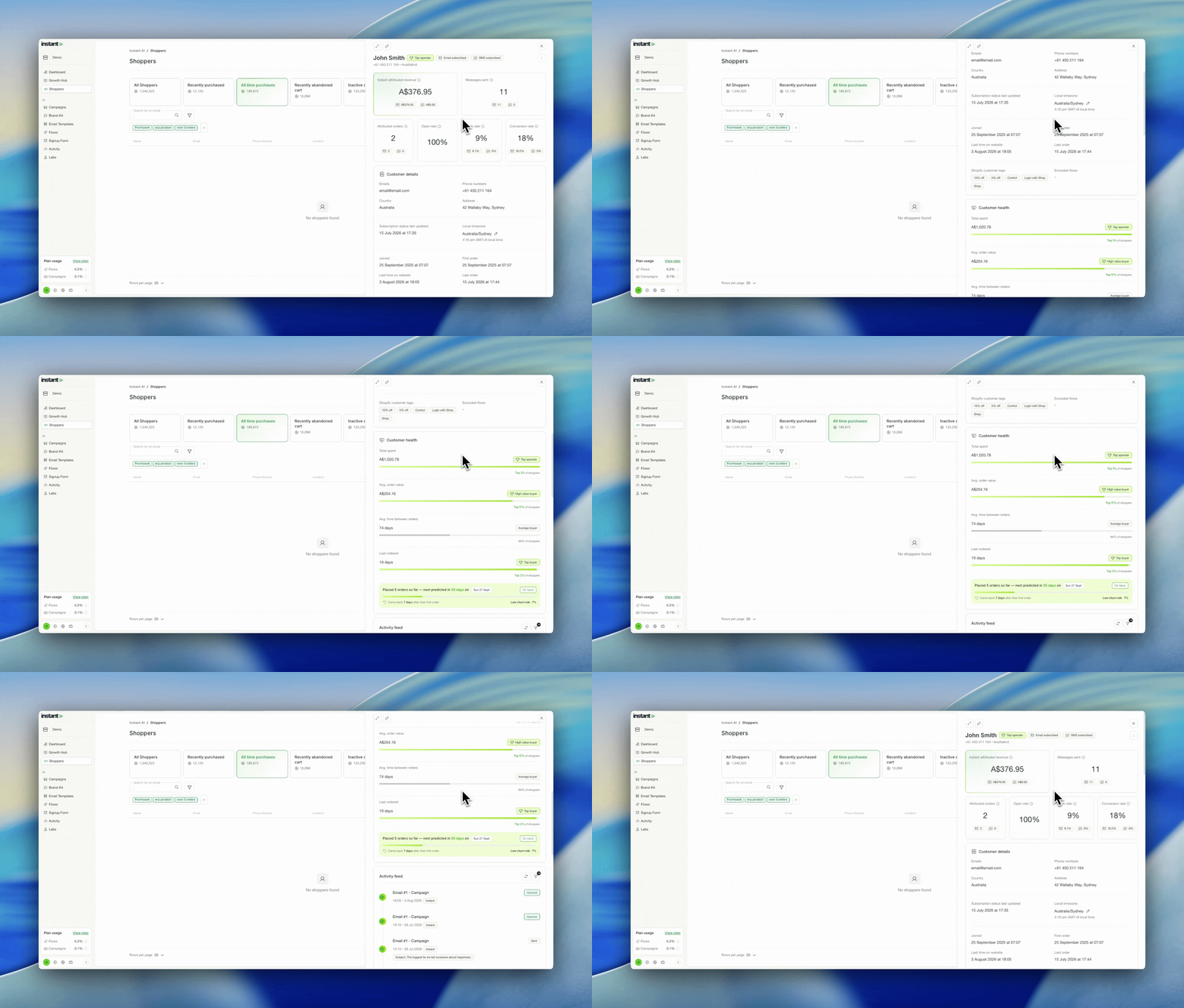
Shopper profiles used to mean a full page redirect every time you wanted a closer look. Now you can open a profile in a side panel, glance at what you need, and carry on where you were. The new customer health insights turn each profile into a quick read on the relationship. See who your highest spenders are, how often they buy, and when they're likely to order next, so you can spot the shoppers worth a targeted follow up.

Shopper profiles now open in a side panel, so you can click a profile and see a preview without leaving the page you're on

July 2026

18 updates
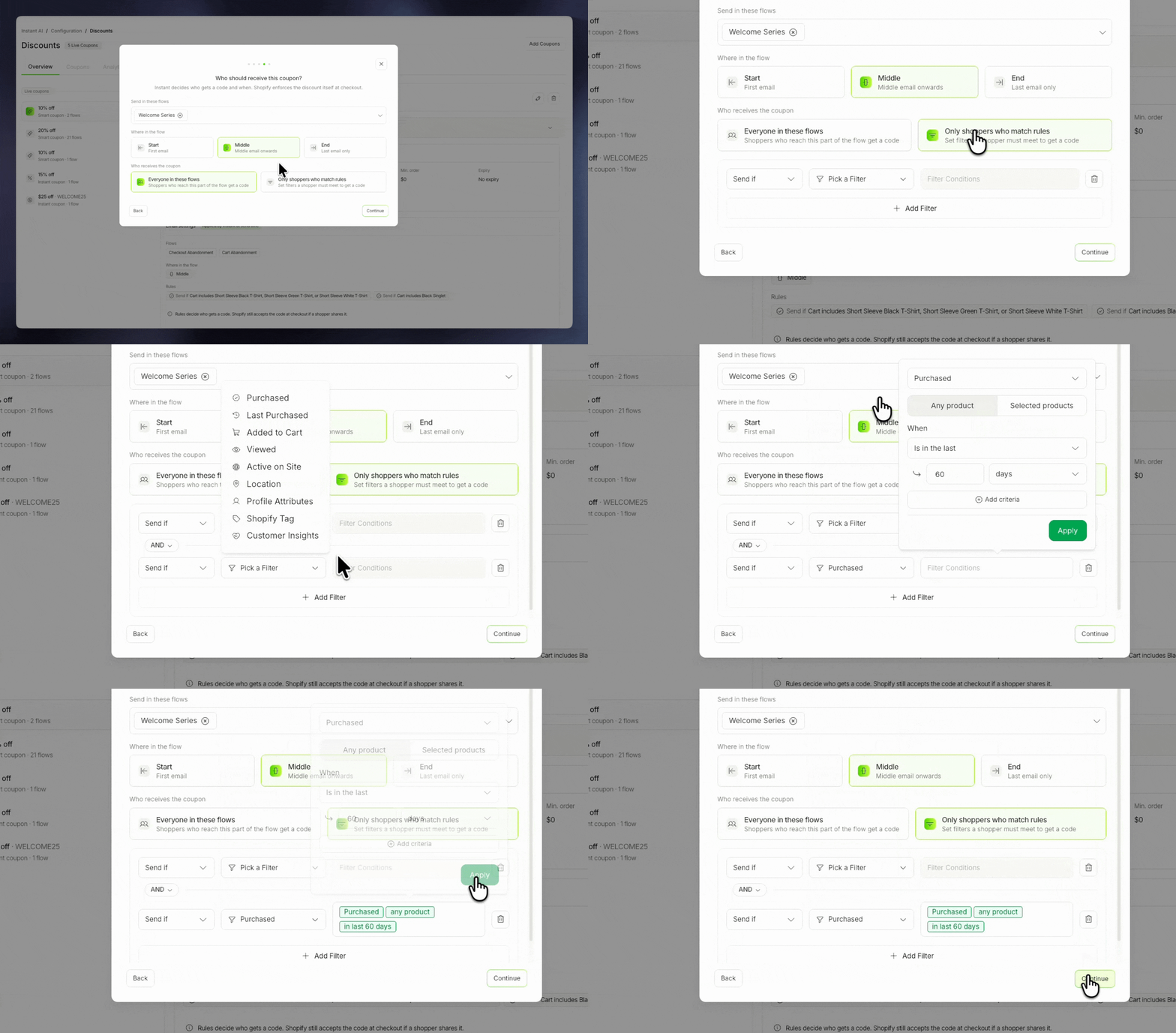
Coupons31 Jul 2026

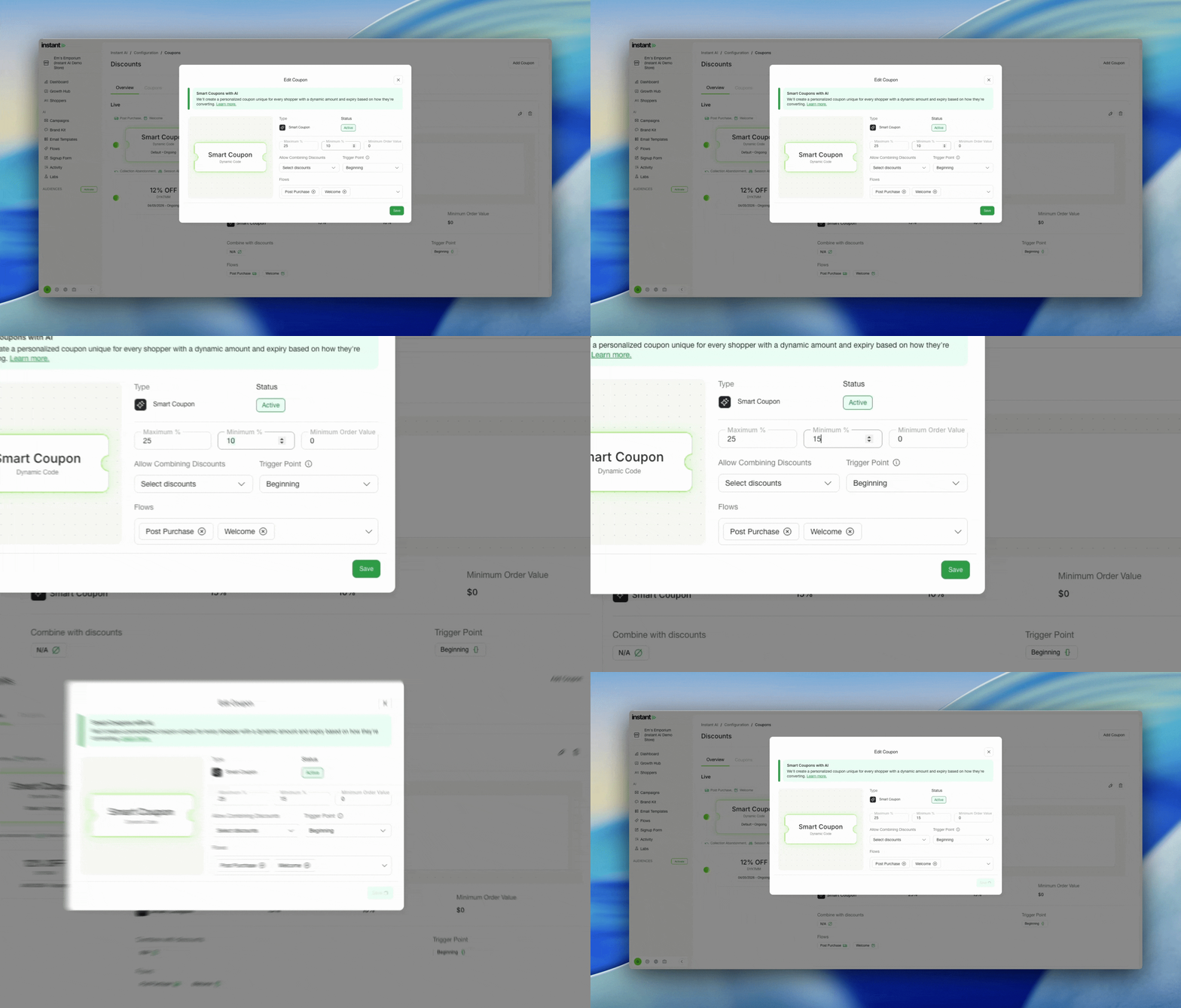
Smart coupons can now have a minimum amount configured

Pick a minimum % discount to offer in your smart rules, as well as a maximum

Segmentation31 Jul 2026

Filter segments by products in a collection

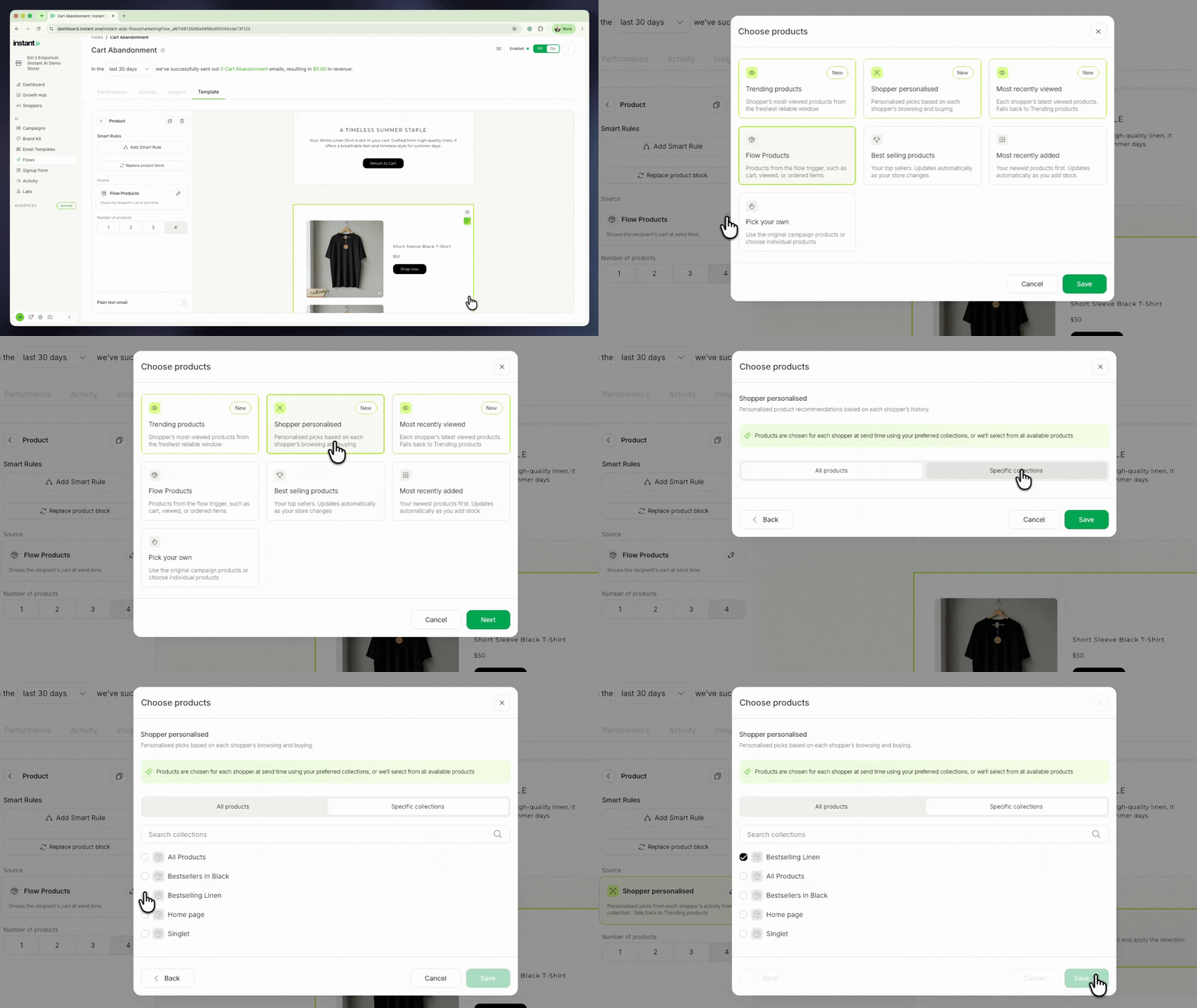
Filter segments based on whether a shopper has purchased a product inside a collection

Email editor30 Jul 2026

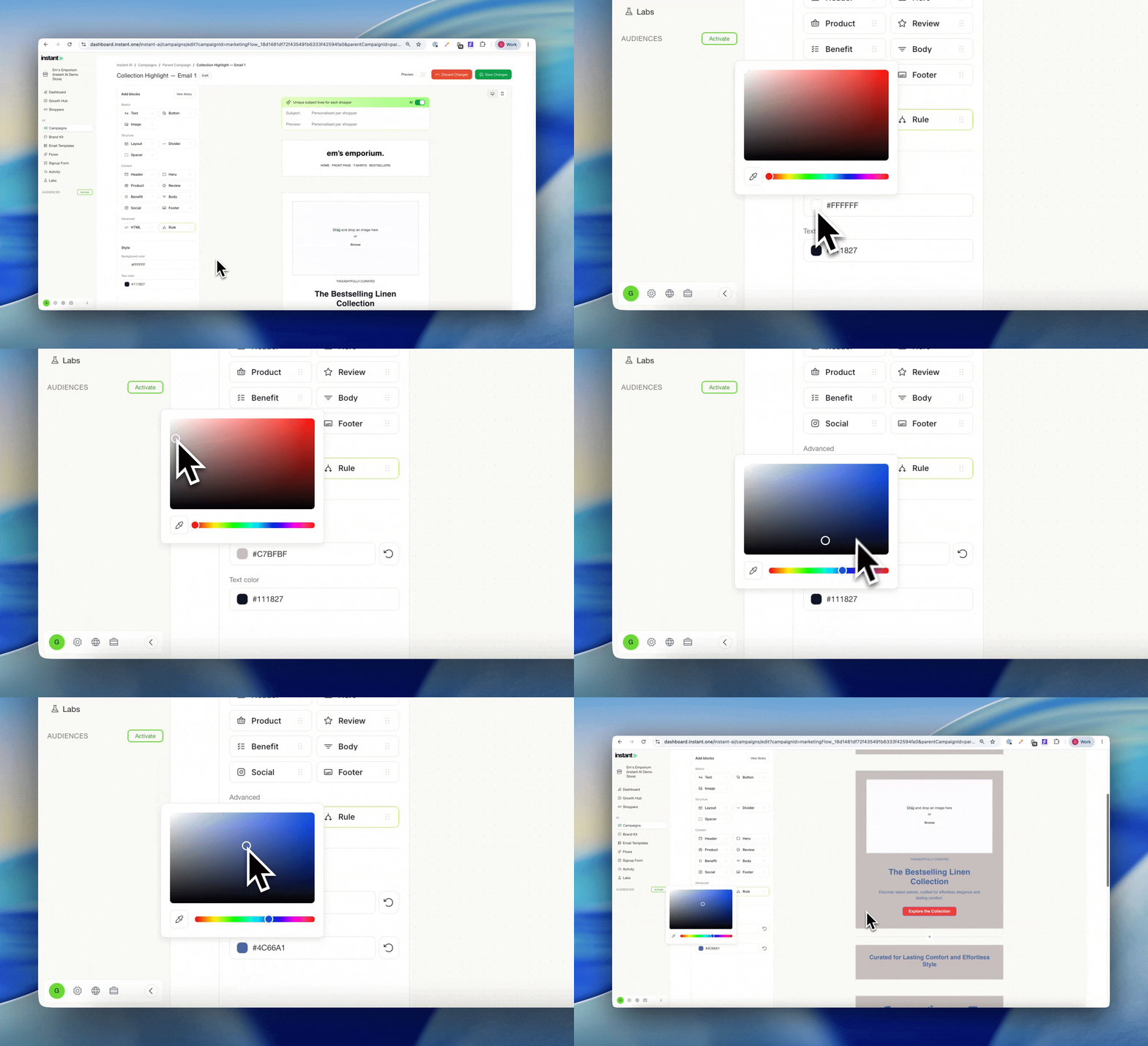
Change the background colour of an individual email

Most brands use their brand kit for the vast majority of their emails, and that's exactly how it should work. But now and then you want one email to look different, without touching your brand kit or every other email. Now you can change the background and primary text colour of a whole email as a one off override, applied in bulk across that email in a couple of clicks. Without needing to manage individual blocks.

Set the background colour and primary text colour for a single email

Brand Kit30 Jul 2026

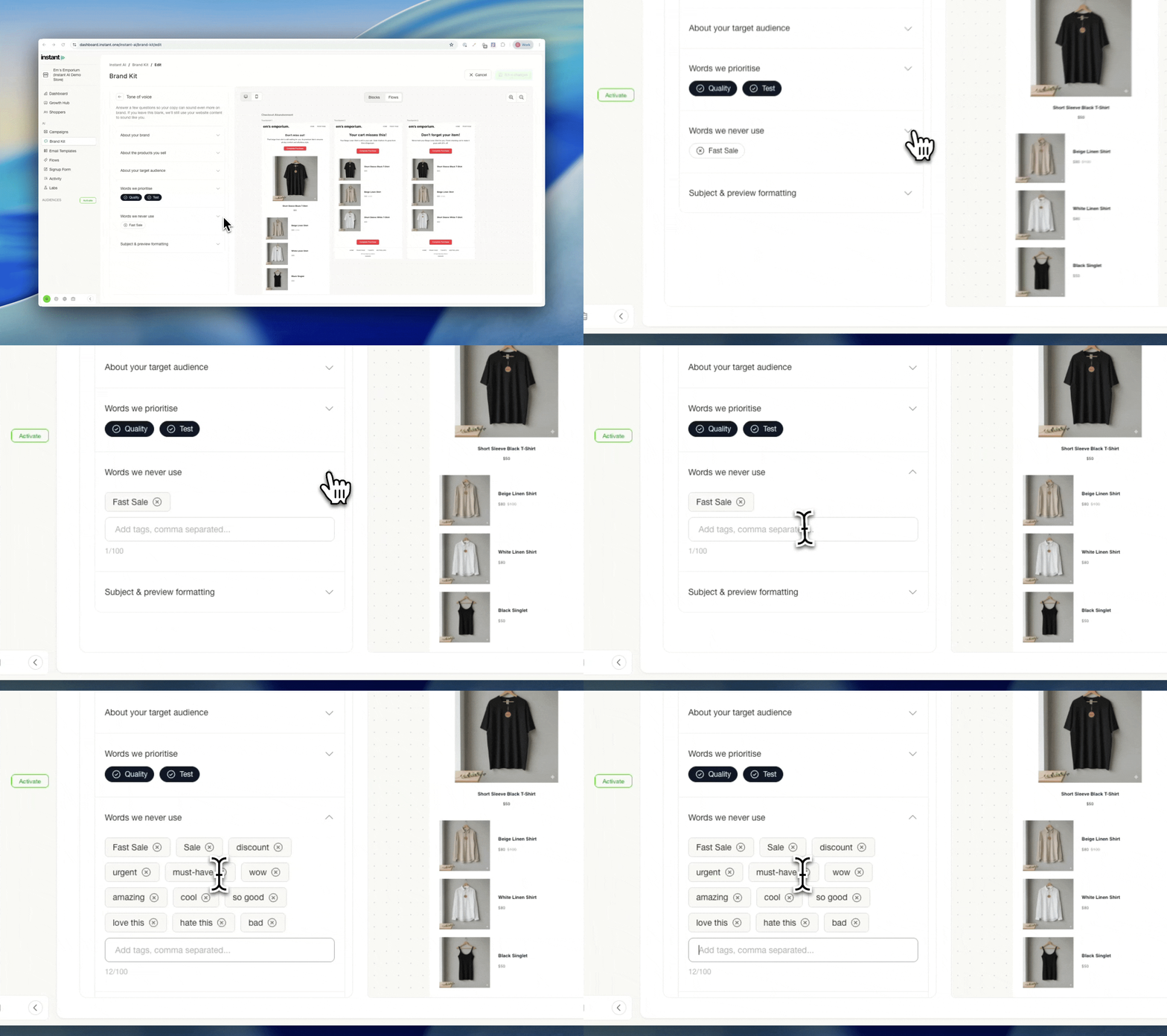
Bulk paste for tone of voice words

Tone of voice words are meant to be single words or short phrases, but it wasn't always obvious, and some stores pasted in full paragraphs by mistake. Now the field tells you exactly how to add words, shows your allowance, and blocks overly long entries before they cause problems. Managing a long list is quicker, and you get it right the first time.

Paste a comma separated string of words into your prioritise and avoid fields, and each word is added as its own chip automatically

Email editor30 Jul 2026

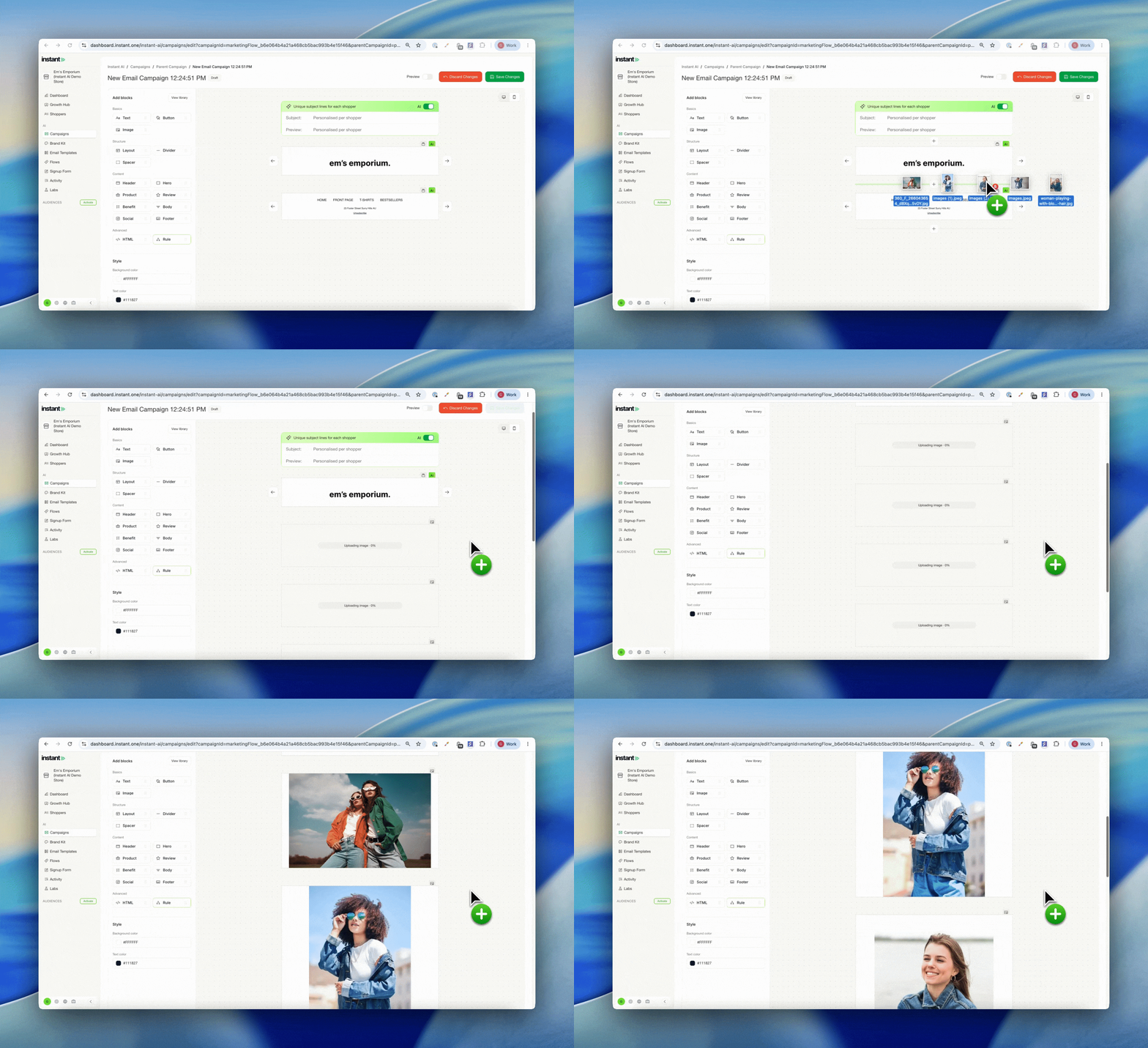
Drag and drop images onto the canvas

If you design images in other tools and just need them inside Instant, this is much faster. Drop a whole batch of files onto the canvas at once and we'll turn each one into an image block for you, so you can build a campaign in a fraction of the time.

Drag files straight from your computer onto the canvas in bulk

Segmentation30 Jul 2026

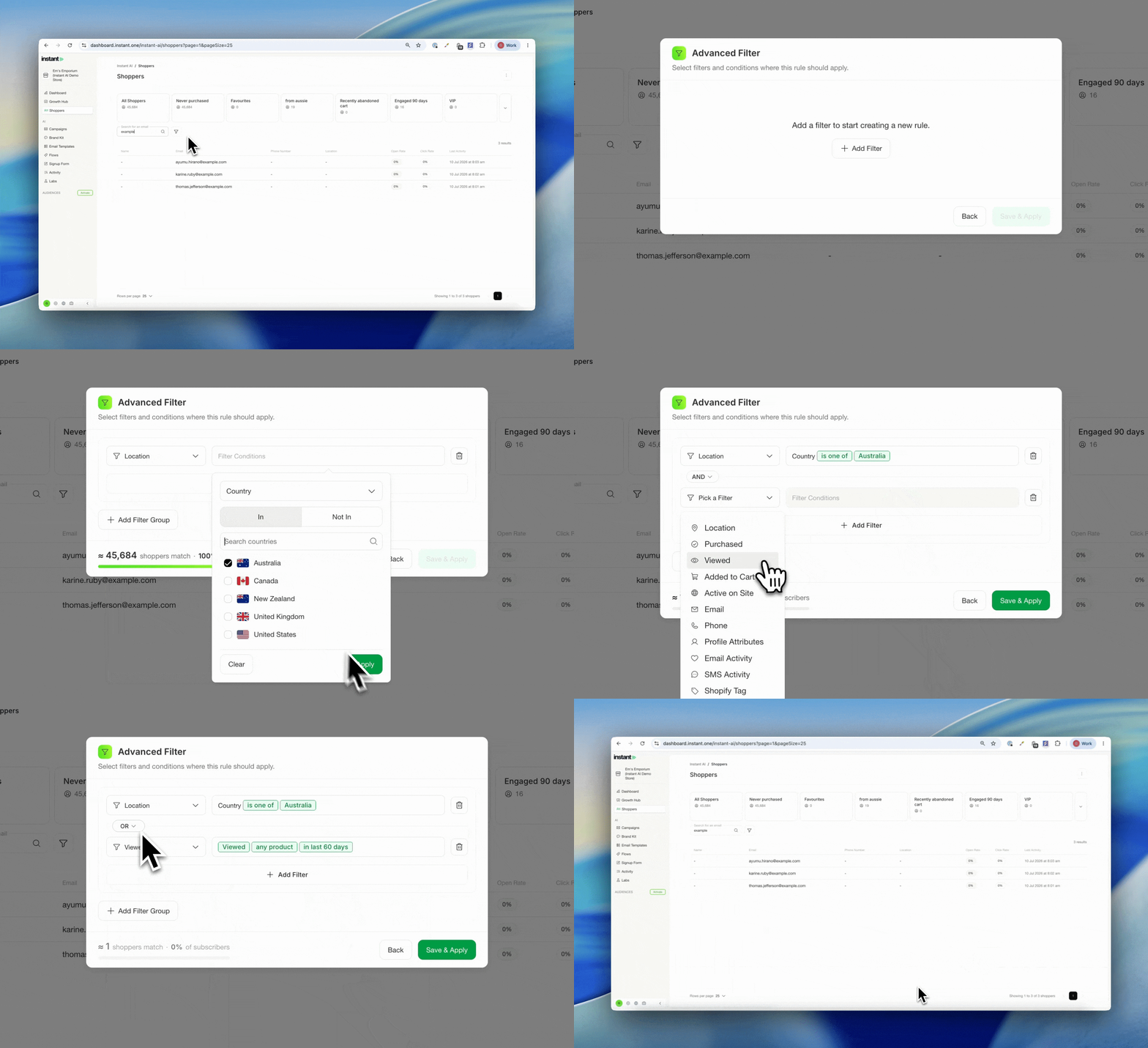
Cleaner advanced segment filter

Building a segment with several groups and nested logic used to be hard to read. The new layout makes the structure clear at a glance, so it's quicker to build the segment you want and easier to spot when the logic isn't quite right.

A refreshed layout for the advanced segment filter, making it easier to manage groups and AND/OR logic

Email editor24 Jul 2026

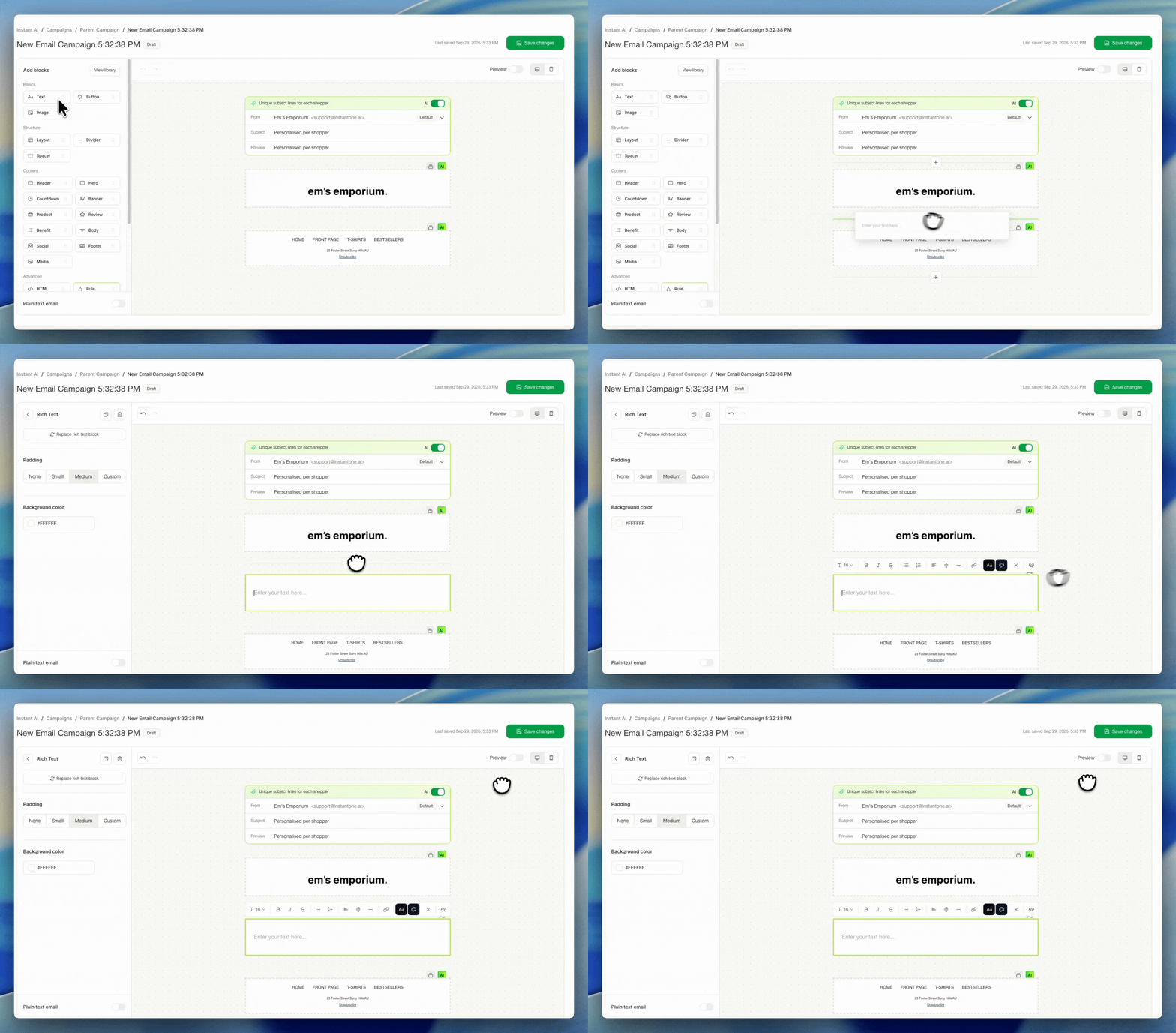
Drag and drop improvements in the email editor

Placing blocks used to mean clicking and then dragging them into position after they landed in the middle of the canvas. Now you can drop a block exactly where you want it in one move, which makes building and rearranging emails quicker. If you liked the old click to insert flow, nothing changes, it still works alongside drag and drop.

Drag blocks straight from the gallery on the left onto the canvas, so you control exactly where each one lands

Email editor24 Jul 2026

Remembering draft settings when swapping images

If you clone a campaign and swap in new images, you no longer lose the links and customisations you had already set. Everything carries over to the new image, so updating creative is a quick swap rather than a rebuild.

Swap an image and keep all your unsaved customisations, including URL links

Segmentation22 Jul 2026

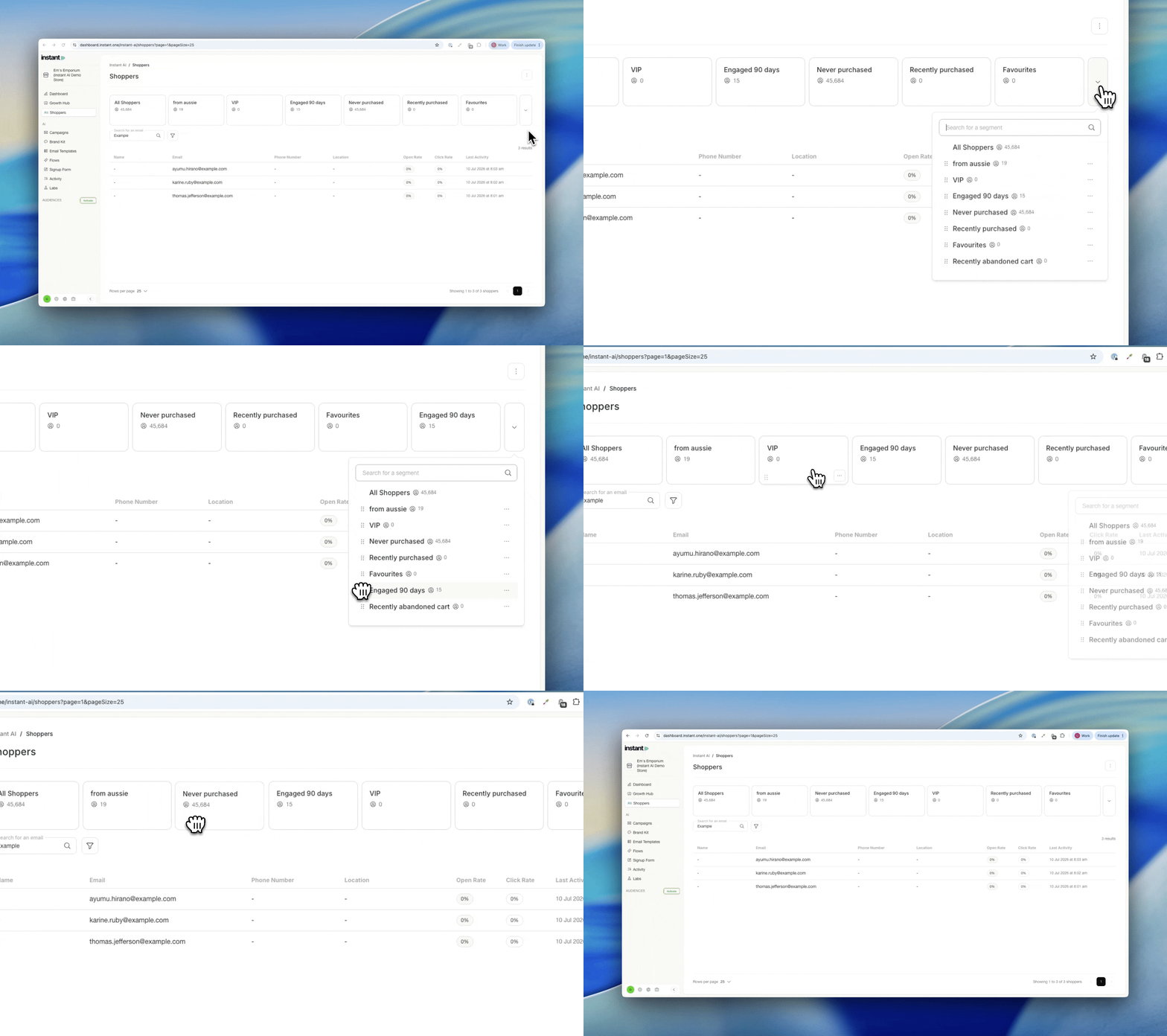
Reorder segments

If you manage a large number of segments, the ones you use most can get lost in the overflow dropdown. Now you decide the order. Pin your key segments (like VIPs or recent purchasers) to the front so they're always easy to reach, and keep the rest tidied away.

Drag and drop your segments to reorder them however you like

Deliverability22 Jul 2026

Improved deliverability recommendations

Many brands add the correct DNS records and connect successfully, but do not realise other settings on their domain are still holding back their deliverability. The expanded recommendations catch these for you. It is a useful checklist before you go live, to make sure everything is optimised from day one. It is just as useful if you are already sending and want to confirm you are following best practice. Either way, the goal is simple: fewer emails in spam, more in the inbox.

Instant now assesses your DMARC and SPF settings on the deliverability dashboard to check you have the optimal setup, not just that your records are connected

Email editor21 Jul 2026

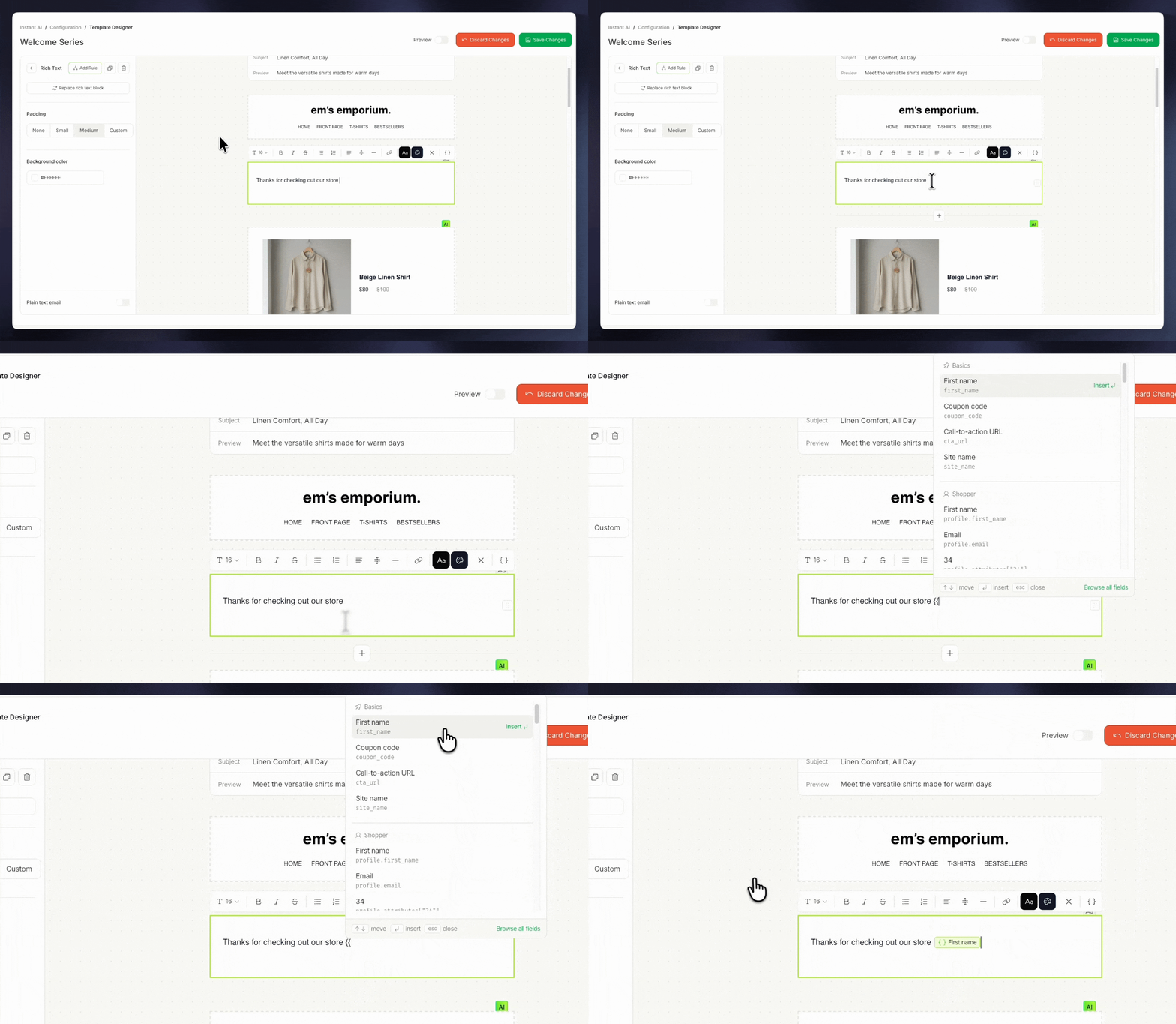
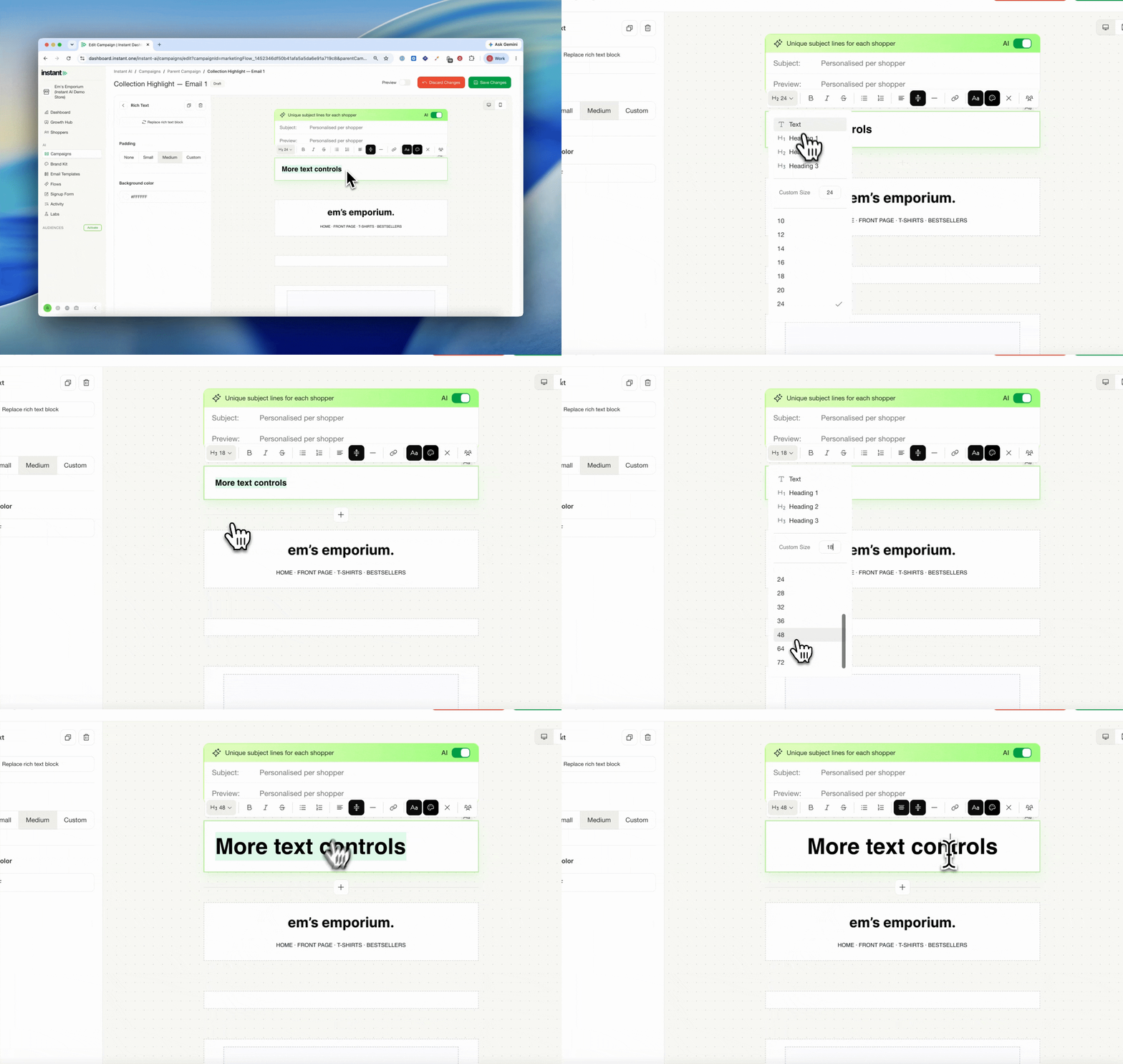
Change font size in the text editor

Override any text to any size directly in the text editor

Flows21 Jul 2026

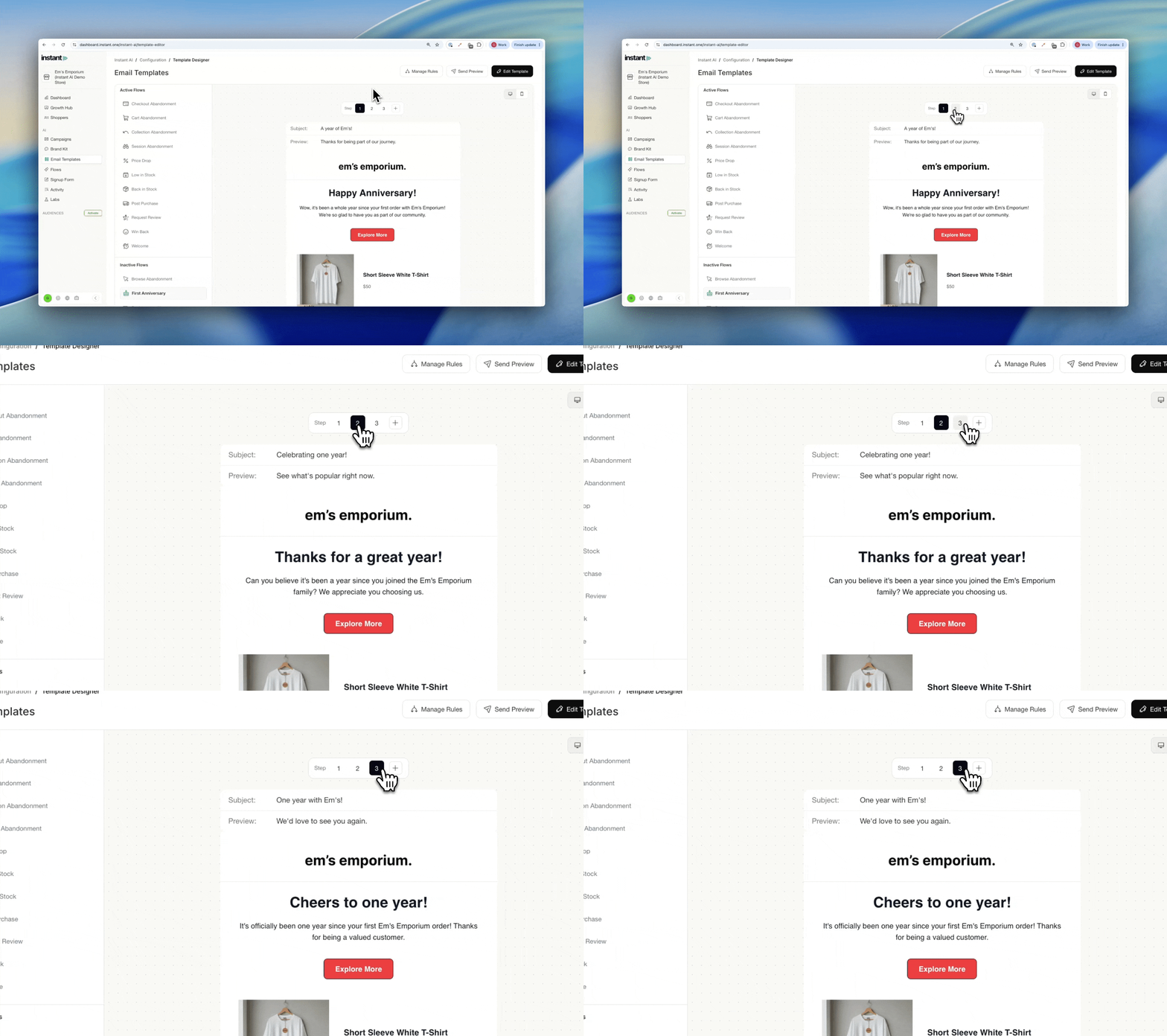
First Anniversary flow

The First Anniversary flow is a simple, personal way to build loyalty and win back customers who haven't shopped in a while. Marking the anniversary of a first purchase gives you a natural, warm reason to reach out, and pairing it with a discount turns that moment into an incentive to buy again. It works especially well as a winback, reminding customers of a brand they bought from a year ago with a personalised gift.

Enable a First Anniversary flow to celebrate a customer one year on from their first purchase

Email editor21 Jul 2026

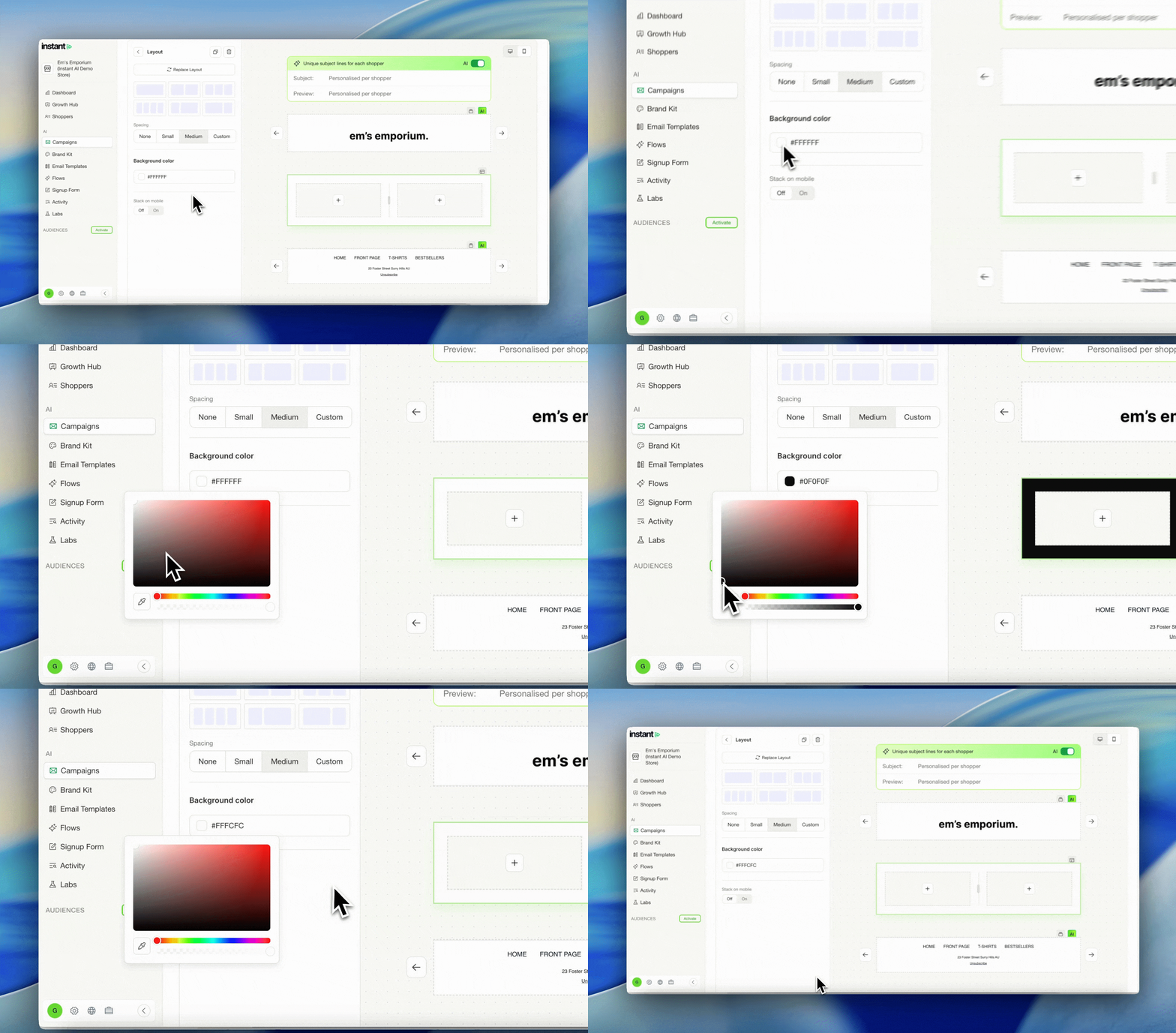
Change the background colour of layout blocks

A colour picker has been added to the Layout Block options

Flows21 Jul 2026

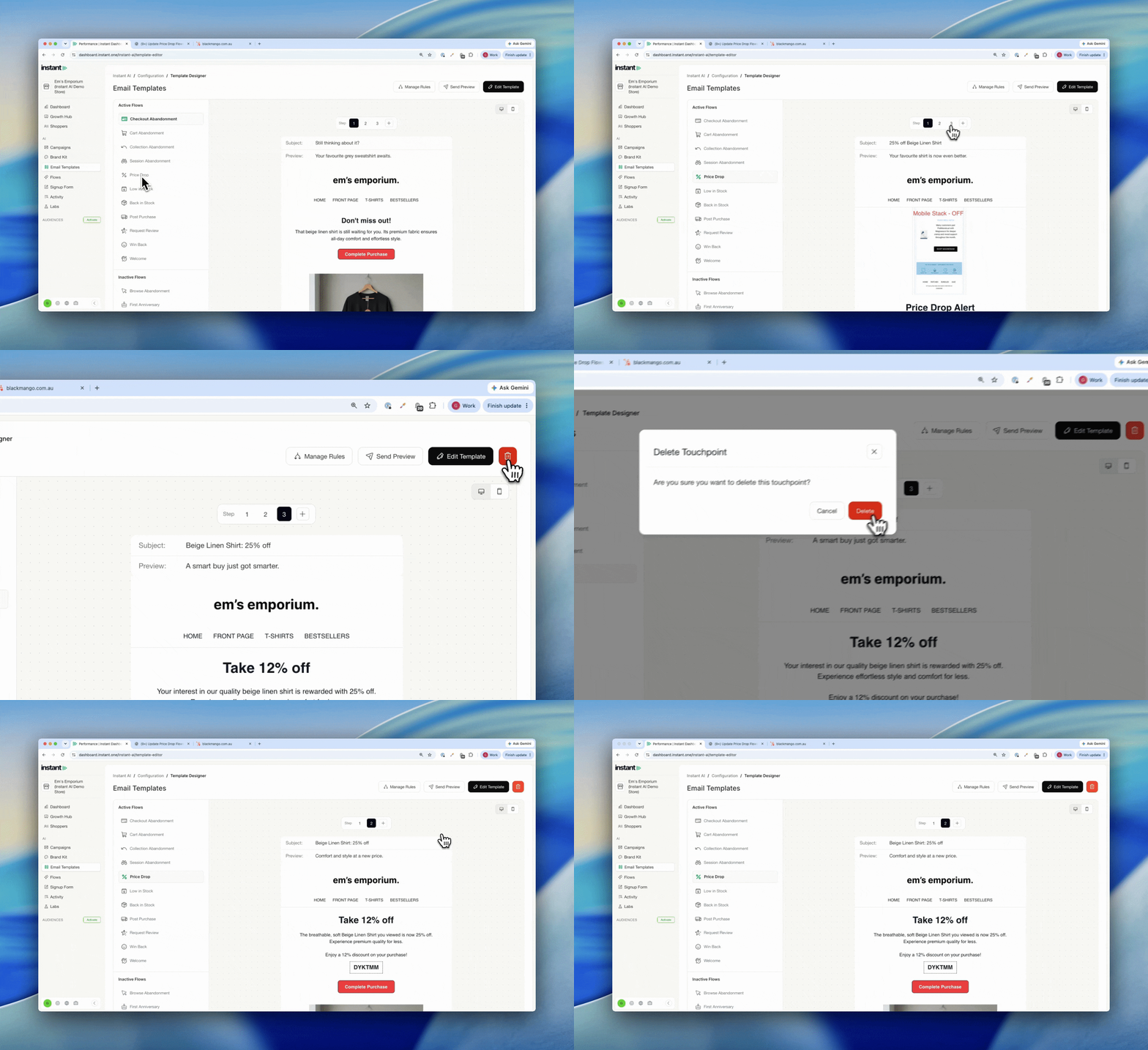
Minimum and maximum email touchpoints

Welcome flows now support up to 10 email touchpoints (previously 5)

Email editor14 Jul 2026

Image gallery improvements

Upload images in bulk. When you add an image block, drag and drop multiple images at once and they auto-select and add to your email together.

Segmentation8 Jul 2026

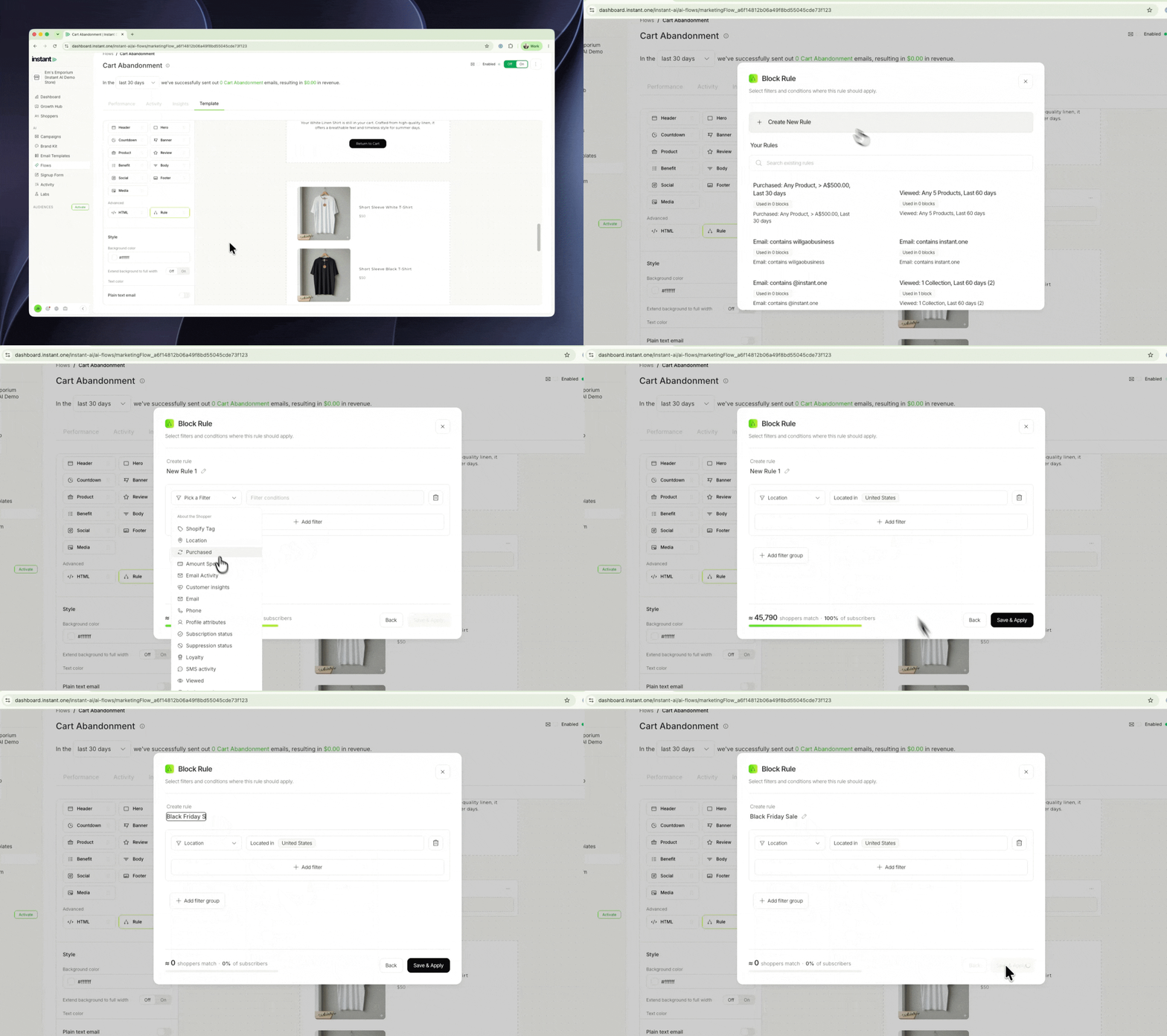
Improved location filters

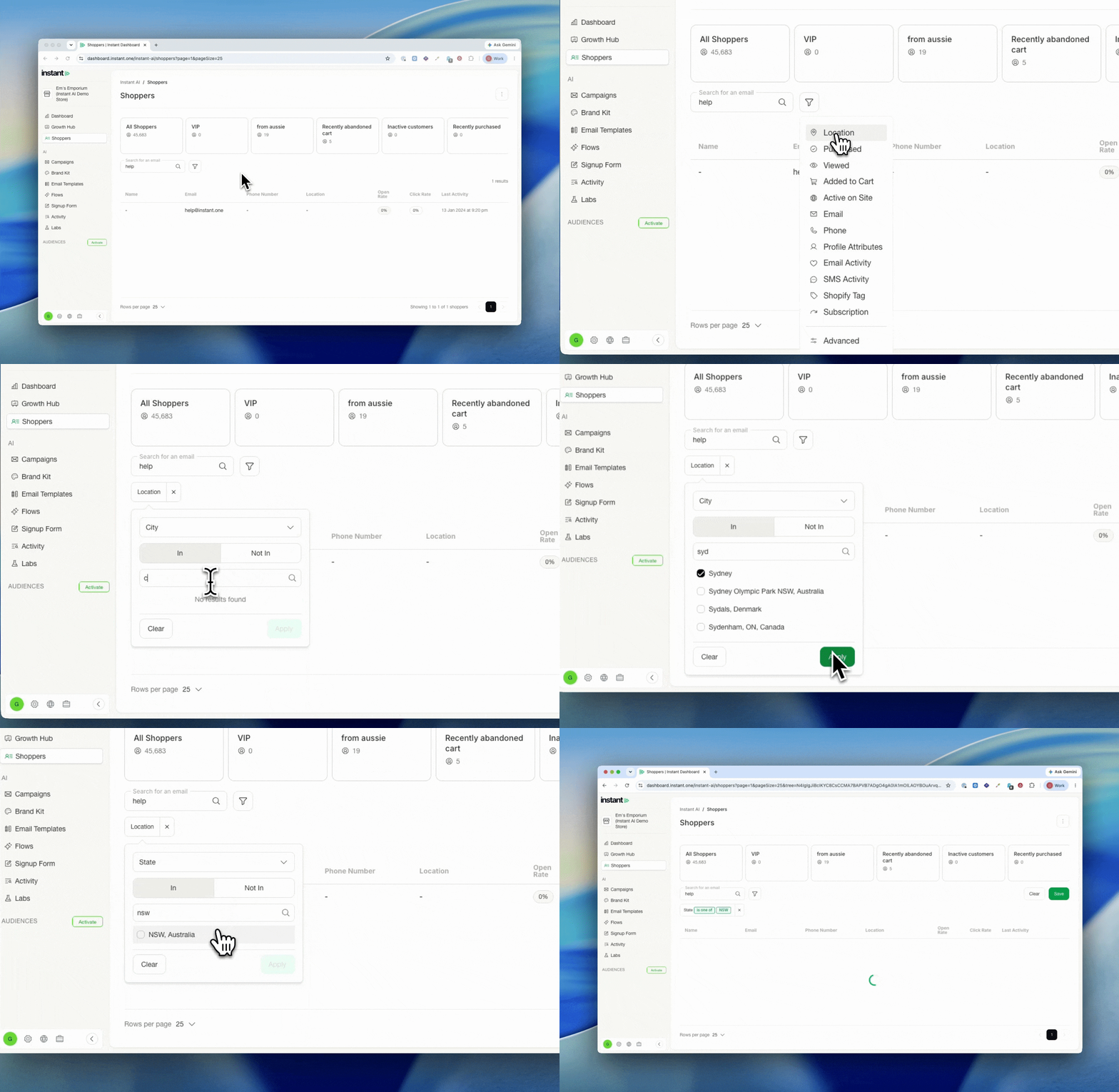
Many brands want to get granular with segmentation to unblock use cases the standard filters could not reach. You can now find every customer within 10km of your store, or target shoppers in specific suburbs for a local promotion. Set the location filter once, pick how you want to drill down, and Instant handles the rest.

The location filter in segmentation now supports more granular shopper information

Deliverability8 Jul 2026

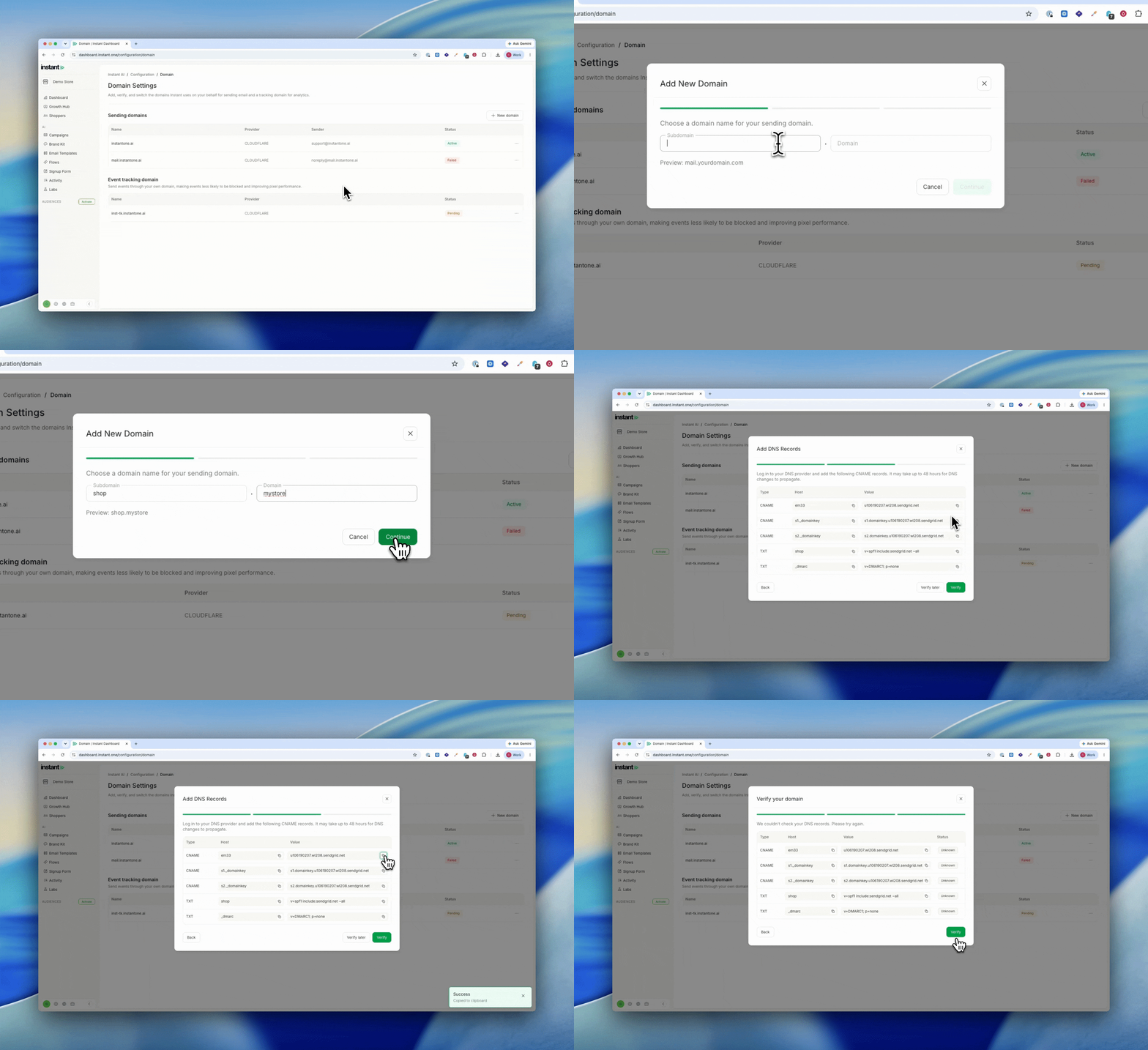
Self-serve changes to domains and subdomains

Configure and change your own sending subdomain, without going through support

Integrations6 Jul 2026

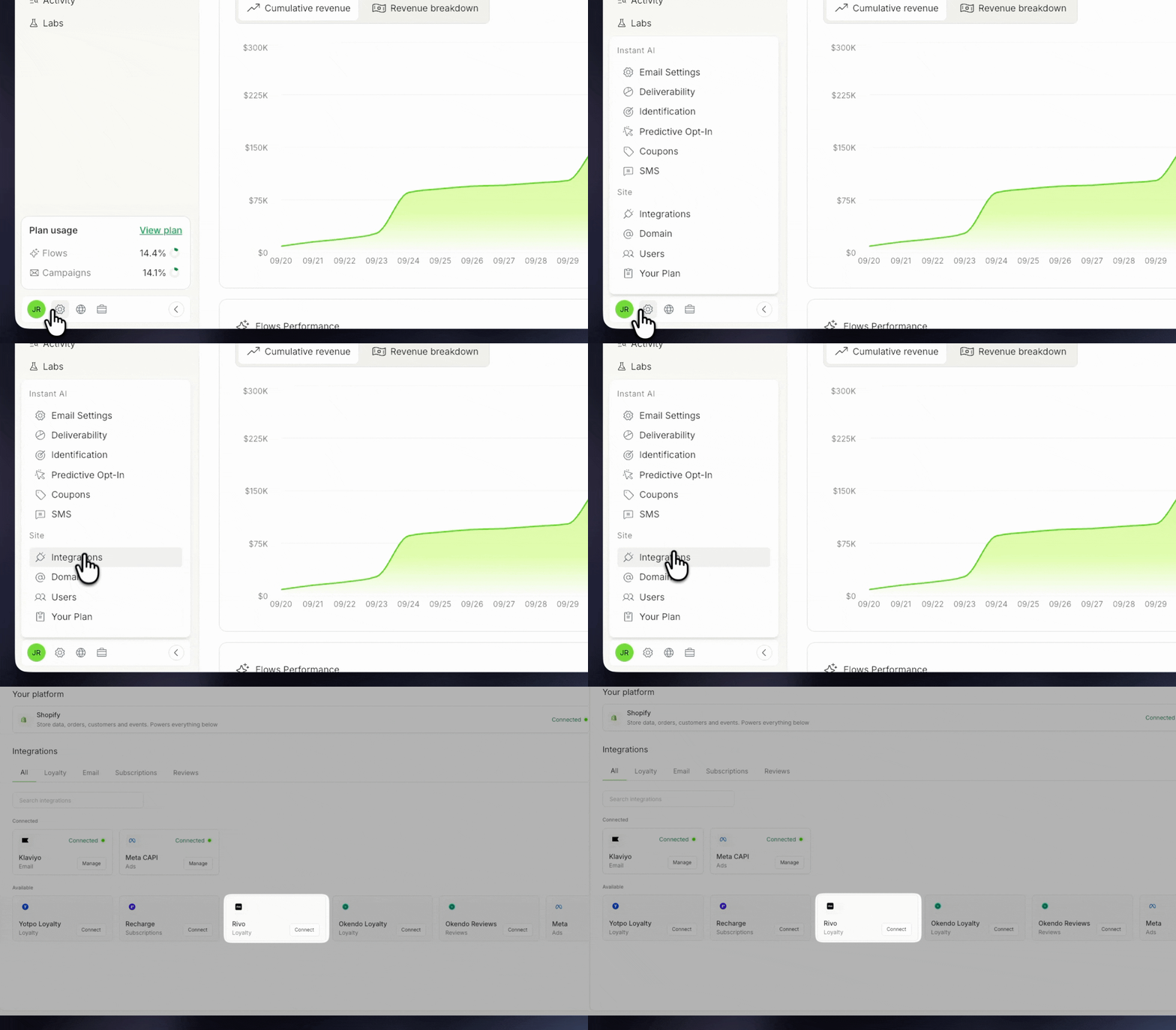
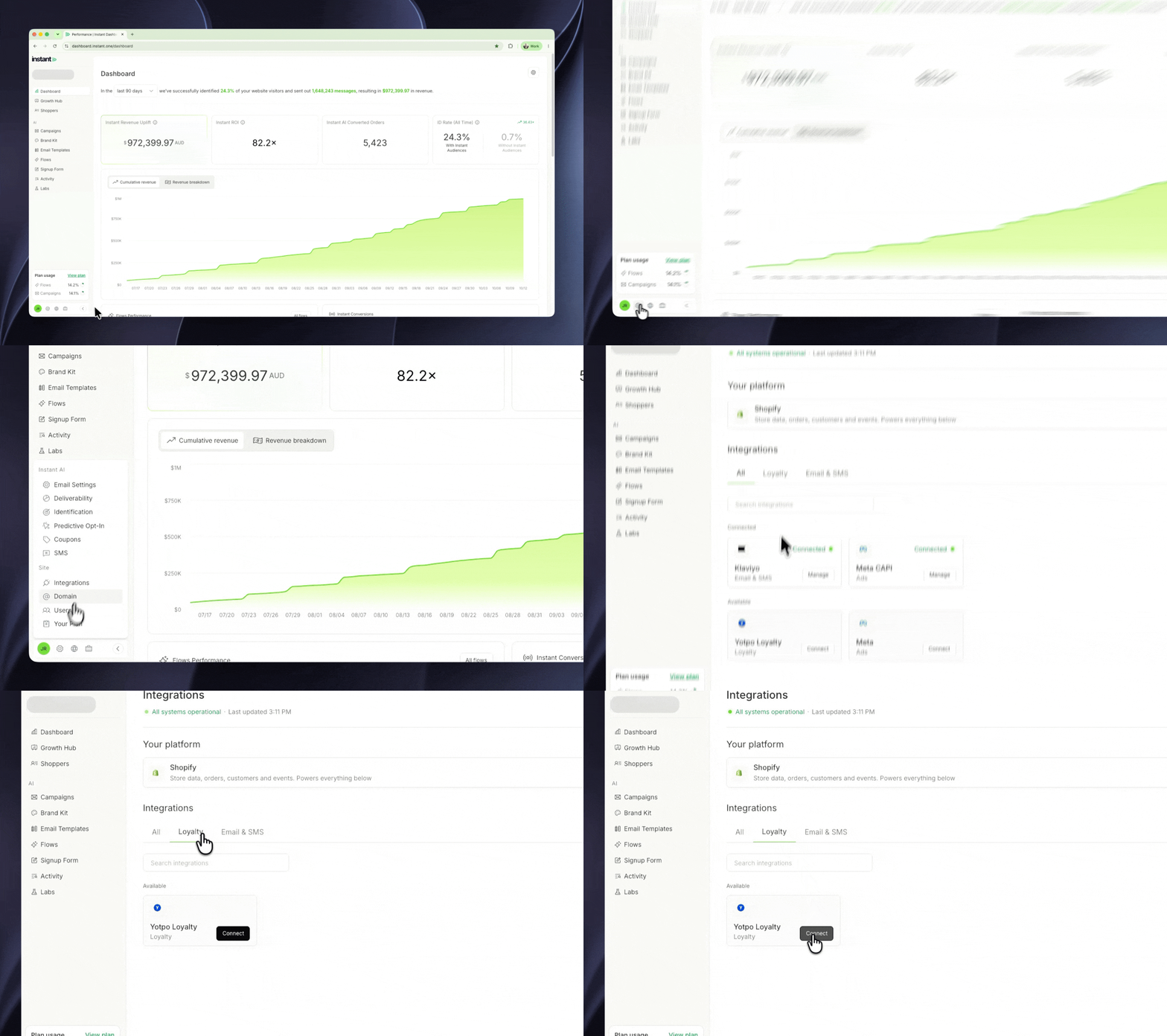
Meta integration for segments

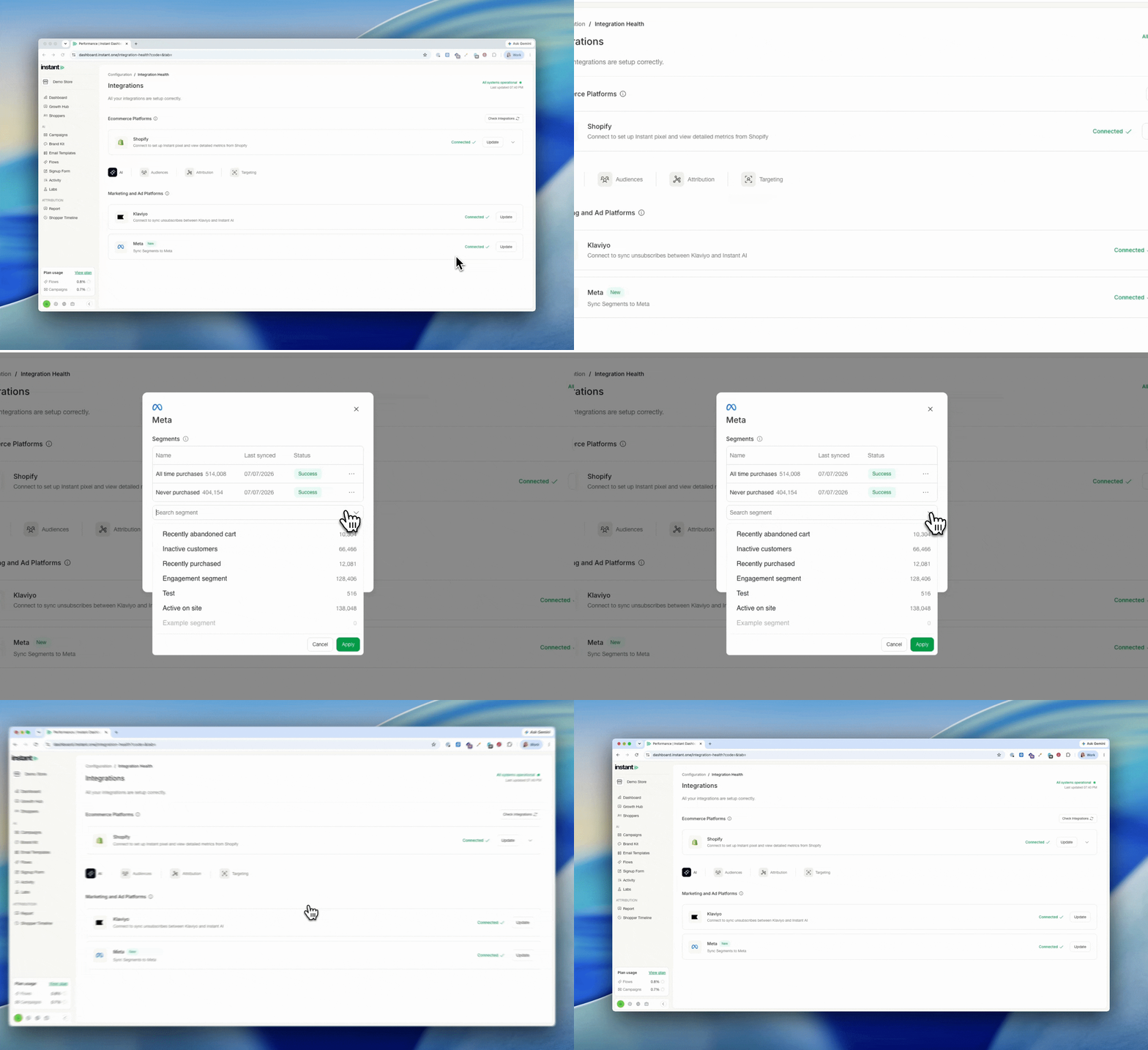
Your first party data is some of your best ad targeting data, and Instant AI can help you make the most of it. The Meta integration lets you take any segment you can build in Instant, from cart abandoners to VIPs to shoppers who viewed a specific product, and turn it into a Meta audience for your ads. Because the segment is dynamic, the audience is too. We re-sync it to Meta every day, so as shoppers meet or stop meeting your criteria, your Meta audience keeps up without any manual exports. For example, build a segment of everyone who abandoned cart and viewed a specific product but hasn't purchased, sync it to Meta, then push them a special offer on Facebook and Instagram.

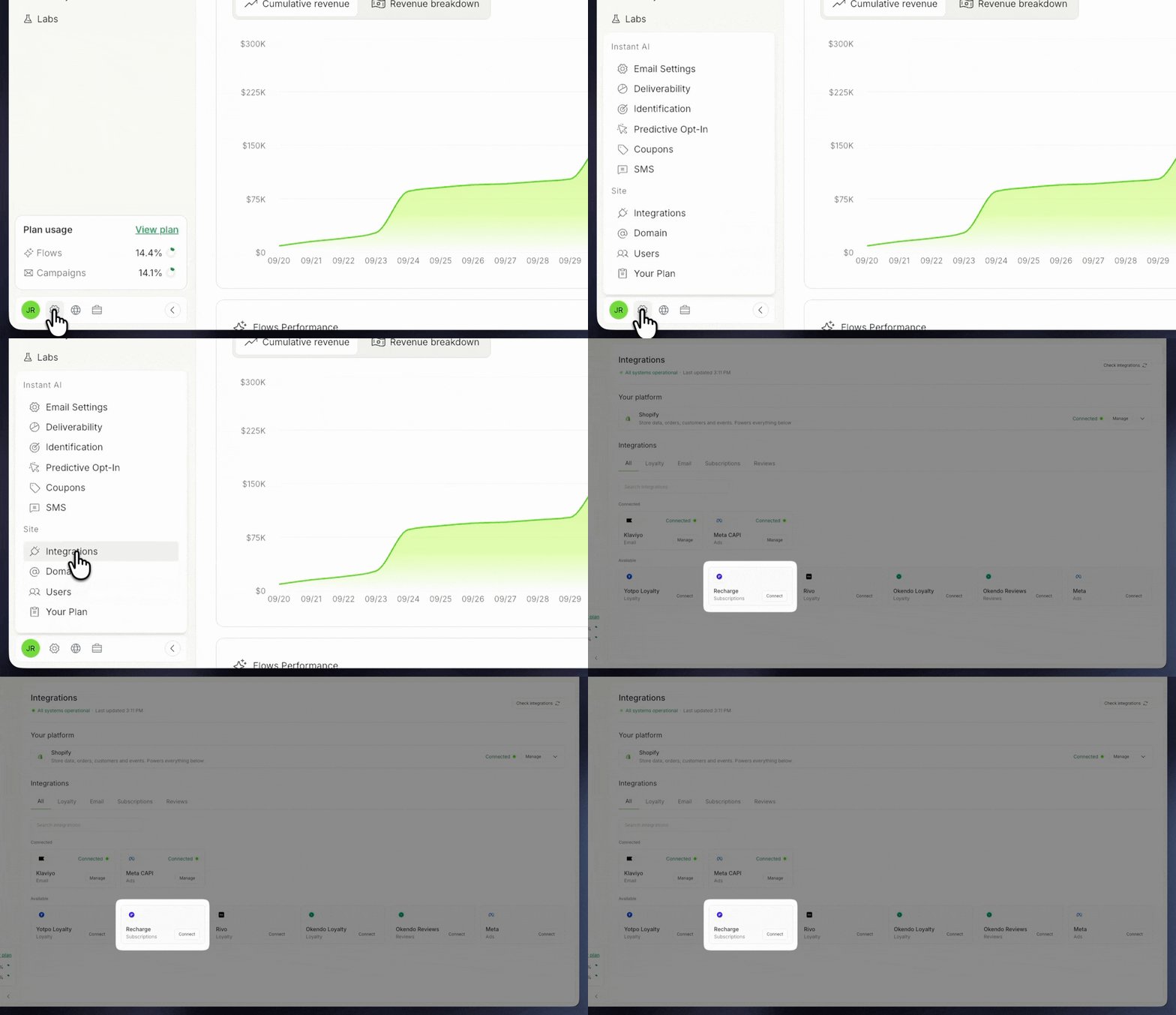
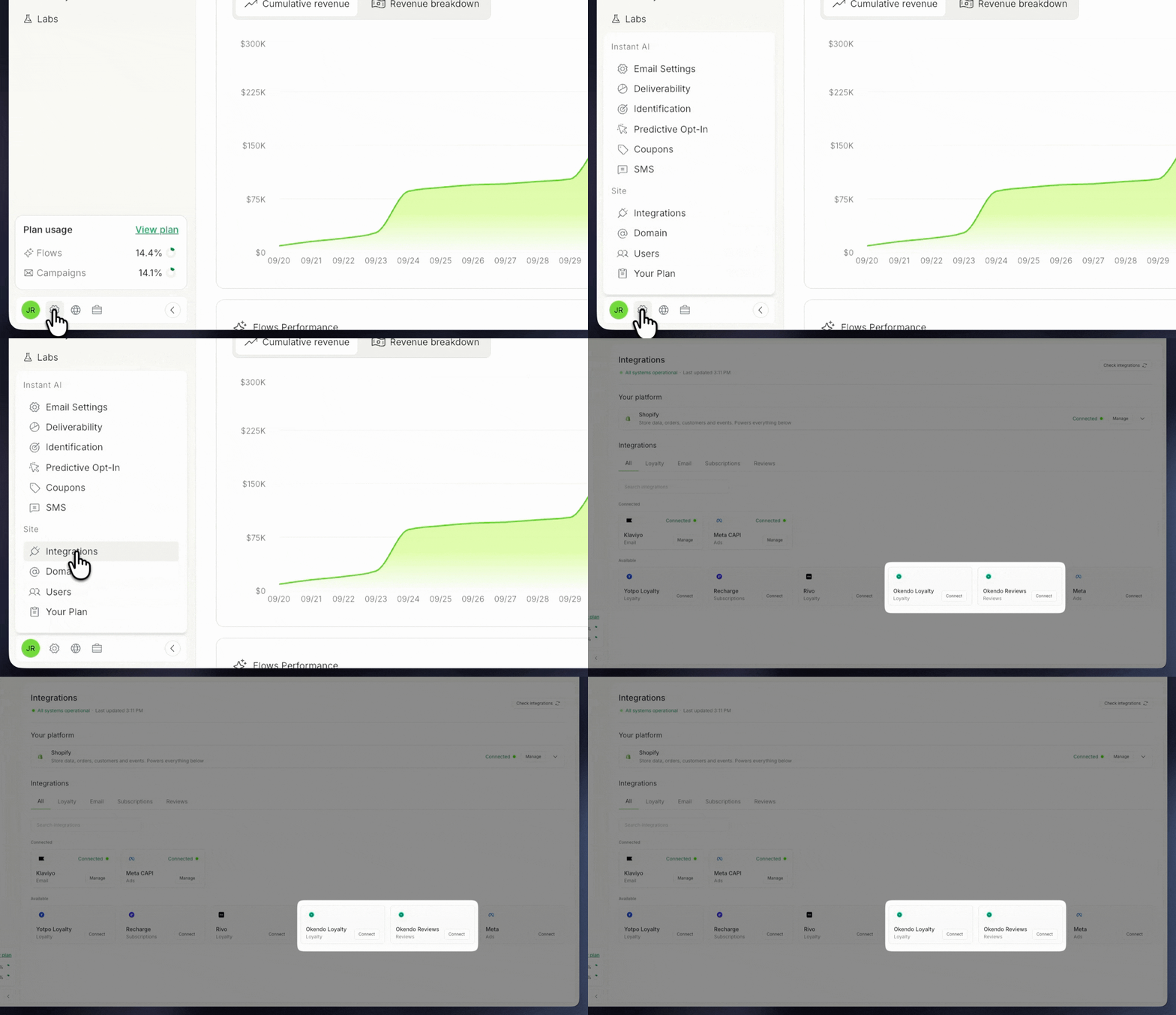
Connect Instant AI to Meta to build more targeted audiences for your Meta ads

SMS is now available in all Abandonment Flows and all Stock Flows

Add SMS to every abandonment and stock flow, including Browse, Collection and Session Abandonment, Low in Stock and Back in Stock.

SMS in flows started with your Checkout and Cart Abandonment flows. It now covers every abandonment flow and every stock flow, and turning it on works the same way in each one. That puts a text in front of a shopper who browsed a product, left a collection page, ended a session without buying, or is waiting on a product that is low or back in stock. Each of those moments can now reach a shopper by SMS as well as email.

  • SMS can now be turned on for every abandonment flow and every stock flow
  • Five more flows support SMS: Browse Abandonment, Collection Abandonment, Session Abandonment, Low in Stock and Back in Stock
  • If SMS is enabled on your account, open the flow and select Enable SMS on this Flow in the banner at the top
  • Each flow then sends a text alongside its emails, so a shopper who signed up by phone hears from you too
Learn more ↗

New Insights tab on Abandonment Flows

See who your Checkout, Cart and Browse Abandonment flows recover and what they buy, in a new Insights tab.

Flow reporting has always told you how much revenue an abandonment flow recovers. It has not told you much about who it recovers, or what they buy. Insights fills that gap. You can see whether the flow brings back first time or returning customers, whether the coupon is helping or costing you margin, and which products and price points drive the recovered revenue.

  • Checkout, Cart and Browse Abandonment flows now have a third tab, Insights, which breaks down where the flow's conversions come from
  • First time vs returning customers shows revenue, orders and average order value for each group
  • What customers bought splits recovered orders by customer type, cart size and product price band
  • How coupons perform shows redemption rate, coupon revenue, discount given, and average order value with and without the flow coupon
  • Top products ranks what the flow recovers by revenue or by purchases

Countdown Timers are now in the block library

Add a live countdown timer to any email from the block library, styled from your brand kit.

Countdown timers add real urgency to a sale or launch email. This release puts them in the block library as a standard block, so adding one takes a couple of clicks and no design work. Because the timer runs live in the inbox, the time shown is always correct at the moment the email is opened. A shopper who opens your sale email on the last day sees the hours left, not the number that was right when you sent it.

  • A new Countdown category in the block library gives you 6 timer styles to choose from
  • Drop one into an email and the colours and fonts come straight from your brand kit
  • The timer counts down live in the inbox, so every shopper sees the real time remaining when they open the email

All flows now support up to 10 touchpoints

Every email flow can send up to 10 touchpoints, and your existing minimums stay the same.

Instant AI still sets the number of emails in each flow for you, based on what performs. What changes here is the ceiling, not the recommendation. If you have wanted more emails in one particular flow, you no longer have to work around a lower cap on that flow. Every email flow uses the same limit, so a Welcome or an Abandoned Cart sequence can run to 10 touchpoints when that suits your store.

  • Every email flow now supports up to 10 touchpoints, up from a maximum of 5
  • Flows that were capped lower now use the same limit as every other flow
  • Minimums and defaults are unchanged, so nothing moves unless you add touchpoints yourself
  • SMS Welcome flows keep their maximum of 5 touchpoints
Learn more ↗

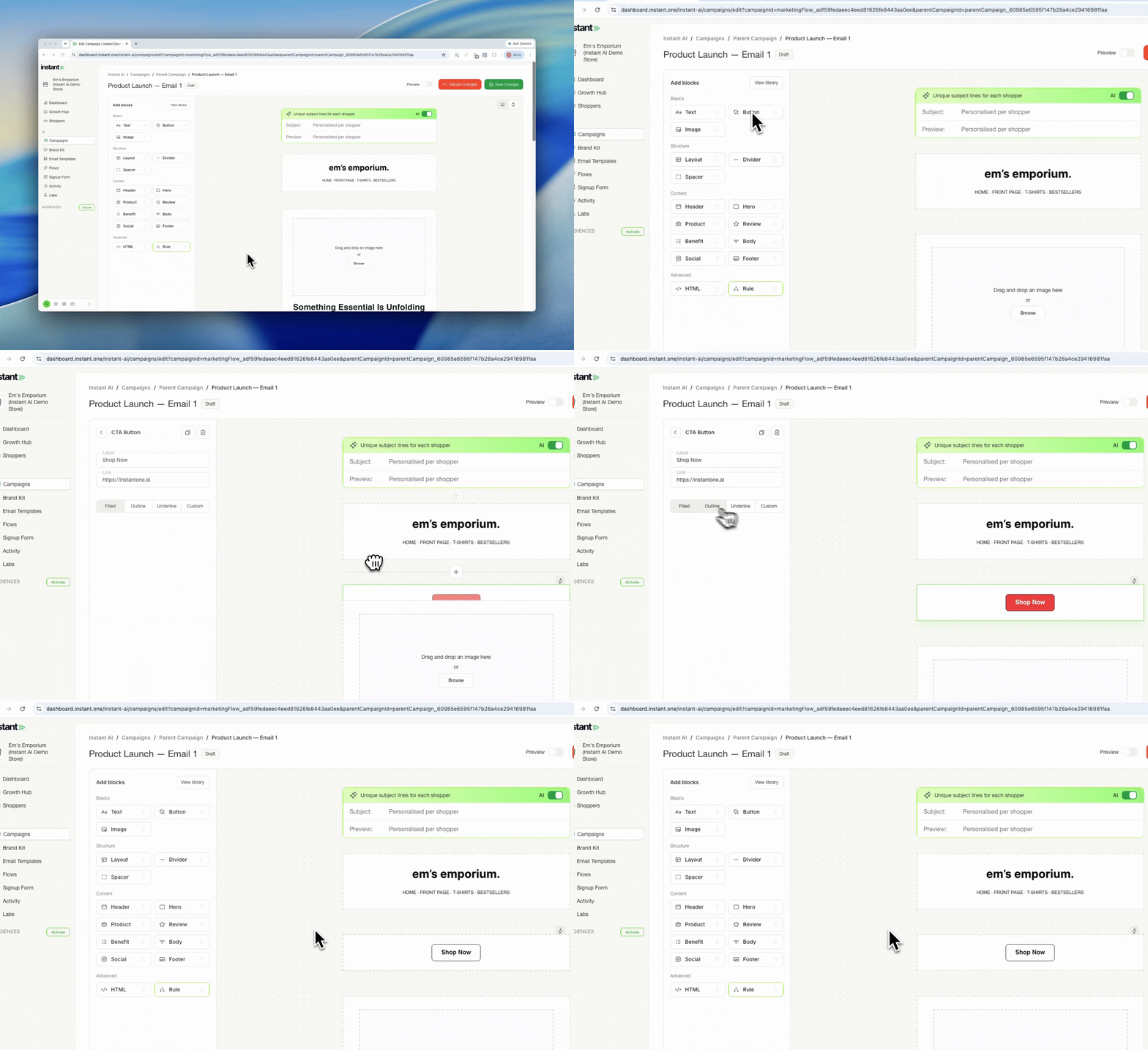
CTAs can now be overlaid on images

Add a CTA over any image in the image editor, styled from your brand kit.

This follows text over images. The image editor already handled cropping and editable text, and the CTA was the last piece of a hero image that still had to be built somewhere else. Every CTA style in your brand kit is available in the editor, so a button placed over an image matches the rest of your email with no setup. Pick Custom when one image needs something different.

  • Editing an image now includes a CTA option, so you can place a button over any image
  • CTA styles come straight from your brand kit, with primary, outline and underline as the defaults
  • Choose Custom to configure your own CTA instead
  • Together with text and shapes, you can design a full hero image without leaving Instant
  • Select an image block while editing an email, then click Edit image
Learn more ↗

Send emails from a different email address

Choose which email address and sender name each campaign or flow email goes out from.

Most of your email should come from the same place, and it still does unless you change it. This is for the emails that should not: a campaign written by your founder, or a plain text step in a flow that reads like a note from a person rather than from a brand. A plain text email lands differently when it actually arrives from your founder, and a message asking whether someone needs help with their order works better coming from support than from your marketing address.

  • A new From section when you edit any email lets you pick which address that email sends from, in both campaigns and flows
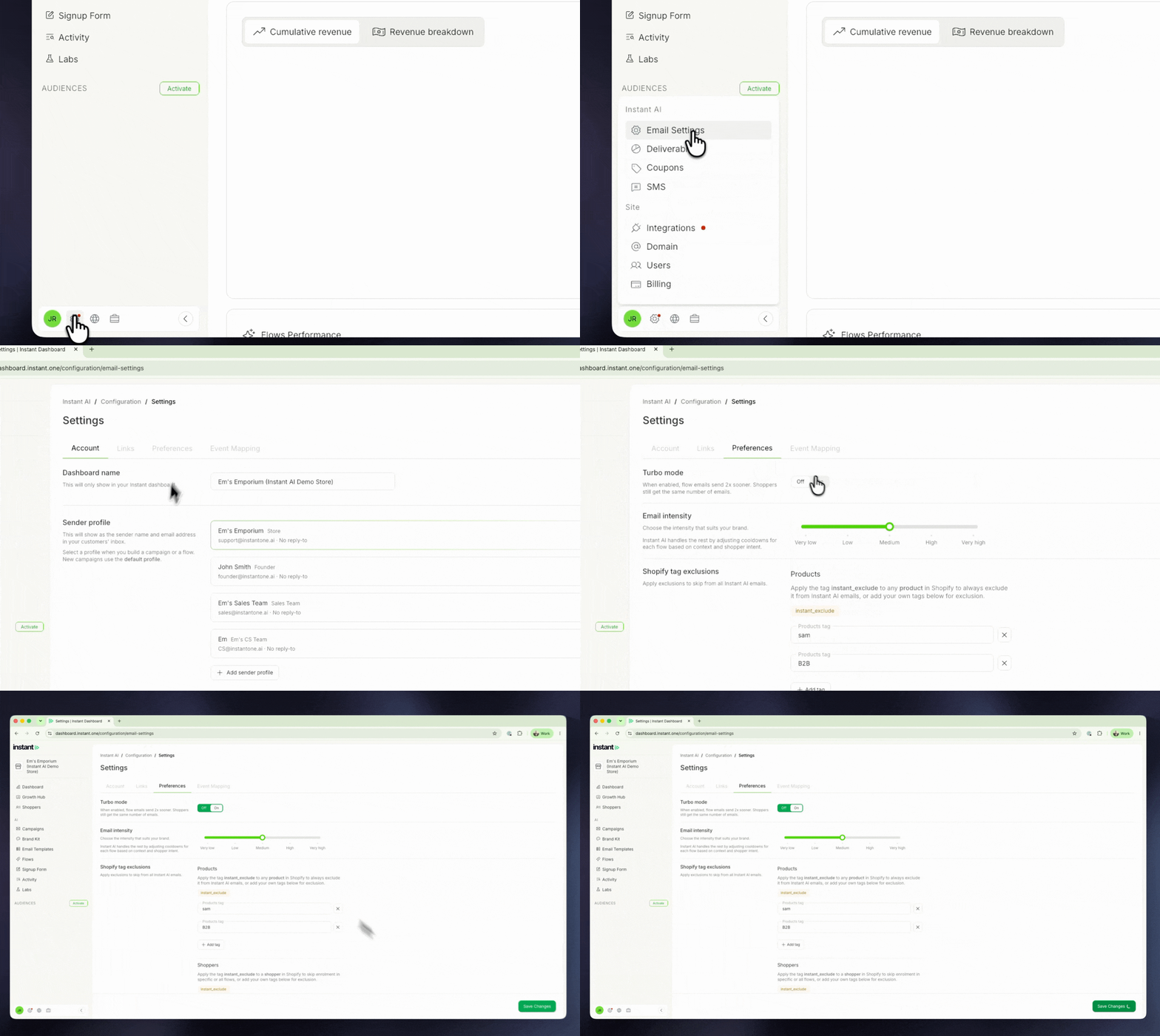
  • Create sender profiles for each address you want to send from, each holding an email address and a sender name, for example John Smith and [email protected]
  • Set one profile as your default, so you only choose a different one when you want to
  • Find sender profiles under Settings > Email Settings, then scroll down to Sender profiles
Learn more ↗

Improved flow analytics with per step analytics

See revenue, interactions and per step performance for every flow on one page.

The numbers behind your flows were already being tracked. What changes here is the order they appear in, so the revenue a flow brought in reads first and the detail sits under it. The per step card is the new part. You can see which touchpoint is doing the work and what share of the results comes from each step, so a flow that looks healthy overall no longer hides a step that is not pulling its weight.

  • Flow pages have a new structure, with revenue data at the top, then interactions, then the per step breakdown
  • Delivered, opens, clicks and conversions each plot as a graph over time when you select their tab
  • A new performance per step card breaks down performance by touchpoint, alongside the totals

Add text over images

Layer editable text over any image, straight from the image editor.

Text added to an image is usually baked into the file the moment it is saved. From that point a small copy change means rebuilding the image from scratch, and the original layers are gone. Instant keeps the text as its own layer for as long as the image exists. A price, a date or an offer can be corrected weeks later in a few seconds, without going back to a design tool.

  • The image editor now lets you layer text over any image
  • Build your own hero images, or drop a message over an image you already have
  • Text styling reads from your brand kit for smart defaults, and you can override it with your own
  • Your text stays editable for good. It is never flattened into the image, so you can come back and change it at any time
Learn more ↗

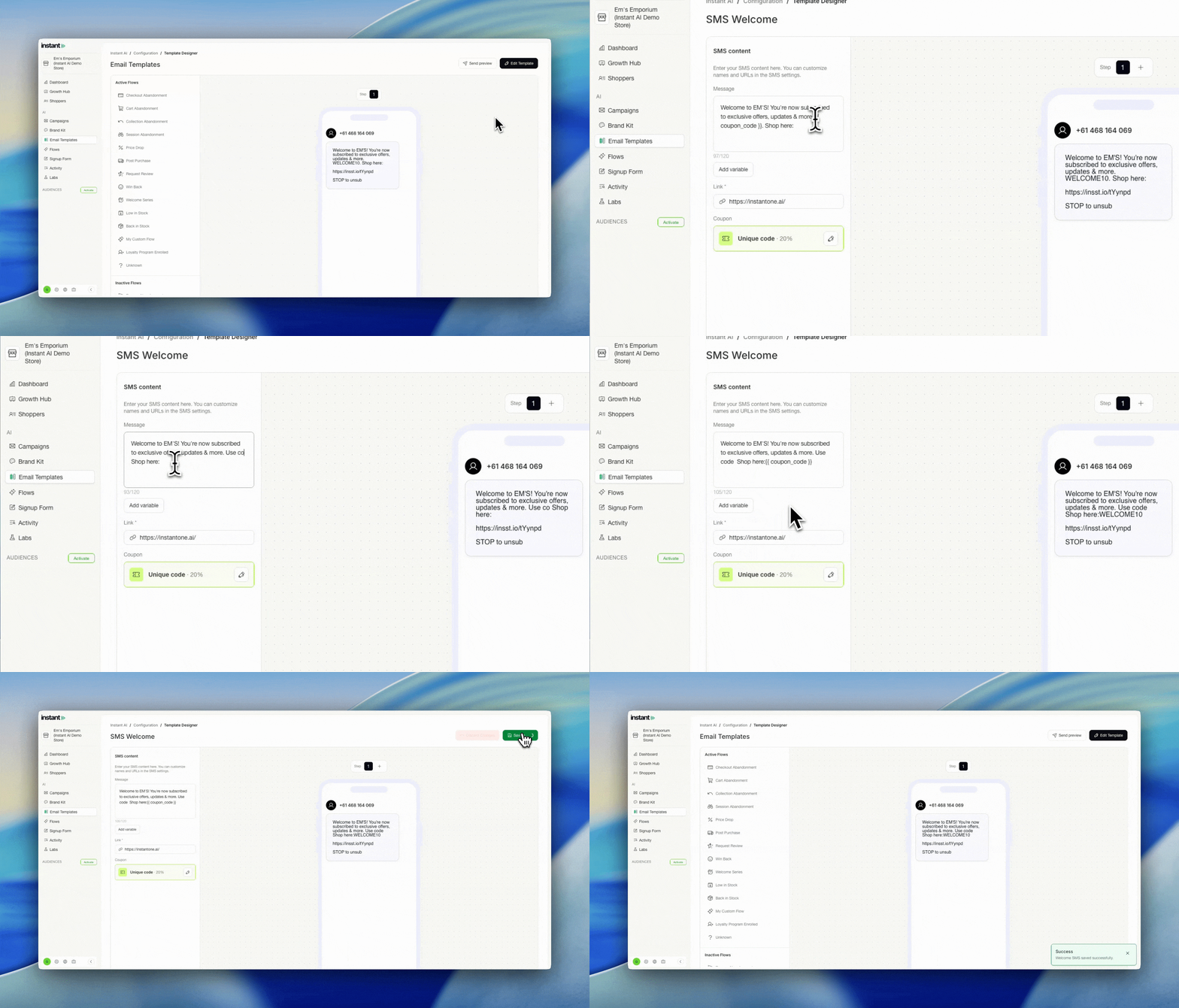
SMS Welcome flows are now live

Turn on a dedicated SMS Welcome flow and text new subscribers as soon as they opt in to SMS.

This is a standalone flow rather than SMS added to your existing Welcome flow. It has its own trigger, its own touchpoints and its own copy, and it does not replace or delay the email welcome a shopper is already in. Welcome copy is the most bespoke content most brands write, so this flow hands you the message to write rather than generating it. A shopper who signs up with a phone number and no email address now gets a welcome as well, where before they heard nothing from you until your next SMS campaign.

  • A dedicated SMS Welcome flow texts a shopper as soon as they subscribe to SMS
  • The flow appears in your dashboard once SMS is connected and ready to send
  • You write your own copy for each message in the flow
  • Your configured coupon carries across, and you can include the coupon code in your template
  • It runs in parallel with your email Welcome flow, so a shopper can receive both depending on which they signed up to and when
Learn more ↗

Brand kit now supports a mobile only logo

Upload a second logo just for mobile, and Instant picks the right one per device.

Plenty of brands have a long horizontal logo that works well on desktop and gets squeezed on a phone, so they keep a shorter mobile version alongside it. Until now the way to handle that in an email was a custom header with your own logic for what to show and hide on mobile. You can keep using Instant’s standard header instead, and just upload the second file.

  • Upload a second logo that is specific to mobile
  • Shoppers reading on desktop see your desktop logo, and shoppers on a phone see your mobile one
  • Works automatically across every Instant header, all you need to do is upload the extra file

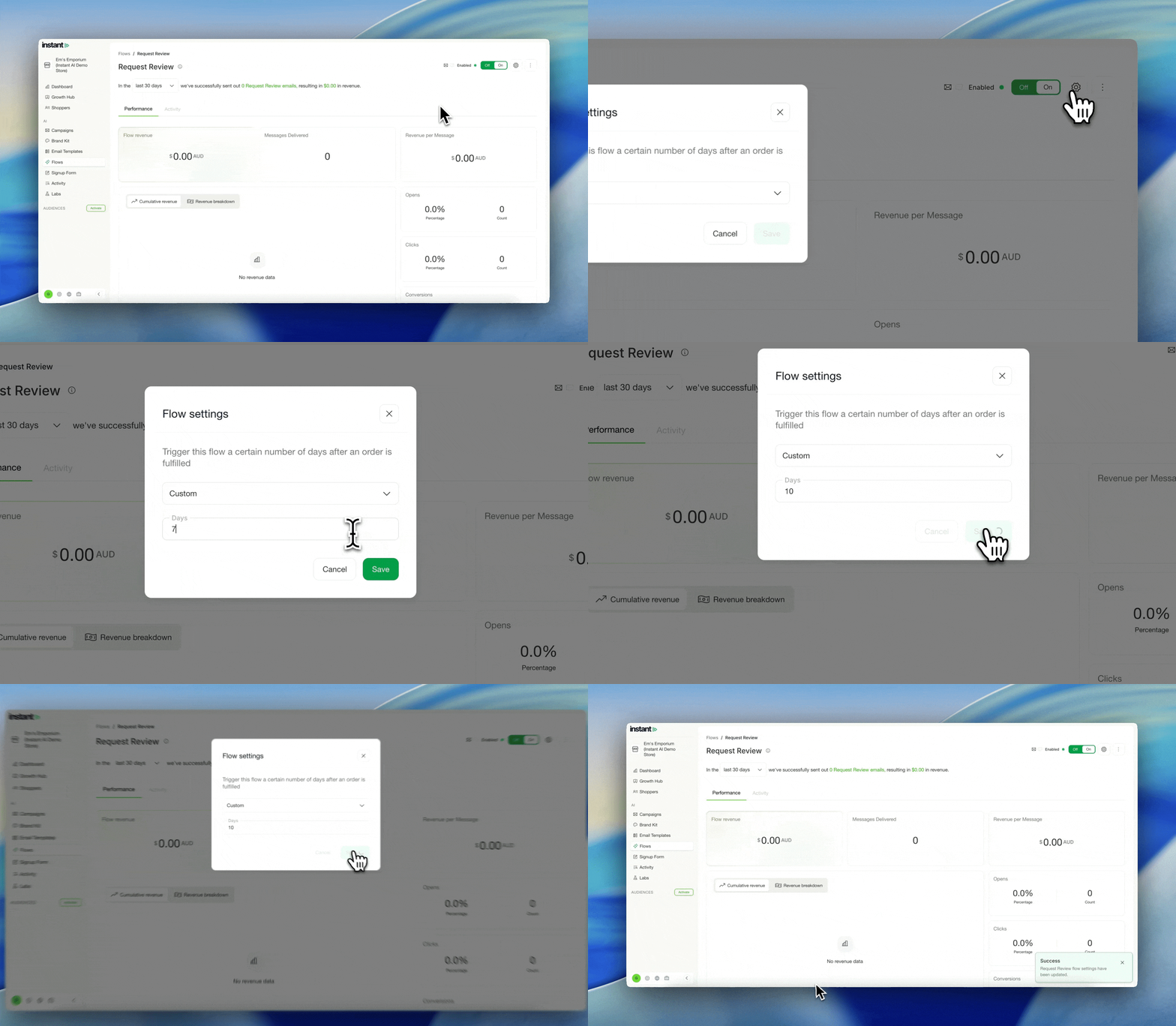
Request Review Flows now support custom triggers

Set your own delay between an order being fulfilled and the review request going out.

  • Set your own waiting period between an order being fulfilled and the review request sending
  • The default stays at 7 days, so nothing changes unless you adjust it

Bounce Reasons now on the deliverability dashboard

See exactly why your emails bounce, grouped by reason, on the deliverability dashboard.

This page reports on work that is already happening. Instant manages a large number of deliverability scenarios for you automatically, and the recommendations page already tells you when something needs your attention. Reasons adds the evidence behind that. It shows why the bounces you still see are happening, and once the detail is visible most accounts look a lot healthier than expected.

  • A new Reasons tab on the deliverability dashboard breaks down every reason your emails bounce
  • Bounces are grouped into categories, so you can see exactly what is causing them
  • An activity log at the bottom of the page shows everything happening on your account
  • Search, filter and open the full detail on any entry, which makes a problem much faster to diagnose

Skip Campaign emails if someone converts

Stop sending the rest of a multi-step campaign to shoppers who have already purchased.

Campaigns and flows have always worked differently. A flow reacts to what a shopper does, and a campaign sends to everyone on the list. That gap mattered most when you were using a multi-step campaign to nurture shoppers towards a purchase, because someone who bought from the first email kept getting the rest. You can now put that logic on a campaign. Build three or four emails to warm shoppers up, and anyone who converts along the way stops receiving the remaining sends.

  • Turn on a toggle to stop sending the remaining emails in a multi-step campaign to shoppers who convert
  • Build a nurture campaign of three or four emails and have it behave like a flow, so anyone who purchases early drops out
  • Off by default, and you can switch it on or off at any time
  • Find it under Campaigns > your campaign > Overview > Stop sending after purchase

Crop images from the email editor

Crop, rotate and flip your images without leaving the email editor.

Small image changes used to mean leaving Instant. You would open the image in another tool, crop it, save it, then come back and upload it again. Now the edit happens where you are already working, so the back and forth goes away for the small adjustments that come up while you are building an email.

  • Crop and edit your images from inside the email editor
  • Choose from a library of preset image sizes, or crop freeform to your own dimensions
  • Rotate and flip images as well
Learn more ↗

Send a preview email to someone else

Send a test email to a client, a teammate, or anyone who needs to review it, not just to yourself.

If you work with an agency or review emails across a large team, the person signing off on the copy is often not the person logged into Instant. You can now send the preview straight to whoever needs to see it, without forwarding it on yourself.

  • Send a preview email to an address other than your own
  • Click Send preview to send it to yourself by default
  • Or open the drop down to pick another user, or type in any email address
  • Useful when the person who needs to review the email is not an Instant user

Winback periods are now adjustable beyond 90 days

Set your winback flow to any number of days, so it matches how often your customers actually buy.

A 90 day winback window is best practice for most stores, and it gets the strongest results across our merchant base. But some categories have much longer natural repurchase cycles, and a 90 day cap meant the flow would reach shoppers well before they were ready to buy again. You can now match the winback period to how your customers actually shop, whether that is four months, six months, or longer.

  • Set a winback period to any number of days, not just up to a 90 day maximum
  • Extend to 120 days, 180 days, or longer where your buying cycle calls for it
  • The 90 day default stays in place, so nothing changes unless you choose to adjust it

Daily, weekly and monthly view for the campaign revenue graph

Switch the campaign revenue graph between daily, weekly and monthly to see up to 12 months of revenue.

  • The campaign revenue graph can now be filtered by daily, weekly or monthly, instead of showing the last 7 days only
  • Switch to monthly to see your total campaign revenue across the past 12 months
  • Switch to weekly or daily to compare this week against last week
  • Find it on the campaign revenue graph at the bottom of your Dashboard

Configurable stock thresholds for Back in Stock and Low in Stock

Set your own unit threshold for the Back in Stock and Low in Stock flows instead of the fixed 10 units.

  • Set your own unit threshold for the Back in Stock and Low in Stock flows, instead of the fixed 10 units
  • Choose Default to stay on the standard threshold, or Custom to set your own number of units
  • Low in Stock triggers when inventory falls below the number you set. Back in Stock triggers once at least that many units are added back
  • One threshold per flow, and you can change it whenever you like
  • Saved changes apply to the flow straight away
  • Existing flows stay on the 10 unit default until you change them
  • Find it under Flows > flow overflow menu > Edit trigger

Upload images up to 10MB

Upload images up to 10MB, including GIFs.

  • Upload images up to 10MB
  • This includes all supported image types, including GIFs

Upload customers to a custom list

Tag everyone in a shopper upload with a shared attribute, so you can find that group again later.

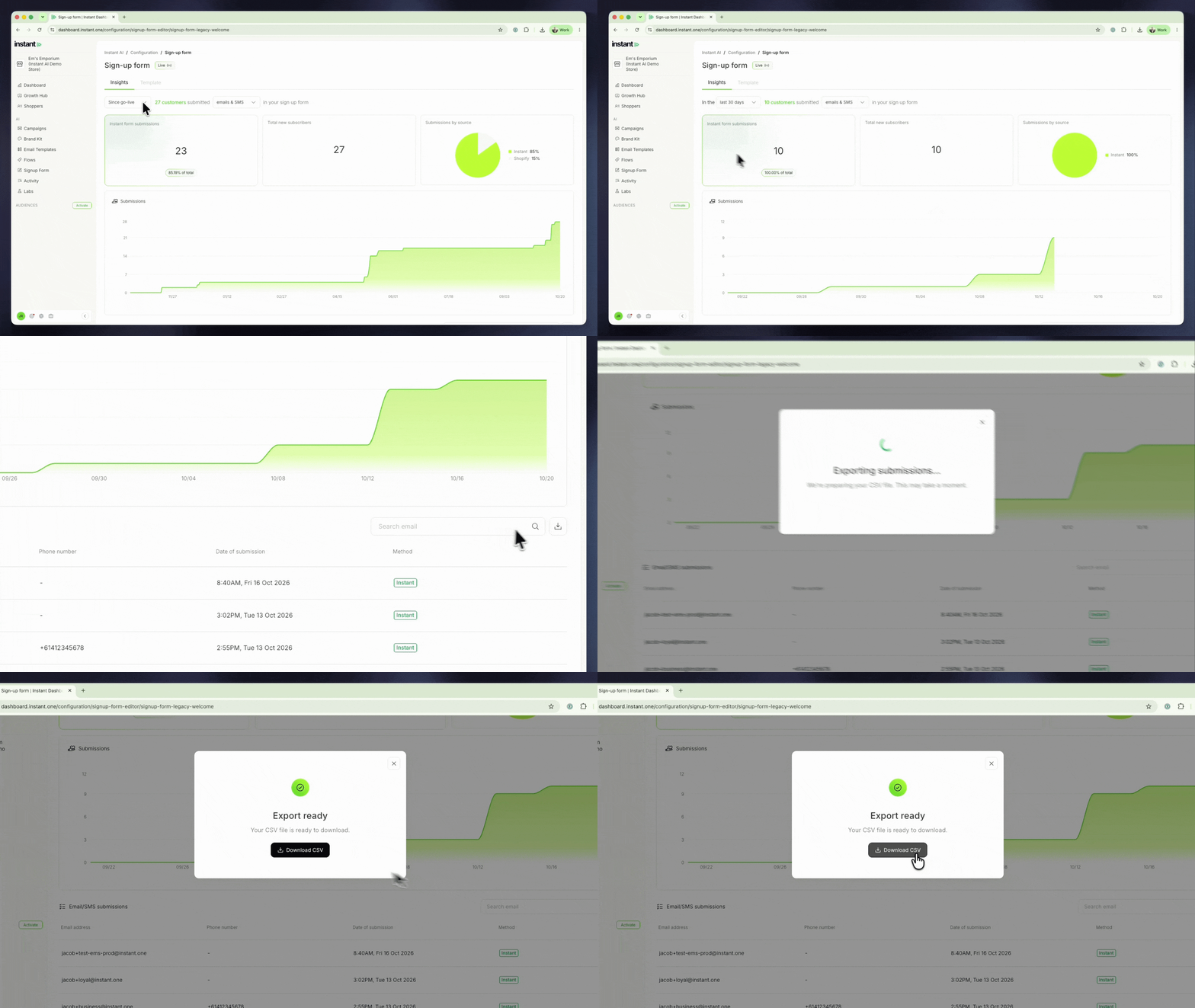
Often you run an event and walk away with a CSV of sign-up emails, then need to email everyone on that list. You can upload them as new shoppers so they are in your campaigns, but it can be hard to know where you met them or to keep that group of people associated together. Tagging them on upload solves that. The shoppers go into your master list as normal, and the shared attribute lets you find the exact group again in segmentation and target them in a campaign. Previously you could do this with Shopify tags, which is still a great, closely integrated approach. This is an alternative for when you think in terms of "lists", while staying integrated with everything in segmentation.

  • When uploading a new list of shoppers, you can now choose to tag everyone in that upload with a shared attribute
  • This creates a custom profile attribute for the new list and tags every shopper you upload with it
  • Choose to upload to your master list only, or upload to your master list and tag them with a custom attribute at the same time
  • Find the new attribute after uploading under Shoppers > Filters > Profile Attributes > Your filter

More visibility over Shopify integration events

See webhook and conversion events on your Shopify integration page to check the integration is healthy.

  • See webhook events and conversion events directly on your Shopify integration page
  • Get a clearer picture of the health of your Shopify integration in one place
  • Check whether the events coming from your store have actually changed over time
  • See which events we receive from the Shopify webhook (server side) and which from our pixel (client side)
  • Find it on your Shopify integration page
Learn more ↗

Improved breakdown of segment count

A tooltip on your eligible contact count shows exactly how that number is reached.

Your total email list and the number you can actually send a campaign to are often different, and it is not always obvious why. The usual reason is that suppressed contacts cannot be sent a campaign, so they are removed from the eligible count. Now you can hover over the total and see the full breakdown yourself, so the numbers make sense at a glance without having to ask.

  • A tooltip now sits next to the total eligible contacts for a campaign, breaking down how that final number is reached
  • See exactly what is subtracted to get there, for example suppressed contacts and email addresses not eligible to receive marketing

Custom flow improvements

Trigger a custom flow automatically when a Shopify tag is added to a customer.

Some brands run a sale, waitlist, or promotion that only needs a flow for a short window, then take it down again. That kind of short-lived, custom automation was hard to manage before. Now you can add a Shopify tag to the right customers and trigger a custom flow off it, for exactly as long as you need it, without touching your core flows. One brand recently shut their store for 48 hours and built a waitlist flow that captured everyone who submitted their email while the store was down. When they reopened, they sent a campaign to everyone carrying that tag: an on-demand announcement to a warm, ready audience of over 1,700 people. The same approach powers competitions too, like tagging 1 in every 100 entrants as a winner and triggering a flow just for them.

  • Trigger a custom flow automatically when a specific Shopify tag is added to a customer
  • Ideal for time-limited campaigns like a sale waitlist, a competition, or an event sign-up: apply a Shopify tag to the right customers and the matching flow enrols and sends
  • Reuse the same tag for segmentation, so you can also send a one-off campaign to everyone carrying that tag (for example, the moment your sale goes live)
  • Find it under Flows > Custom
Learn more ↗

Predicted Gender in segmentation

Segment shoppers by a predicted gender based on their first name.

Predicted gender is based on census data matched to first names, the same approach used elsewhere. It is not relevant for every store, but some verticals rely on it heavily, so if you segment this way today you can now do it inside Instant.

  • A new filter on a shopper's profile that predicts a shopper's gender based on their first name
  • Go to Shoppers > Add Filter > Profile Attribute > Predicted Gender
Learn more ↗

Filter segments by product variant

Build segments around a specific product variant, like a single size or colour, not just the product.

  • Build segments based on a specific product variant, not just the product itself
  • Target shoppers by the exact variant they bought or engaged with, like a single size, colour, or style within a product
  • Combine variant filters with your other segment rules to get as specific as you need
  • Find it under Segments > Add Rule > Product Variant

Turn off review stars in emails

Turn off review stars in your emails if you would rather not show them.

  • Turn off review stars in your emails if you'd rather not show them
  • Stars stay on by default, you can opt out whenever you like
  • Handy if your reviews provider is unsupported or only partially supported
  • Find it under Settings > Email Settings

Dismissible Klaviyo integration banner

Dismiss the Klaviyo integration banner and it stays hidden for that site.

  • The banner prompting you to integrate with Klaviyo can now be dismissed
  • Press the X on the banner and it stays hidden for that site from then on
  • You can still add an integration any time under Settings > Integrations, the banner just won't show

Improved shopper profiles and customer health insights

Open a shopper profile in a side panel and see their spend, order frequency and predicted next order.

Shopper profiles used to mean a full page redirect every time you wanted a closer look. Now you can open a profile in a side panel, glance at what you need, and carry on where you were. The new customer health insights turn each profile into a quick read on the relationship. See who your highest spenders are, how often they buy, and when they're likely to order next, so you can spot the shoppers worth a targeted follow up.

  • Shopper profiles now open in a side panel, so you can click a profile and see a preview without leaving the page you're on
  • Expand any preview to a full panel, or copy its URL to share a shopper with a teammate for collaboration
  • Previewing a shopper now shows customer health insights based on their past purchase behaviour: their total spend with you, their average order value, their average time between orders, and a predicted next order date from their history

Smart coupons can now have a minimum amount configured

Set a minimum discount as well as a maximum in your smart coupon rules.

  • Pick a minimum % discount to offer in your smart rules, as well as a maximum
  • Both ends of the discount range are now fully configurable
  • Previously the minimum was fixed at 5% and only the maximum could be adjusted

Filter segments by products in a collection

Filter segments by whether a shopper bought, viewed or added to cart a product in a collection.

  • Filter segments based on whether a shopper has purchased a product inside a collection
  • The same option is supported in the Product Viewed and Added to Cart filters
  • Bulk manage product filters by collection instead of selecting products one by one

Change the background colour of an individual email

Override your brand kit to set the background and text colour for one email.

Most brands use their brand kit for the vast majority of their emails, and that's exactly how it should work. But now and then you want one email to look different, without touching your brand kit or every other email. Now you can change the background and primary text colour of a whole email as a one off override, applied in bulk across that email in a couple of clicks. Without needing to manage individual blocks.

  • Set the background colour and primary text colour for a single email
  • Use the Style panel on the left to override your brand kit for this one email
  • Find it in Email Templates > Template Designer

Bulk paste for tone of voice words

Paste a comma separated list into your tone of voice fields and each word is added as its own chip.

Tone of voice words are meant to be single words or short phrases, but it wasn't always obvious, and some stores pasted in full paragraphs by mistake. Now the field tells you exactly how to add words, shows your allowance, and blocks overly long entries before they cause problems. Managing a long list is quicker, and you get it right the first time.

  • Paste a comma separated string of words into your prioritise and avoid fields, and each word is added as its own chip automatically
  • Placeholder text now shows you how to paste with commas, and displays your remaining word allowance
  • Each single entry is capped at 60 characters, so a stray paragraph won't get added by mistake

Drag and drop images onto the canvas

Drag files from your computer onto the canvas and each one is added as its own image block.

If you design images in other tools and just need them inside Instant, this is much faster. Drop a whole batch of files onto the canvas at once and we'll turn each one into an image block for you, so you can build a campaign in a fraction of the time.

  • Drag files straight from your computer onto the canvas in bulk
  • Every file is added automatically as its own image block, no need to go through the image library

Cleaner advanced segment filter

A refreshed layout for the advanced segment filter, so groups and AND/OR logic are easier to follow.

Building a segment with several groups and nested logic used to be hard to read. The new layout makes the structure clear at a glance, so it's quicker to build the segment you want and easier to spot when the logic isn't quite right.

  • A refreshed layout for the advanced segment filter, making it easier to manage groups and AND/OR logic
  • All the same functionality, just cleaner and easier to follow

Drag and drop improvements in the email editor

Drag blocks from the gallery onto the canvas so you control exactly where each one lands.

Placing blocks used to mean clicking and then dragging them into position after they landed in the middle of the canvas. Now you can drop a block exactly where you want it in one move, which makes building and rearranging emails quicker. If you liked the old click to insert flow, nothing changes, it still works alongside drag and drop.

  • Drag blocks straight from the gallery on the left onto the canvas, so you control exactly where each one lands
  • Prefer clicking? A click still auto-inserts the block into the middle of your canvas, so both methods work
  • The side panel now shows all available blocks by default, so you can reach them faster without opening the library every time
  • Find it in the email editor

Remembering draft settings when swapping images

Swap an image and keep your unsaved customisations, including URL links.

If you clone a campaign and swap in new images, you no longer lose the links and customisations you had already set. Everything carries over to the new image, so updating creative is a quick swap rather than a rebuild.

  • Swap an image and keep all your unsaved customisations, including URL links
  • Previously, swapping an image reset those settings, so you had to reapply them each time
  • Makes cloning campaigns and updating images much faster

Reorder segments

Drag and drop your segments into the order you want, so your favourites stay front and centre.

If you manage a large number of segments, the ones you use most can get lost in the overflow dropdown. Now you decide the order. Pin your key segments (like VIPs or recent purchasers) to the front so they're always easy to reach, and keep the rest tidied away.

  • Drag and drop your segments to reorder them however you like
  • Reorder the cards directly on screen, or from within the overflow dropdown
  • The order you set controls which segments show by default, so your favourites stay front and centre

Improved deliverability recommendations

Instant checks your DMARC and SPF setup and flags settings that are quietly hurting your deliverability.

Many brands add the correct DNS records and connect successfully, but do not realise other settings on their domain are still holding back their deliverability. The expanded recommendations catch these for you. It is a useful checklist before you go live, to make sure everything is optimised from day one. It is just as useful if you are already sending and want to confirm you are following best practice. Either way, the goal is simple: fewer emails in spam, more in the inbox.

  • Instant now assesses your DMARC and SPF settings on the deliverability dashboard to check you have the optimal setup, not just that your records are connected
  • Your domain is monitored proactively, so we surface other settings that could be quietly affecting your deliverability, even after you have added the right DNS records
  • Key recommendations now appear on your main domain page as well as the deliverability dashboard, so you see them wherever you are working
  • Find your recommendations under *Settings > Deliverability or Settings > Domain*
Learn more ↗

Change font size in the text editor

Highlight any text and set it to any size, not just your brand kit sizes.

  • Override any text to any size directly in the text editor
  • Previously text could only be set to brand kit sizes. Now you can highlight any text and set it to any size you like
  • Override the font style too, using any font imported from your brand kit, along with other styling options

First Anniversary flow

Celebrate a customer one year on from their first purchase with an automatic anniversary email.

The First Anniversary flow is a simple, personal way to build loyalty and win back customers who haven't shopped in a while. Marking the anniversary of a first purchase gives you a natural, warm reason to reach out, and pairing it with a discount turns that moment into an incentive to buy again. It works especially well as a winback, reminding customers of a brand they bought from a year ago with a personalised gift.

  • Enable a First Anniversary flow to celebrate a customer one year on from their first purchase
  • The email sends automatically one year after a customer's first order
  • Add a coupon with a discount to mark the occasion and give them a reason to come back

Change the background colour of layout blocks

Set the background colour of an individual layout block, independent of the rest of the email.

  • A colour picker has been added to the Layout Block options
  • Override the background colour of an individual layout block, independent of the rest of the email

Minimum and maximum email touchpoints

Welcome flows now support up to 10 emails, and Price Drop flows can drop to a single email.

  • Welcome flows now support up to 10 email touchpoints (previously 5)
  • Price Drop flows now support as few as 1 email touchpoint (previously 3)
  • Adjust the number of emails when editing your Welcome or Price Drop flow

Image gallery improvements

Upload images in bulk and clear out unused ones in a single action.

  • Upload images in bulk. When you add an image block, drag and drop multiple images at once and they auto-select and add to your email together.
  • Ideal if you design a batch of images in Canva or elsewhere and want to drop them straight into the gallery and add them all in one go.
  • Bulk delete unused images. In the "Unused" tab of the gallery, select all and clear them in a single action.
  • Keeps your image gallery tidy by removing images you no longer need.

Improved location filters

Filter shoppers by country, state, city, or distance from an address.

Many brands want to get granular with segmentation to unblock use cases the standard filters could not reach. You can now find every customer within 10km of your store, or target shoppers in specific suburbs for a local promotion. Set the location filter once, pick how you want to drill down, and Instant handles the rest.

  • The location filter in segmentation now supports more granular shopper information
  • Filter by Country, State, City, or distance from an address
  • Add the location filter, choose how you want to drill down, and follow the prompts
  • With the distance filter, choose whether to measure in miles or kilometres
  • Address searches run through Google's address API, so you can find any valid registered address

Self-serve changes to domains and subdomains

Configure and change your own sending subdomain without going through support.

  • Configure and change your own sending subdomain, without going through support
  • Choose the subdomain name you send from (for example, mail. or send.)
  • Get a fresh set of DNS records to add every time you create a new domain
  • Once a domain is authenticated, pick which one Instant sends from
  • Find it under Settings > Domain
Learn more ↗

Meta integration for segments

Sync any Instant segment to Meta as a custom audience, refreshed every day.
Your first party data is some of your best ad targeting data, and Instant AI can help you make the most of it. The Meta integration lets you take any segment you can build in Instant, from cart abandoners to VIPs to shoppers who viewed a specific product, and turn it into a Meta audience for your ads. Because the segment is dynamic, the audience is too. We re-sync it to Meta every day, so as shoppers meet or stop meeting your criteria, your Meta audience keeps up without any manual exports. For example, build a segment of everyone who abandoned cart and viewed a specific product but hasn't purchased, sync it to Meta, then push them a special offer on Facebook and Instagram.
  • Connect Instant AI to Meta to build more targeted audiences for your Meta ads
  • Create a segment in Instant using any criteria, then add it to your Meta integration
  • We sync everyone in that segment to Meta once a day, so your audience stays current for targeted ads
  • Find it under Integrations > Meta and follow the prompts to get started
Learn more ↗